•
•
•
•
•
•
•
•
•
•
•
•
•
•
•
•
•
•
•
•
•
•
•
•
•
•
•
•
•
•
•
•
•
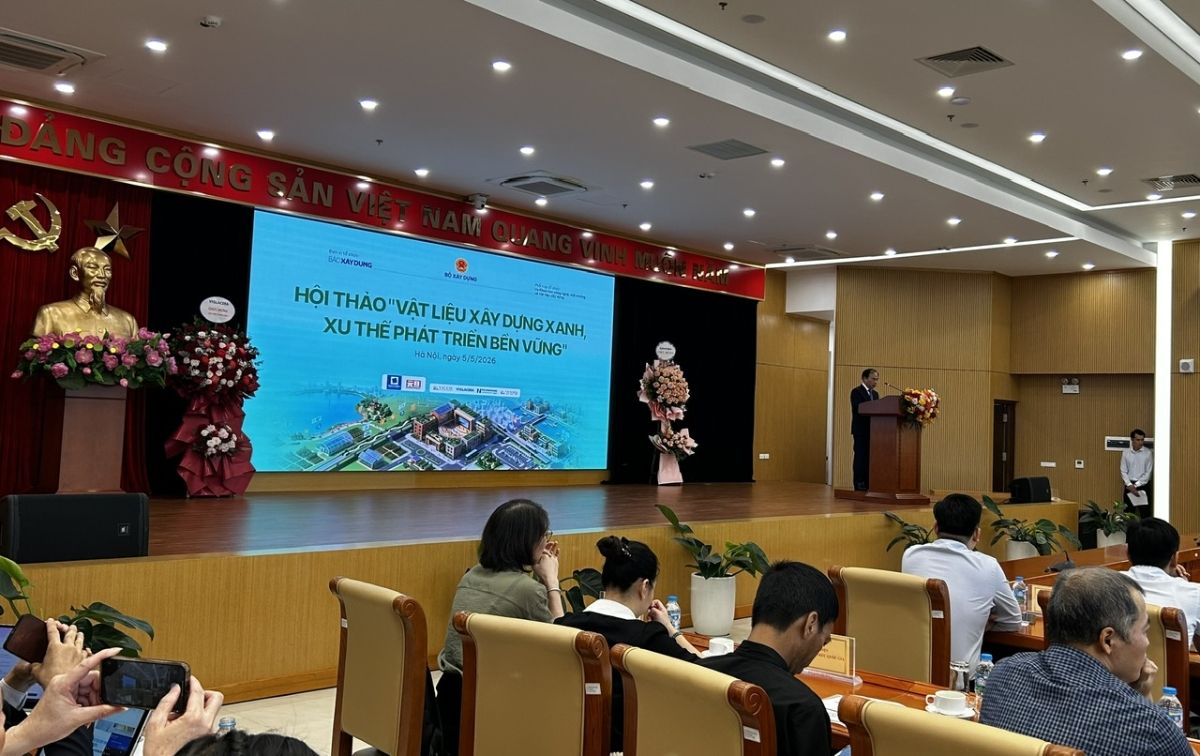
Over recent years, Vietnam has seen initial positive results in developing green, environmentally friendly construction materials, ranging from policy refinement to expanding production and practical application.
At the workshop “Green Building Materials – Sustainable Development Trend” organized by Construction Newspaper on May 5, 2026, Deputy Minister of Construction Nguyen Van Sinh said that as Vietnam accelerates its transition to a green growth model and a low-carbon economy, the construction sector faces a need to transform more robustly and comprehensively.
The deputy minister noted that the building materials sector plays a key role as a fundamental input for infrastructure development, urbanization, housing, and industry and socioeconomic projects. However, it also consumes substantial resources and energy and faces environmental and emissions pressures, making greening the sector an urgent development requirement rather than only a trend.
To meet this requirement, the Government and the Prime Minister have issued policies to promote development, encourage production, and support the use of environmentally friendly materials, including non-fired building materials, recycled materials, energy-efficient materials, and low-emission materials.
Key policy instruments highlighted include Decision No. 1658/QD-TTg approving the National Strategy on Green Growth for the 2021–2030 period with a vision to 2050, and Decision 1266 guiding the development of green building materials. The deputy minister also pointed to the integration of green-material development requirements in the Construction Law, the Law on Resources and Environment, and Decree 09 on building materials.
Alongside institutional refinement, the Ministry of Construction has taken practical actions such as “Green Week,” including content on developing green materials and green transport, which it said helps ease difficulties for enterprises producing and developing green building materials.
In practice, green building materials have expanded, particularly non-fired building materials. The sector includes products such as cement-bound aggregate bricks, aerated concrete, foamed concrete, and extruded hollow-wall panels.
According to the Ministry of Construction, Vietnam currently has about 2,900 facilities producing non-fired building materials with a total designed capacity of 12.4 billion standard bricks per year, accounting for 40% of total building materials capacity. In 2025, production reached over 7.2 billion standard bricks, while consumption was around 6.7 billion bricks.
This product group, the ministry said, helps reduce the use of fired clay, preserves arable land, lowers fossil fuel consumption, limits emissions, and supports the reuse of industrial by-products such as fly ash, slag, and gypsum as raw materials.
In addition, finishing and enclosure materials with energy-saving features have been studied, produced, and applied. The article specifically mentioned Low-E glass and Solar Control glass, which reduce heat transfer through building envelopes and limit solar radiation.
The ministry also said that many domestic building material products are gradually approaching green certification, environmental certification, and high technical requirements of domestic, regional, and international markets.
Despite the results, the green transformation of the building materials sector still faces difficulties. These include high investment costs for technology, intense competitive pressure, and a market that is not yet fully ready due to continued habits of using traditional materials. The article also cited that the system of standards, regulations, and incentive mechanisms is not yet complete, and that access to green credit and incentives remains a barrier for enterprises.
To clarify and implement directions, the Ministry of Construction continues to refine legal documents, including a draft decree to replace Decree 09/2021/ND-CP on building materials and a circular regulating the quality of building materials products to replace Circular 10/2024/TT-BXD.
A notable point in the draft replacement decree, according to the article, is directing the management and development framework for building materials toward a green transition, digital transformation, a circular economy, resource and energy savings, emission reductions, and strengthened state management.
In the long term, the ministry said this approach is expected to create a transparent and more stable legal environment for enterprises investing in technology, developing new materials, recycled materials, and green materials, and expanding markets with improved quality and stronger environmental responsibility.
To further clarify the directions, Mr. Le Van Ke, Deputy Head of the Department of Science, Technology, Environment and Building Materials (Ministry of Construction), said that improving the effectiveness and efficiency of management and development in the coming period should focus on several core areas:
From now until 2030 and beyond to 2045, the article states that the building materials sector must transform from a traditional manufacturing industry into a modern, green, smart industry with high competitiveness and deeper participation in domestic and international value chains.
Premium gym chains are entering a “golden era” that is ending or already in decline, as rising operating costs collide with shifting consumer preferences toward more flexible, community-based ways to exercise. Long-term memberships are shrinking, margins are pressured by higher rents and facility expenses, and competition from smaller, more personalized…