•
•
•
•
•
•
•
•
•
•
•
•
•
•
•
•
•
•
•
•
•
•
•
•
•
•
•
•
•
•
•
•
•
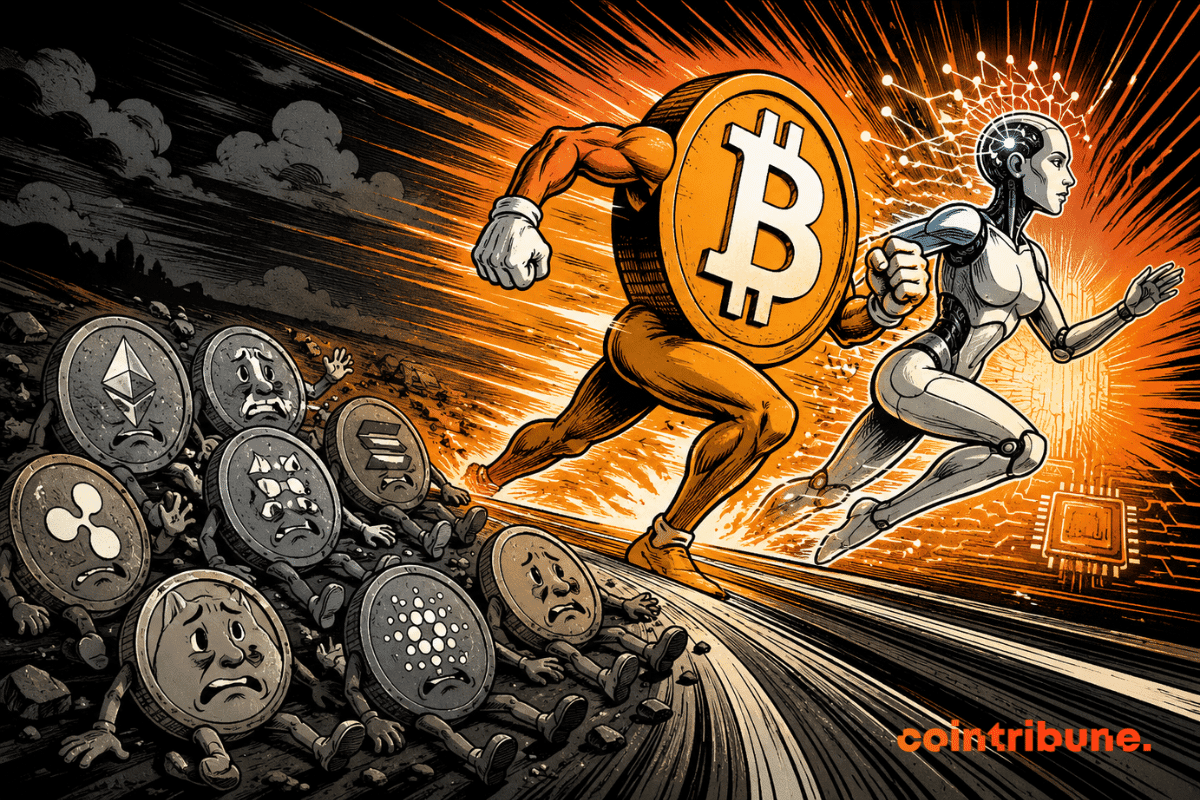
Crypto markets are entering a new phase of capital rotation. Altcoins are seeing a sharp decline in spot demand, while bitcoin and AI-related sectors are drawing more investor attention. Even as direct purchases weaken, trading volumes remain high on some platforms, suggesting a shift in where capital is deployed rather than a broad exit from crypto.
For several weeks, the altcoin market has shown signs of slowdown alongside increased selling pressure. Excluding Ether, altcoins recorded a net sales volume of $266 billion on centralized exchange platforms—reported as the highest level since the tracking of this indicator began in 2020. This gap between sales and spot demand points to reduced immediate interest from investors.
Despite the decline in spot activity, derivatives trading remains active. Altcoins continue to account for a substantial share of exchange activity, in some cases exceeding bitcoin and Ether on certain platforms.
According to data cited from crypto analyst IT Tech, the cumulative difference between purchases and sales confirms prolonged selling pressure. The negative balance is described as reaching a new low even though traders remain active in derivatives markets.
In this environment, bitcoin continues to play a major role in allocating available liquidity. Stablecoin reserves on platforms have changed little since December 2024, indicating that liquidity remains available, but is being used more selectively.
The bitcoin price has also shown large swings, with movements of more than 50% between $60,000 and $120,000. At the same time, ERC-20 stablecoins on exchange platforms have maintained a ratio between 40% and 46% of their total supply, according to data cited from market analyst MorenoDV. This stability suggests liquidity has not disappeared from the market.
The report also notes that exchange capital appears to be moving toward other financial products. Futures contracts on metals reached nearly $500 billion in March 2026, while perpetual products linked to pre-IPO assets grew rapidly between March and June.
Capital rotation is not limited to alternative cryptocurrencies. Investors are also exploring products tied to stocks, commodities, and technology companies associated with artificial intelligence. Exchange platforms are expanding the trading options available to users.
Altcoins remain active in this broader setup, but face increased competition for available liquidity. Derivatives volumes indicate traders are still present, while spot purchases appear to favor specific sectors.
Overall, the diversification of flows suggests investors are seeking exposure across multiple asset types within both digital and traditional markets. The report concludes that bitcoin remains concentrated in liquidity, while AI and new financial products capture a growing share of attention. Whether the rotation becomes more entrenched will depend on developments in trading volumes, stablecoin reserves, and spot demand in the coming months.
Ready Card users outside the European Economic Area have reportedly faced an abrupt service halt after a transition involving the card issuer disrupted the USDC spending product, according to user notices shared on X.
A notice shared…