Positioning ahead of a key macro week is rarely random, and that remains true as high caps break key support levels. Investors appear split between buying the dip and expecting a deeper correction, with current positioning tilting toward the latter.
Bitcoin faced several potential catalysts during the week beginning the 12th of October.
On Monday, U.S. markets re-open after the reported lifting of sanctions on Russian diesel. Jobs and housing data come out on Tuesday, providing fresh insight on the U.S. economy. On Wednesday, CPI and Core CPI inflation readings will take center stage, followed by PPI and Core PPI on Thursday. Finally, on Friday, Kevin Warsh is scheduled to speak.
Meanwhile, the spot market flows are less mixed. U.S. spot Bitcoin ETFs had a net inflow of $21.13 million, with nearly all of the capital flowing into BlackRock’s IBIT. However, the broader trend remains weak, with the funds recording a $681 million outflow this week, the biggest weekly outflow in more than three months. This implies that despite a brief return of buying interest, institutional demand for Bitcoin is under pressure.
Historically, the fourth quarter has been bullish for Bitcoin and the broader crypto market, with average returns exceeding 71%.
More than half of these gains have historically come in October and November combined, fueling the seasonal “Uptober” narrative.
The divergence between spot inflows and derivatives activity is creating a risk to the anticipated Uptober rally and to the $60,000 downside target.
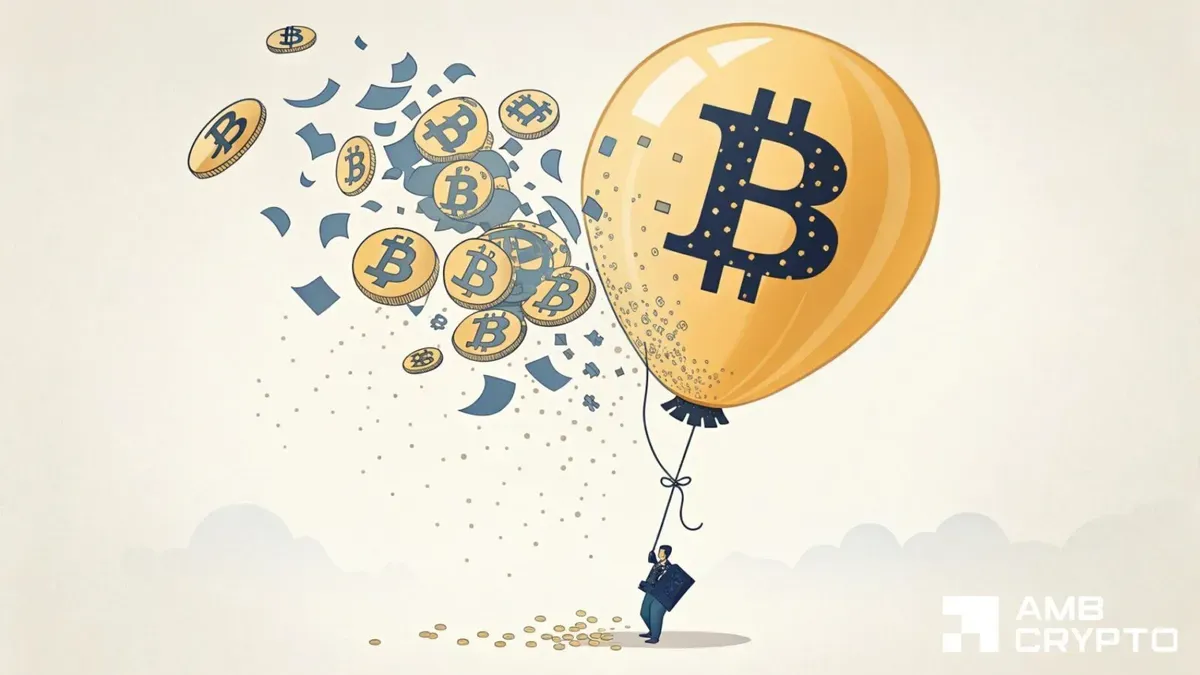
Bearish bets and ETF outflows are putting pressure on Bitcoin despite hopes for an “Uptober” rally. The upcoming macro data this week could determine whether Bitcoin recovers or moves toward $60k.
Some observers have highlighted a potential move toward $60k, with one X post describing it as an “inevitable setup.”
Bearish bets and ETF outflows are putting pressure on Bitcoin despite hopes for an Uptober rally. Key economic data this week could determine whether Bitcoin recovers or falls toward $60k.