•
•
•
•
•
•
•
•
•
•
•
•
•
•
•
•
•
•
•
•
•
•
•
•
•
•
•
•
•
•
•
•
•
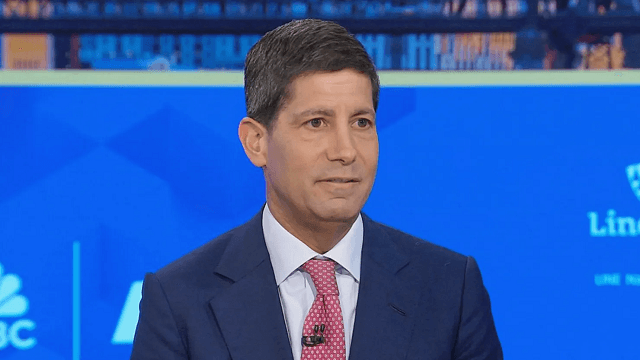
At the first monetary-policy meeting chaired by the new Federal Reserve Chair Kevin Warsh, the Fed kept the federal funds rate target range at 3.5% to 3.75%. The range has been held since the end of 2025 after a cumulative 75 basis point cut. While the decision to hold was widely expected, the meeting drew close attention because Warsh oversees policy for the first time as chair.
One of the most notable changes was in the Fed’s rate projections, commonly referred to as the dot plot. Earlier projections had left room for additional rate cuts this year, but the new projections remove that scenario. Instead, many Federal Open Market Committee participants now appear to think rates may need to stay at the current level longer than previously anticipated, and the possibility of a rate increase has been brought back into consideration.
Among 18 participants who released rate forecasts, nine projected a rate increase this year.
The dot plot also included an unusual detail: only 18 of the 19 participants submitted economic and rate forecasts. Because the Fed publishes the dot plot anonymously, markets cannot determine who declined to participate.
Before the meeting, many Wall Street analysts expected Warsh to be an outlier in the forecast process. Warsh has long been one of the strongest critics of publishing the dot plot and forward guidance, arguing that releasing too many forecasts for rates, growth, inflation, and unemployment can constrain the central bank to scenarios that may not occur.
In addition to holding rates, the Fed trimmed the post-meeting statement substantially. The statement this time ran about 130 words, compared with 341 words in the April 2026 statement, making it one of the shortest Fed statements in years.
Rather than providing detailed assessments, the FOMC emphasized a few core points on growth and inflation:
The Fed said the economy continues to grow at a solid pace despite elevated uncertainty, citing factors including the conflict in the Middle East. It also said productivity and capital investment remain strong.
The Fed said payrolls continue to rise in line with the labor force and that the unemployment rate has hardly changed.
The Fed reiterated that inflation remains above its 2% goal, partly due to supply shocks that pushed prices up in some areas, especially energy.
The statement also said the Fed will continue to maintain ample reserves in the banking system, implying it does not plan to accelerate runoff of the balance sheet, which is currently around $6.7 trillion—a topic Warsh had raised before becoming chair.
The most significant message from the meeting came through the rate forecasts. The new dot plot indicates officials no longer expect rate cuts in 2026 as previously anticipated. Instead, most cuts, if any, are shifted to 2027–2028.
The median projected fed funds rate for end-2026 is 3.8%, about 0.16 percentage points higher than the current level, implying a possible one-rate increase this year. Officials also maintained the long-run neutral rate at 3.1%.
Alongside the rate outlook, the Fed significantly revised its economic projections. Headline inflation for 2026 is projected at 3.6%, while core inflation is projected at 3.3%. This represents a sharp change from the March projection, when both headline and core inflation were at 2.7%.
For growth, the Fed lowered its 2027 forecast to 2.2%. It also projected unemployment at 4.3%.
The labor market continues to present challenges for the Fed. Under normal circumstances, central banks might discount temporary supply shocks such as energy-price spikes, but lessons from post-pandemic inflation have made the Fed less willing to overlook these risks.
Recent data show price pressures remain elevated. CPI in May rose 4.2% year over year, the highest in three years. Core inflation was 2.9%, and overall inflation has remained above the 2% target for five consecutive years.
At the same time, the labor market has shown resilience despite higher rates. The May jobs report indicated the U.S. economy added 172,000 jobs, beating analysts’ expectations. The unemployment rate remained at 4.3% over the past year.
Before becoming Fed chair, Warsh argued that inflation driven by supply shocks is often temporary and should not drive policy. He also argued that AI could help ease inflation over the long run by boosting productivity and reducing production costs.
However, with inflation still high and the labor market not weakening, the probability of rate cuts has diminished. The CME FedWatch tool indicates markets no longer expect rate reductions in 2026 and even foresee a potential 0.25 percentage-point increase by year-end.
Ready Card users outside the European Economic Area have reportedly faced an abrupt service halt after a transition involving the card issuer disrupted the USDC spending product, according to user notices shared on X.
A notice shared…