Five key points from the first meeting of Fed Chair Kevin Warsh
In the first meeting of the newly appointed Fed Chair Kevin Warsh, the U.S. Federal Reserve kept the federal funds rate unchanged as expected by the
market. However, the accompanying signals were markedly more hawkish, prompting investors to reassess the outlook for monetary policy in the period ahead.
The U.S. stock market fell broadly after the meeting, while Treasury yields rose sharply as Mr. Warsh issued hawkish messages on inflation.
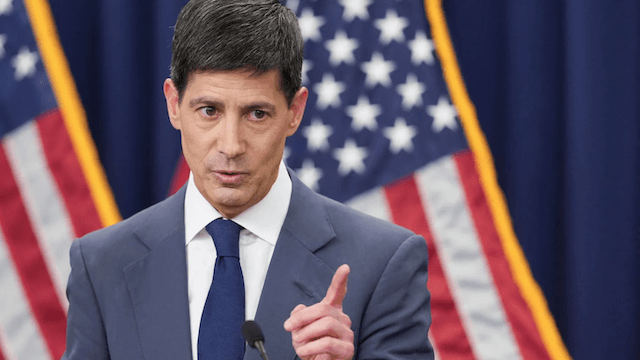
New Fed Chair Kevin Warsh
1. Rates unchanged but hawkish tilt gains the upper hand
The Fed unanimously kept the federal funds rate in the 3.50%–3.75% range, with no dissent.
In Fed speak, hawish means policymakers who prioritize fighting inflation via higher rates, while dove signals favor supporting growth and employment with looser policy.
However, the dot-plot projections indicate policymakers are increasingly leaning toward higher rates in the near term. The FOMC split into two camps: nine members see rates staying the same or falling, while the remaining nine project at least one rate increase.
The current median projection implies the Fed could raise rates by 0.25 percentage point before the end of 2026.
2. The mystery of the 'dot-plot' explained
Ahead of the meeting, observers had speculated that Warsh would not submit his own forecast to the dot plot. This was ultimately confirmed.
Warsh said he continued to encourage others to provide forecasts, but he declined to participate himself, saying he had long opposed the Fed's use of forward guidance under the current framework.
"I have not sent my own forecast because that aligns with my longstanding view of the Economic Projections (SEP), at least under the current structure," he said.
This move could signal Warsh’s consideration of changes to—or even removal of—the dot-plot tool in the future.
3. Launching Fed reform with five working groups
Warsh has repeatedly stated his desire to reform the Fed, and the first meeting showed concrete signs of that.
The Fed announced the formation of five task forces to review:
- The Fed's communications strategy.
- The size and structure of the balance sheet.
- Data sources used for policymaking.
- Productivity and the labor market.
- The impact of artificial intelligence (AI) and new technologies.
- The approach to inflation.
This move suggests the Fed under Warsh could operate within a framework very different from that of his predecessor Jerome Powell.
4. A hard line on inflation
The biggest surprise was Warsh's hawkish tone.
In the press conference, he repeatedly invoked the term "price stability," underscoring the Fed's commitment to bringing inflation back to the 2% target.
Market reaction was immediate. The two-year Treasury yield, the most policy-sensitive part of the curve, rose by more than 14 basis points after the meeting.
5. The Fed enters an era of "saying less"
Another notable change was the shortened post-meeting statement.
Where statements during Powell’s era were typically longer than 300 words and contained forward-looking language, this time the statement was around 130 words—concise, direct, and leaving less room for interpretation.
What Wall Street is saying?
Mr. Rick Reider, Global Head of Fixed Income at BlackRock, said: "We believe the Fed has officially entered a new era of monetary policy."
Mr. Krishna Guha, Head of Global Central Bank Strategy at Evercore ISI, said: "Chairman Warsh today resembles a hawkish Fed governor from the past, continuously emphasizing price stability."
Meanwhile, Mr. Dario Perkins, Global Macro Strategist at TS Lombard, noted: "Warsh wants to project the image of a reformer. What that means for the months ahead remains to be seen. But one thing is certain: following the Fed will be more challenging than before."