Get the latest crypto news, updates, and reports by subscribing to our free newsletter.
Giấy phép số 4978/GP-TTĐT do Sở Thông tin và Truyền thông Hà Nội cấp ngày 14 tháng 10 năm 2019 / Giấy phép SĐ, BS GP ICP số 2107/GP-TTĐT do Sở TTTT Hà Nội cấp ngày 13/7/2022.
© 2026 Index.vn
REAL Shows Network (RSN) is a national TV network for top real estate professionals and influential local leaders, giving select hosts in each market the exclusive opportunity to lead a full 30-minute show showcasing their expertise, partners, and community. Created by an Emmy-nominated, Telly Award-winning production team, RSN delivers cinematic,…

Younger investors, particularly Gen Z, are approaching financial markets with a markedly different mindset than previous generations. For them, volatility in assets such as Bitcoin is not necessarily a deterrent; it is often treated as a deliberate component of a broader diversification strategy, with digital assets increasingly integrated into portfolios rather than viewed solely as speculative bets.
Gen Z’s financial behavior has been influenced by major economic disruptions, including the 2008 Financial Crisis and the COVID-19 Pandemic. These experiences have contributed to skepticism toward traditional financial instruments and a greater openness to alternative assets.
Digital fluency also plays a central role. Mobile banking, digital wallets, and online platforms are part of daily life, making assets like Bitcoin feel more accessible and intuitive. Compared with older investors, the article suggests Gen Z is more likely to treat crypto as an extension of everyday financial habits rather than a complex or inherently risky experiment.
Many younger investors view market volatility as a feature rather than a flaw. The article cites survey findings indicating that more than 80% of Gen Z recognize cryptocurrency risks but continue investing. Rapid price swings are framed as the trade-off for the possibility of higher returns, especially in a macro environment where traditional assets may offer slower growth.
Allocating part of a portfolio to Bitcoin is increasingly described as a calculated decision. The article points to Bitcoin’s fixed supply model and historical performance patterns as factors that could support a hedge against inflation and create opportunities for asymmetric gains that traditional markets may not provide.
Social platforms such as TikTok, YouTube, and X influence how Gen Z accesses financial information and forms investment views. Short-form content, peer discussions, and financial influencers can deliver information quickly, helping younger investors engage with markets faster than previous cohorts.
At the same time, the article notes behavioral risks. Memecoins and trending tokens can experience sharp surges and declines driven by viral attention rather than fundamentals. Even so, social media can normalize crypto as a routine portfolio component rather than a fringe or experimental asset.
The article describes high levels of confidence among Gen Z investors, stating that more than 70% report feeling certain about their investment choices. While confidence can encourage action, it may not always reflect deep understanding.
It also references the Dunning-Kruger effect, suggesting younger investors may overestimate their knowledge—particularly when dealing with complex digital assets. Beyond volatility, the article highlights additional risks: during periods of market stress, Bitcoin has sometimes correlated with high-growth equities, which can weaken diversification benefits. Without understanding these dynamics, portfolio allocations may not achieve the intended risk balance, though exposure to these risks can also drive learning over time.
Institutional involvement is presented as a factor that strengthens Gen Z confidence in crypto. The article cites asset managers including BlackRock and Fidelity Investments expanding crypto offerings through ETFs, custody services, and research coverage.
This institutional participation is described as enhancing legitimacy while still aligning with the core attractions for younger investors, including decentralization and user control. The article frames institutional entry as evidence that digital assets are becoming integrated into the global financial system while retaining characteristics that initially appealed to Gen Z.
Overall, the article argues that Gen Z’s investment behavior reflects a view of volatility as part of a deliberate diversification approach. Bitcoin and other digital assets are increasingly portrayed as integral components of modern portfolios rather than purely speculative instruments. While challenges remain—such as overconfidence and information gaps—the trend suggests crypto is evolving into a longer-term tool for portfolio diversification, combining risk management with growth potential.
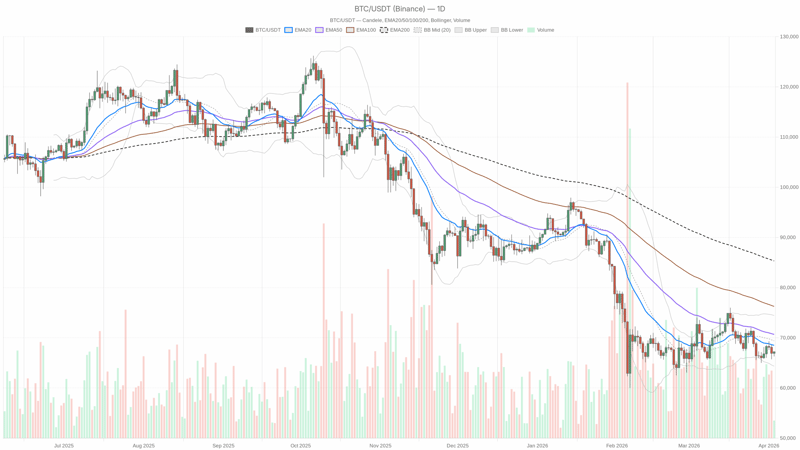





In brief\n\nBitcoin dropped to about $93,000, falling back below the EMA50 and putting its recent golden cross at risk of invalidation. The global crypto market cap stands at $3.15 trillion, down 2.38% in 24 hours. On Myriad Markets, 82% of the money is betting on Bitcoin pumping to $100K before…