•
•
•
•
•
•
•
•
•
•
•
•
•
•
•
•
•
•
•
•
•
•
•
•
•
•
•
•
•
•
•
•
•
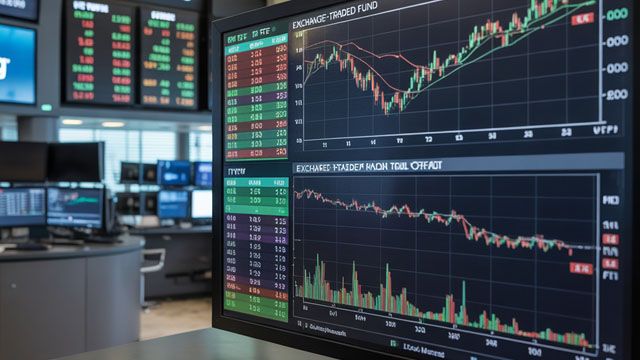
The iShares Semiconductor ETF (SOXX) invests in U.S. companies that design and manufacture chips and components, with a particular focus on firms tied to the artificial intelligence (AI) market. The fund’s heavy exposure to leading AI-related suppliers has helped it generate a 108% return in 2026 so far, far outpacing the S&P 500’s 10% gain for the year.
The iShares Semiconductor ETF holds just 30 stocks, making it highly concentrated. Its 10 largest holdings account for 62.2% of the portfolio’s value, and the top names include major suppliers of AI chips and components.
Data source: iShares. Portfolio weightings are accurate as of June 12, 2026, and are subject to change.
These 10 stocks have produced an average return of 136% this year, helping explain why SOXX is beating the S&P 500 by a wide margin.
Micron Technology is leading the way, supported by explosive demand for high-bandwidth memory (HBM) used in data centers—an important part of the AI hardware stack. Micron is scheduled to report fiscal 2026 third-quarter results (ended May 31) on June 24, with management guidance indicating revenue more than tripled and earnings rising tenfold.
Intel has also been a top performer, benefiting from demand for data center CPUs that can be suited to certain AI workloads better than graphics processing units (GPUs). The article also notes that Intel’s foundry business is seeing renewed momentum as customers seek to secure manufacturing capacity amid a global semiconductor shortage.
Nvidia has delivered a more muted return this year after consolidating gains of more than 12-fold since the start of 2023. The article attributes the ongoing strength to demand continuing to exceed supply for Nvidia’s GPUs, which remain the primary data center chips used in most AI training and inference workloads.
Since its establishment in 2001, the iShares Semiconductor ETF has delivered a compound annual return of 14.9%, compared with an average 8.5% per year for the S&P 500 over the same period. That longer-term record suggests SOXX’s 2026 performance is not simply a one-off.
Still, the article highlights reasons for caution given the sharp gains in some of the fund’s largest holdings. It points to Micron’s situation as an example: the company is benefiting from one of the biggest supply-demand imbalances for memory chips in history, allowing it to dictate prices and supporting very high profit margins. However, it argues that the industry is working to add manufacturing capacity, and when supply catches up, earnings growth from elevated levels could become harder.
The article also cites signs that AI spending may be coming under scrutiny. It says Alphabet CEO Sundar Pichai has been fielding complaints from customers about rising AI costs, and that Uber Technologies’ chief operating officer said it is getting harder to justify the company’s AI spending. If that sentiment spreads, the article warns it could reduce chip demand across the sector.
Overall, the article concludes that SOXX may still be attractive for investors, but emphasizes the importance of maintaining a long-term investment horizon of five years or more due to rising volatility risk.
Ready Card users outside the European Economic Area have reportedly faced an abrupt service halt after a transition involving the card issuer disrupted the USDC spending product, according to user notices shared on X.
A notice shared…