•
•
•
•
•
•
•
•
•
•
•
•
•
•
•
•
•
•
•
•
•
•
•
•
•
•
•
•
•
•
•
•
•
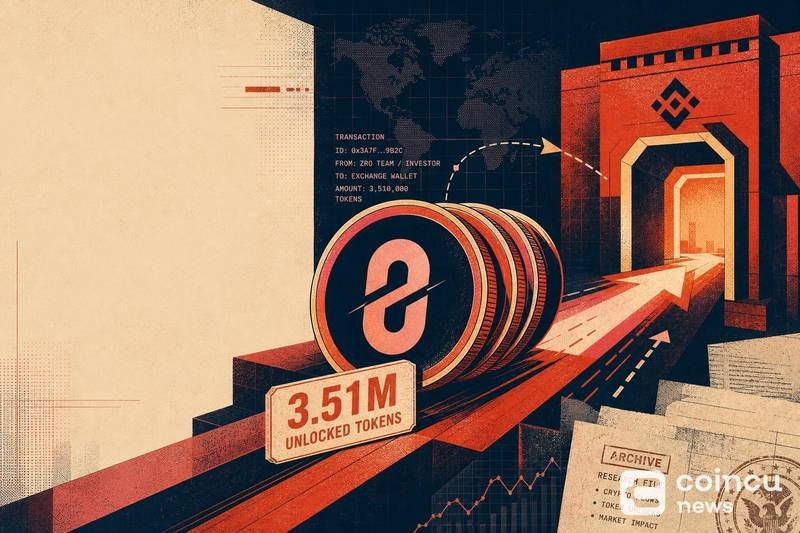
An address linked to the LayerZero (ZRO) team or an early investor has transferred 3.51 million unlocked ZRO tokens to Binance, according to on-chain activity tracked by market observers.
The transfer sent 3.51 million ZRO tokens to a Binance deposit address. The tokens were identified as unlocked, meaning they had already cleared any vesting restrictions before being moved.
The sending wallet’s ownership has not been definitively confirmed. On-chain labels describe it as either team-controlled or belonging to an early investor, but LayerZero Labs has not issued an official statement clarifying the distinction.
A token transfer to a centralized exchange such as Binance is not the same as a market sell order. Tokens deposited to an exchange can remain idle, be used as collateral, or be transferred again without ever reaching the order book.
Traders monitor large exchange inflows because they can increase the liquid supply available for sale. When unlocked tokens from team or investor wallets appear on an exchange, market participants often interpret the move as a potential precursor to selling pressure, even if no sale has been executed.
In this case, no public data confirms whether the 3.51 million tokens were sold after arriving on Binance. The deposit is the only confirmed on-chain event.
Unlocked tokens represent supply that is no longer subject to vesting schedules or lock-up periods. When that supply moves from a holding wallet to an exchange, it can indicate the holder has chosen to make the tokens liquid—an action that can precede selling.
Altcoin markets are often sensitive to these movements. Large unlocks followed by exchange deposits have historically been associated with periods of increased volatility for smaller-cap tokens, as traders may anticipate sell pressure. Broader market conditions can also amplify token-specific supply events, including risk-off episodes in Bitcoin.
However, token movement alone does not confirm intent. Holders may deposit to an exchange for multiple reasons, including rebalancing across wallets, providing liquidity, or preparing for over-the-counter trades that do not directly affect spot markets.
On-chain analysts are likely to monitor several follow-up indicators:
A public statement from LayerZero Labs or confirmed wallet attribution would provide the clearest context. Until then, the transfer remains an on-chain data point with multiple plausible explanations.
No confirmed data shows the tokens were sold. A deposit to an exchange makes tokens available for trading but does not constitute a sale.
The wallet attribution remains uncertain. On-chain labels suggest it belongs to either the ZRO team or an early investor, but neither has been officially confirmed.
Unlocked tokens can be freely sold, unlike vesting-locked supply. When large amounts move to exchanges, traders watch for potential selling pressure that could affect the token’s price. Market participants tracking broader breakout patterns may also factor token unlock schedules into their risk assessment.
Ready Card users outside the European Economic Area have reportedly faced an abrupt service halt after a transition involving the card issuer disrupted the USDC spending product, according to user notices shared on X.
A notice shared…