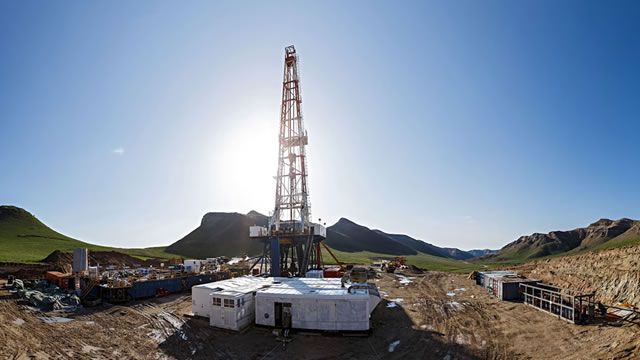
New drilling program and metallurgical tests underway Market study initiated for antimony products from Fortin Zone LONGUEUIL, Québec, Jan. 21, 2026 (GLOBE NEWSWIRE) -- **Azimut Exploration Inc.** (“Azimut” or the “Company”) (**TSXV: AZM**) (**OTCQX: AZMTF**) is pleased to announce the start of a new minimum 5,000 metre diamond drilling program on the **Fortin antimony-gold zone** (the “Fortin Zone”) on its **wholly owned** **Wabamisk Property** (the “Property”) in the Eeyou Istchee James Bay (“James Bay”) region of Québec, Canada. **The Fortin Zone is evolving into one of the largest antimony-bearing mineralized systems in Canada**. **Drilling to date outlined a 1.8-kilometre-long antimony-gold-bearing body traced to a vertical depth of 250 metres, which remains open in all directions**. Since its discovery by prospecting in 2024, the Company has drilled 86 holes (12,286 m) on the Fortin Zone and surrounding targets. A **separate gold target** immediately south of and subparallel to Fortin is also currently being delineated by drilling. In addition, Azimut drilled 26 holes (3,633 m) late last year on the Rosa Zone (gold), where assay results are pending. Rosa is 15 kilometres west of Fortin. **2026 Outlook** A comprehensive exploration program is accelerating the project’s advancement. **Drilling**: The minimum 5,000 m drilling phase with two rigs aims to: * Expand the mineralized body at depth and along strike; and * Further delineate wide high-grade lenses with incremental and infill holes. One of the main objectives is to test the Fortin Zone at depth for potential gold enrichment related to antimony–gold vertical zonation, as documented in several deposits worldwide. A preliminary 3D modelling of the mineralized body is in progress. **Metallurgical tests** and **market studies**: SGS Canada has been mandated to conduct initial metallurgical tests on the mineralized material from Fortin and to assess global market demand for such mineral products. **Assessment of new gold targets:** Significant results since 2024 are driving a comprehensive re-evaluation of the Property’s gold potential, with ground geophysics, prospecting, and drilling planned on high-priority targets. One of the most notable identified targets is the 15-kilometre underexplored strike between the Fortin and Rosa zones ([see Figure 5](https://www.globenewswire.com/Tracker?data=IAEandk_GJqEiMujvllqDmCGFu9di0x4TnhZVV7dTDtrns5IK2D58FmEoAlzCmPg2TK3O78Y13kG_N0wvagEMqvnD0JmjWi4wCBztJw1pDhWRiY3HT5T90GkP_2658GtyyCaLKb3kh3MCSjzCVtwlEy95x_U8RthTYAPQ5jZTxpV1HnB8QgXOmx-zFwVzO06 \"see Figure 5\") ). **Key Results** ([see Figures 1 to 8, Tables 1 and 2](https://www.globenewswire.com/Tracker?data=IAEandk_GJqEiMujvllqDlBGst6MWHHVSUoY4kPlZjTJjJ73zEAVujjdYW8OFidjXW0RzHVsmmS2Pq0p_olGtetXmnHq1f3AAgtUh-9MwnZtO9eEkR9asmEHP6ZZZ_ykFV73C0h3JwUGLvQHLYzss7mmVfFMj7JHLpd1L0JPzonEI8yJJLxQ-nr4qYFiLgsNvtf-Yxi-tw3_OEIus3XiG4JefhqZ4_Tgne6tV3GaGdU= \"see Figures 1 to 8, Tables 1 and 2\") ) This press release presents drilling highlights from the second delineation phase on the Fortin Zone, including the final set of assay results received ([see Table 1](https://www.globenewswire.com/Tracker?data=A_1Mc0oa6myc8YI-7UtFLiQQuRi8v3ahUStTlgZ_bPSh5MY68zHNZZOK38vYESqnRK28HvM4OxQnPxkxpcEroKkyxut_qRY_TDAyUwf8oWtPb4rdqsVZZJgJqOOSEZzSWsc9r6nVIZXDTIwd1nQYQGX67XqXe8xGfExCRf3WzxynntIPr4pi5VlRFuHyG2Ud ). Previous drilling and channel sampling results have been disclosed (PR of October 29, 2024; January 16, 2025; May 22, 2025). The 35 holes (5,890 m) of the second phase were drilled at an average of 100-metre-spacing, both along strike and at depth, down to a maximum vertical depth of 250 metres. Twenty-nine (29) holes (83%) returned antimony mineralization with grades above 0.2% Sb, including 19 holes with gold grades above 0.5 g/t Au. The new assay results include: | | | | | --- | --- | --- | | | Hole WS25-74 | 0.24% Sb over 23.5 m (from 87.0 m to 110.5 m), including | | | | 1.33% Sb over 2.05 m (from 88.0 m to 90.05 m) | | Hole WS25-84 | 0.19% Sb over 13.15 m (from 86.5 m to 99.65 m), including | | | | 0.52% Sb over 3.15 m (from 96.5 m to 99.65 m) | | Hole WS25-71 | 1.58% Sb over 0.45 m (from 95.45 m to 95.90 m) | | | | | | The best results previously reported from this phase include (PR of October 23, 2025): | | | | | --- | --- | --- | | Hole WS25-67 | 0.89% Sb, 0.65 g/t Au over 41.9 m (from 171.6 m to 213.5 m), including | | | 1.05% Sb, 1.88 g/t Au over 13.5 m | (from 174.0 m to 187.5 m), with | | | 1.84% Sb, 10.9 g/t Au over 1.7 m | (from 177.0 m to 178.7 m), and | | | 1.27% Sb over 16.5 m | (from 197.0 m to 213.5 m), with | | | 2.69% Sb over 5.0 m | (from 202.0 m to 207.0 m) | | Hole WS25-85 | 0.74% Sb over 41.0 m (from 129.0 m to 170.0 m), including | | | 0.98% Sb, 0.15 g/t Au over 17.0 m | (from 148.0 m to 165.0 m), with | | | 1.93% Sb over 2.0 m | (from 135.0 m to 137.0 m), and | | | 1.82% Sb, 0.13 g/t Au over 2.0 m | (from 148.0 to 150.0 m), and | | | 1.16%Sb, 0.12 g/t Au over 3.0 m | (from 154.0 m to 157.0 m), and | | | 1.62% Sb, 0.18 g/t Au over 3.0 m | (from 162.0 m to 165 m) | | Hole WS25-86 | 0.56% Sb over 27.0 m (from 252.0 m to 279.0 m), including | | | 1.40% Sb, 0.16 g/t Au over 7.0 m | (from 253.0 to 260.0 m), with | | | 3.32% Sb, 0.10 g/t Au over 2.0 m | (from 258.0 m to 260.0 m) | | Hole WS25-72 | 1.07% Sb over 13.6 m (from 120.5 m to 134.1 m), including | | | 3.12% Sb, 0.14 g/t Au over 2.0 m | (from 126.0 m to 128.0 m) | | Hole WS25-55 | 0.28% Sb, 0.12 g/t Au over 78.0 m (from 16.0 m to 94.0 m) | | | 0.26% Sb, 0.12 g/t Au over 12.0 m | (from 120.0 m to 132.0 m) | | Hole WS25-65 | 0.57% Sb over 17.85 m (from 63.8 m to 81.65 m), including | | | 1.13% Sb, 0.12 g/t Au over 2.15 m | (from 79.5 m to 81.65 m) | | Hole WS25-75 | 0.34% Sb over 18.05 m (from 177.1 m to 195.15 m), including | | | 0.98% Sb over 3.35 m | (from 186.15 m to 189.5 m) | | | | | The gold target 110 metres south of Fortin has been delineated along a minimum 400 m strike, dipping steeply to the south. Gold grades are related to disseminated to semi-massive arsenopyrite hosted in sheared metasediments. The target appears to correlate well with induced polarization and arsenic soil anomalies. The best results include: | | | | | --- | --- | --- | | Hole WS25-54 | 6.24 g/t Au over 2.50 m (from 72.3 m to 74.8 m), including | | | 13.4 g/t Au over 1.0 m (from 72.3 to 73.3 m) | | Hole WS25-67 | 2.10 g/t Au over 3.45 m (from 66.8 m to 70.25 m), including | | | 12.3 g/t Au over 0.40 m | (from 69.85 m to 70.25 m) | | Hole WS25-85 | 0.79 g/t Au over 9.0 m (from 34.0 m to 43.0 m), including | | | 3.63 g/t Au over 1.0 m | (from 42.0 m to 43.0 m) | | Hole W25-53 | 0.76 g/t Au over 4.00 m (from 5.0 m to 9.0 m), including | | | 1.79 g/t Au over 1.50 m | (from 7.5 m to 9.0 m) | | Hole W10-05 | 0.60 g/t Au over 17.8 m (from 197.7 m to 215.5 m; historic hole) | | | | | **Preliminary geometry of the Fortin Zone** **Strike-length**: At least 1.8 kilometres, based on 58 mineralized holes, within a broader 2.4-kilometre-long prospective corridor, based on 2 holes drilled on the eastern and western extensions (WS25-22 and WS25-34, respectively). **Thickness:** Intervals grading above 0.1% Sb range from 5 to 50 metres wide along the hole, averaging roughly 25 metres. **Dip**: To the south at approximately 70 to 75 degrees. Due to topographic constraints, hole WS25-55 was drilled toward the south, resulting in a long down-dip interval. **Vertical extent**: Tested from surface down to 250 metres; open at depth. **Mineralized system and geological context** The antimony-gold mineralized system is associated with a massive albitic stratiform hydrothermal alteration zone (the “albitic unit”) within a thick detrital metasedimentary sequence. Evidence of very strong albitic alteration, with progressive replacement of host rocks, has been documented. This alteration is possibly controlled by the original rock’s porosity and fracturing. The massive albitic unit has been intersected by 77 holes over a lateral distance of 2.65 kilometres. Its thickness varies from several metres to over 90 metres. The multi-kilometre lateral continuity of the albitic unit may suggest a kilometre-scale vertical extent. The mineralized system is currently recognized almost continuously over a distance of 1.8 kilometres and remains open along strike and at depth. Antimony sulphides (berthierite: FeSb2S4, gudmundite: FeSbS, and stibnite: Sb2S3) are associated with intense quartz veining and brecciated facies within the albitic unit, and are commonly associated with other sulphides (arsenopyrite, pyrrhotite, pyrite). Sericite is the main alteration mineral, locally accompanied by chlorite, epidote and carbonate. Massive to semi-massive mineralization occurs along the southern sheared and locally folded contact between the albitic sill and less-altered metasedimentary host rocks. The northern contact is also mineralized, but drilling to date suggests it is less continuous than the southern contact. The quartz vein network is mostly subparallel to the east-west schistosity. The rheologic contrast between the brittle albitic unit and the more ductile metasedimentary rocks appears to be one of the key controls on mineralization at the scale of the Fortin Zone. Antimony-rich systems are unusual in Archean settings in Québec. The mineralized albitic unit on the Wabamisk Property lies along the major tectono-metamorphic boundary separating the volcano-plutonic La Grande Subprovince and the metasedimentary Opinaca Subprovince. This geological environment has already been recognized as prospective for gold, exemplified by the Eleonore gold deposit. At Wabamisk, the antimony-rich zone may transition to a deeper gold-rich zone. Mineralogical and metallurgical characterization of the mineralized material, including comminution and flotation testwork, is progressing well. **About Antimony** The price of antimony has been very volatile over the last 2 years, due to ongoing supply shortages exacerbated by trade disputes. Antimony is listed as a critical mineral by the Canadian and American governments and the European Commission. Three countries account for about 90% of the world’s production, estimated to be 100,000 tonnes in 2024: China 60%, Tajikistan 17% and Russia 13%. Antimony is not currently mined at scale in Canada or the United States. In August 2024, China imposed restrictions on antimony exports, leading to significant supply disruptions. While some restrictions have since been lifted, antimony remains subject to broader export controls, highlighting the importance of diversifying critical mineral supply chains outside of China. Source: USGS, Antimony Commodity Summary, January 2025. **About the Wabamisk Property** Wabamisk is a wholly owned project comprising 673 claims covering 356 km2. The adjacent Wabamisk East Property (205 claims, 108.5 km2) is mainly explored for its lithium potential. Together, the Wabamisk and Wabamisk East projects provide a 51-kilometre strike position in one of the most prospective belts in the James Bay region. Wabamisk lies 13 kilometres east of the Clearwater Property (Fury Gold Mines Ltd), 42 kilometres northeast of the Whabouchi lithium deposit (Rio Tinto – Nemaska Lithium), and 70 kilometres south of the Eleonore gold mine (Dhilmar Ltd). Major powerlines pass through or close to the Property’s eastern end, and the North Road highway passes 37 kilometres to the south. The nearest town is Nemaska, a Cree village municipality 55 kilometres to the southwest. **Drilling, Analytical Protocols and Project Management** Nouchimi-RJLL Drilling Inc. of Rouyn-Noranda, Québec, is conducting the drilling program with two rigs using NQ core diameter. Sawed half-core drill core samples are sent to ALS Laboratories in Val-d’Or and Montréal, Québec, where gold is analyzed by fire assay, with atomic absorption and gravimetric finishes for grades above 3.0 g/t Au. Samples are also analyzed for a 48-element suite using ICP. Antimony is also analyzed using four-acid digestion and ICP-AES (Sb-ICP08). Azimut applies industry-standard QA/QC procedures to its drilling and prospecting programs. All batches sent for analysis included certified reference materials, blanks and field duplicates. The project is under the direction of Alain Cayer (P.Geo.), Azimut’s Project Manager. **Qualified Person** Dr. Jean-Marc Lulin (P.Geo.), Azimut’s President and CEO, prepared this press release and approved the scientific and technical information disclosed herein, including the previously reported results presented in the figures and tables supporting this press release. He is acting as the Company’s qualified person within the meaning of _National Instrument 43-101 – Standards of Disclosure for Mineral Projects_. **About SGS** SGS is the world\'s leading testing, inspection and certification company. SGS is recognized as the global benchmark for quality and integrity. With more than 99,500 employees, SGS operates a network of over 2,500 labs and business facilities combining the precision and accuracy that define Swiss companies to help organizations achieve the highest standards of quality, compliance and sustainability. **About Azimut** Azimut is a leading mineral exploration company with a solid reputation for target generation and partnership development. The Company holds the largest mineral exploration portfolio in Quebec, controlling strategic land positions for gold, copper, nickel and lithium. Azimut is concurrently advancing several high-potential projects: * Wabamisk (100% Azimut) – Fortin Zone (antimony-gold); Rosa Zone (gold): initial phase of drilling completed, assays pending. * Wabamisk East (100% Azimut) – Lithos North & South (lithium): initial phase of drilling completed, assays pending. * Elmer (100% Azimut) – Patwon gold deposit at the resource stage (311,200 oz Indicated and 513,900 oz Inferred); internal scoping study in progress; field assessment of the recently acquired K2 claim block. * Kukamas (KGHM option) – Perseus Zone (nickel-copper-PGE): drilling phase completed; assays pending. Azimut uses a pioneering approach to big data analytics (the proprietary AZtechMine™ expert system), enhanced by extensive exploration know-how. The Company’s competitive edge is based on systematic regional-scale data analysis. Azimut maintains rigorous financial discipline and a strong balance sheet. Azimut has two strategic investors among its shareholders, Agnico Eagle Mines Limited and Centerra Gold Inc., which hold approximately 11% and 9.9%, respectively, of the Company’s issued and outstanding shares. Contact and Information Jean-Marc Lulin, President and CEO Tel.: (450) 646-3015 – Fax: (450) 646-3045 Jonathan Rosset, Vice President Corporate Development Tel.: (604) 202-7531 info@azimut-exploration.com www.azimut-exploration.com Cautionary note regarding forward-looking statements This press release contains forward-looking statements… (text omitted for brevity in this data field)






](https://cms-beta.indexcdn.com/cold_weather_causes_these_stocks_to_rally_reported_merger_20260120_39c5999bdc.jpg)