•
•
•
•
•
•
•
•
•
•
•
•
•
•
•
•
•
•
•
•
•
•
•
•
•
•
•
•
•
•
•
•
•
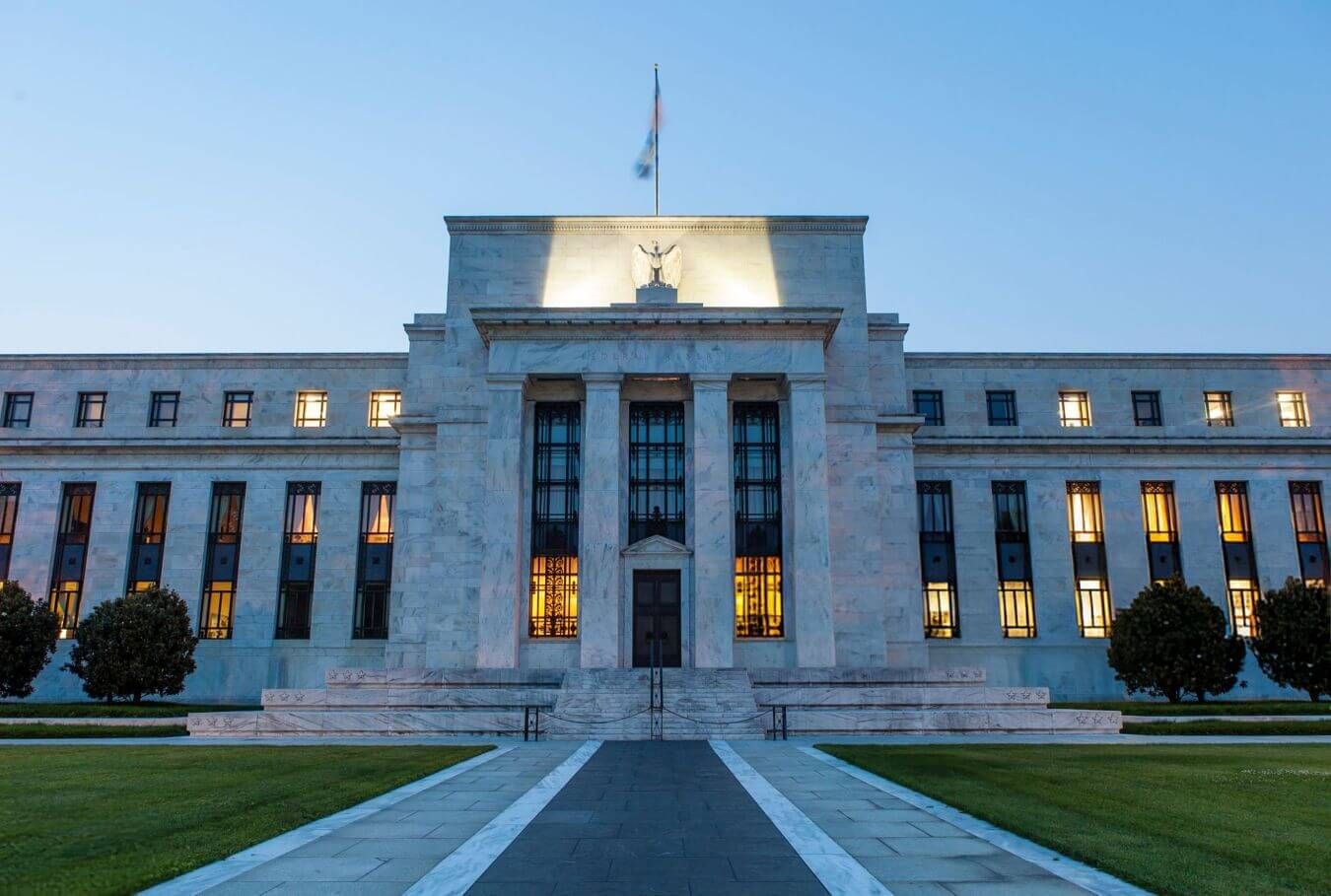
Digital asset markets fell broadly on Thursday after the Federal Reserve signaled a more restrictive policy stance, even as President Trump’s interim Iran peace framework lifted equity futures.
Bitcoin traded near $63,900, down 3% over 24 hours. Ether fell 3.4% to $1,733. XRP declined 3.9% to $1.17, while Solana dropped 3.6% to $71.
Among major cryptocurrencies, Hyperliquid’s HYPE posted the steepest losses, falling 7.2% to $69. Despite the decline, the token was still up about 28% over the past week, remaining the period’s top performer. Tron was the only major digital currency showing gains, rising 0.9%.
The Federal Reserve maintained its benchmark interest rate in the 3.5% to 3.75% range, in line with market consensus. However, revised economic projections pointed to higher inflation expectations and a reduced path for future rate reductions.
Several Federal Reserve officials also indicated that potential rate increases remain possible. A more restrictive stance typically tightens financial conditions, which can shift capital away from speculative assets such as cryptocurrencies.
At the same time, an interim peace framework between President Trump and Iran took effect Thursday. The arrangement is expected to restore commercial shipping through the Strait of Hormuz and remove sanctions targeting Iranian petroleum exports.
Equity futures rose: Nasdaq 100 futures gained about 1.4%, S&P 500 futures advanced 0.8%, and Dow futures increased 0.6%. Brent crude oil fell toward $78 per barrel.
Cryptocurrencies did not track the equity strength, suggesting digital assets were responding primarily to monetary policy rather than the geopolitical developments.
Thursday was the final trading session before markets close Friday for the Juneteenth federal holiday. Broader discussions, including matters related to Iran’s nuclear capabilities, are scheduled to continue over the subsequent 60-day period.
Gerry O’Shea, head of global market insights at Hashdex, said Bitcoin is likely to consolidate between $60,000 and $70,000 in the coming weeks unless a major new driver emerges.
He cited two potential catalysts: presidential approval of the CLARITY Act, legislation aimed at crypto market infrastructure, or additional progress in US-Iran diplomatic relations.
O’Shea also noted that investor attention has shifted toward initial public offerings and artificial intelligence equities, pulling sentiment away from digital assets. He expects capital to return as institutional participation expands and regulatory frameworks become clearer.
Bitcoin’s support near the lower $64,000 level suggests selling pressure may be easing, but buyers remain cautious given the Federal Reserve’s restrictive policy posture.
Ready Card users outside the European Economic Area have reportedly faced an abrupt service halt after a transition involving the card issuer disrupted the USDC spending product, according to user notices shared on X.
A notice shared…