•
•
•
•
•
•
•
•
•
•
•
•
•
•
•
•
•
•
•
•
•
•
•
•
•
•
•
•
•
•
•
•
•
Global financial markets on June 18 are focused on policy decisions from major central banks. In Asia, Indonesia, the Philippines and Japan are continuing to tighten monetary policy to defend their currencies and curb inflation, while the Bank of England (BoE) is expected to keep rates steady as it assesses the potential impact of a US-Iran ceasefire.
According to a Bloomberg survey, the Bank of Indonesia (BI) and the Bangko Sentral ng Pilipinas (BSP) are forecast to raise rates by 25 basis points on the afternoon of June 18.
In Indonesia, analysts expect BI to lift the policy rate to 5.75%, following an unscheduled 25 basis point hike last week. BI faces significant pressure as it must defend the rupiah, which has fallen nearly 6% since the start of the year, and restore investor confidence. Additional concerns include fiscal discipline under President Prabowo Subianto, including the USD 15 billion free meals program, as well as inflation risks from rising fuel prices.
In the Philippines, BSP is likely to raise its reverse repurchase (RRP) rate to 4.75%. The Philippines is a near-total oil importer from the Middle East, leaving it exposed to spillovers from the conflict. May 2026 inflation rose to 6.8%, and is expected to remain above the 2–4% target in 2026 and 2027. The rate hike comes as the economy grew only 2.8% in Q1 2026, and the peso recently hit a record low of around 61.750 per USD earlier this month.
OCBC economist Lavanya Venkateswaran said that while external geopolitical risks have eased, “the domestic risk factors have not changed,” keeping BI and BSP in a hawkish stance.
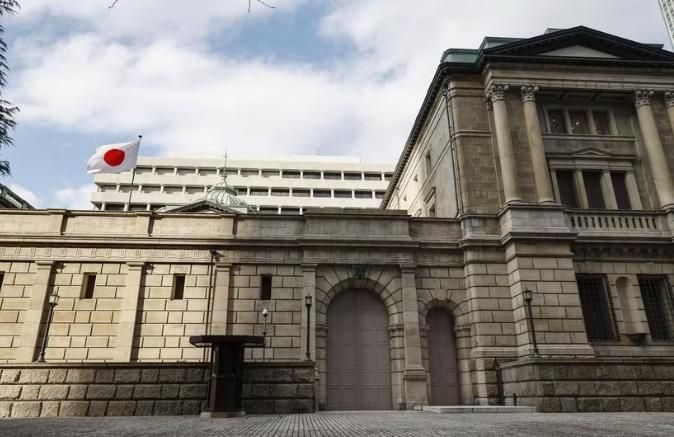
After a historic 1% rate increase earlier this week—the highest since 1995—the Bank of Japan (BoJ) is expected not to stop. Bloomberg’s latest survey of 44 economists found 90% believe the BoJ will deliver another rate hike between now and year-end, with the most plausible timing in October or December.
Markets currently expect Japan’s rate to peak at around 1.75% in this cycle, higher than the 1.5% forecast earlier this month. The yen is trading around 160 per USD, a level that keeps Tokyo authorities ready to intervene in the foreign-exchange market.
The BoJ’s pressure is linked to policy shifts in major economies. With the US Federal Reserve signaling a rate-hike bias this year and the European Central Bank (ECB) acting last week, the BoJ is expected to accelerate to avoid falling behind. The article also notes that the US-Iran ceasefire has helped reopen the Hormuz Strait and ease oil prices, but central banks in Asia are still expected to remain cautious.
In contrast to Asia, the BoE is expected to hold rates at 3.75% at a meeting scheduled for 11:00 GMT (around 18:00 Vietnam time) on June 18.
BoE Governor Andrew Bailey said the bank has time to monitor and is in a different position from the ECB. This assessment is supported by May 2026 UK inflation data, which unexpectedly fell to 2.8%, the lowest in 13 months, helped by cooler food prices offsetting higher fuel costs. At the same time, the UK economy contracted slightly by 0.1% in April 2026.
However, internal divisions remain. It is expected that 2 of 9 members, including Chief Economist Huw Pill and Megan Greene, will vote to raise rates by 0.25 percentage points.
Analysts say BoE’s patience depends heavily on whether the Hormuz Strait truly reopens under the US-Iran agreement. If supply-chain disruptions persist and trigger a second round of inflation, the BoE is described as ready to act decisively.
BoE decisions are also noted as having political implications in Britain, as Prime Minister Keir Starmer’s popularity wanes amid the cost-of-living crisis.
Ready Card users outside the European Economic Area have reportedly faced an abrupt service halt after a transition involving the card issuer disrupted the USDC spending product, according to user notices shared on X.
A notice shared…