•
•
•
•
•
•
•
•
•
•
•
•
•
•
•
•
•
•
•
•
•
•
•
•
•
•
•
•
•
•
•
•
•
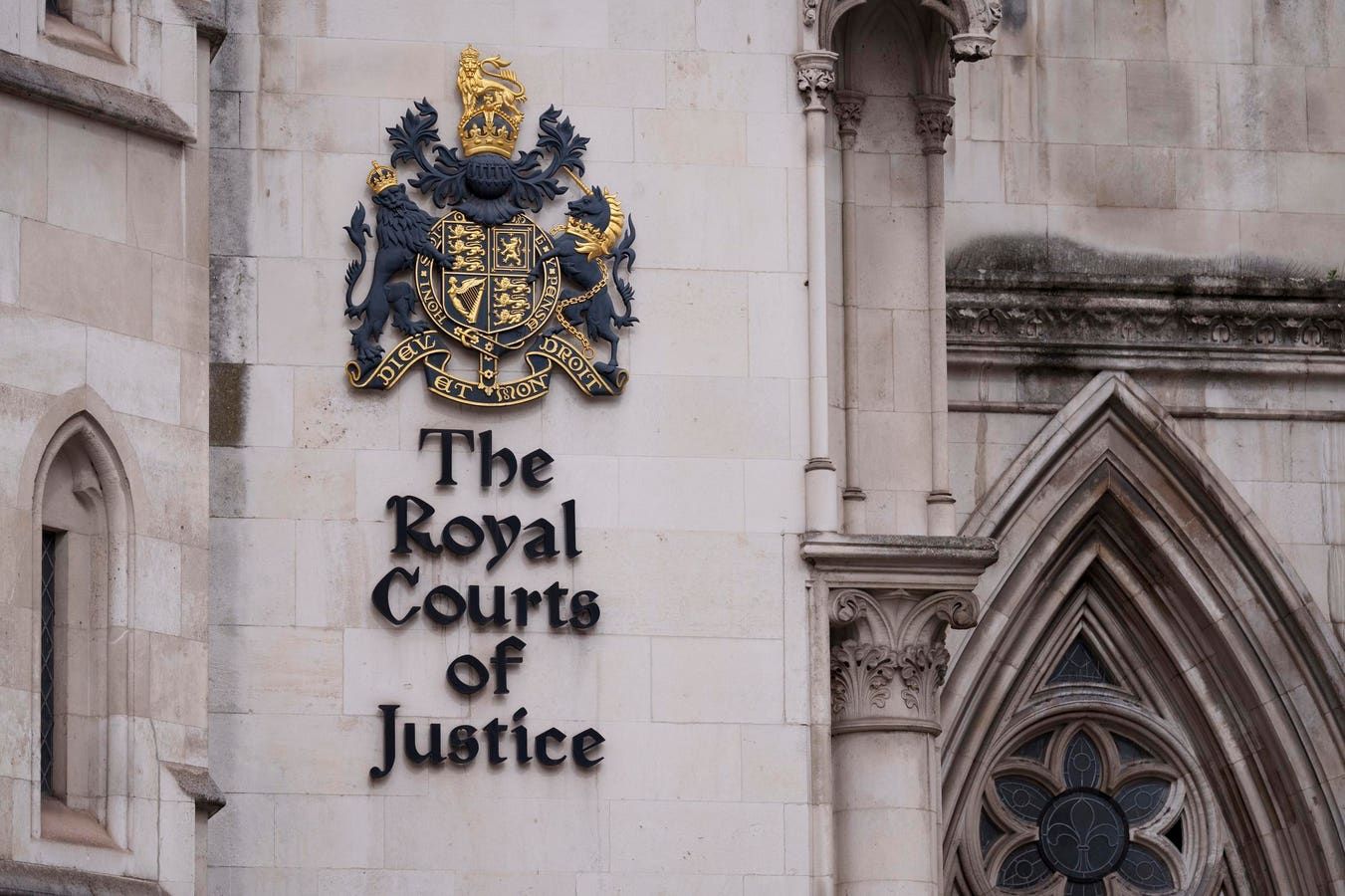
A London County Court was asked whether it could order a debt to be paid in bitcoin, highlighting a central question in English digital asset law: whether courts can award bitcoin directly, or whether any bitcoin-denominated entitlement must be converted into sterling.
In Hussain v Fix, a businessman sought BTC 7.806501396 as reimbursement for expenses, arguing that there was an agreement for payment in bitcoin. The defendant did not attend the hearing on 18 June 2026 and did not serve a defence, leaving the court to consider the claim without a substantive contest.
The claimant applied for summary judgment under CPR 24. With Fix absent and no defence filed, the court had to decide whether the defendant had any real prospect of successfully defending the claim and whether there was any other compelling reason for the matter to proceed to trial.
According to notes from the hearing, the court appeared to accept that there was no meaningful defence before it. The claimant’s case was that Fix had failed to engage with the proceedings and had not put forward evidence capable of defeating the claim.
The more difficult question was whether the court could grant relief in bitcoin rather than sterling.
The Law Commission has argued that the common law is flexible enough to recognise a category of personal property that can accommodate crypto-tokens and other digital assets, and it recommended legislation to reduce uncertainty. The judge indicated he was open to novel developments in law, but said this was not the right forum and expressed doubt—despite the Law Commission’s position—about whether the court had the power to make an order awarding bitcoin directly.
The judge suggested that any award would need to be converted into sterling at the time of the hearing.
The court was not asked whether bitcoin is money. Instead, it focused on the practical question of what the claimant’s contractual entitlement actually was.
Among the issues were whether Hussain was entitled to bitcoin, whether the obligation was denominated in bitcoin, or whether the claim was for reimbursement of fiat expenses with bitcoin used only as the payment mechanism.
Those distinctions matter financially because bitcoin’s price can change between the date an expense is incurred, the date payment is requested, the date proceedings are issued, and the date judgment is entered. The court also considered whether awarding the value of bitcoin at the time of judgment would compensate the claimant or create a windfall, given bitcoin’s price movements.
English law has long struggled to fit bitcoin and other crypto tokens into traditional categories of personal property. Historically, personal property was divided into things in possession (such as physical assets) and things in action (such as debts or contractual rights).
Bitcoin does not fit neatly into either category: it cannot be held in the hand, but it is also not a claim against another person in the usual way. The Law Commission concluded that the common law is flexible enough to recognise a distinct category of personal property for crypto tokens and other digital assets.
That work fed into the Property (Digital Assets etc) Act 2025, which confirmed that a thing is not prevented from being property simply because it is neither a thing in possession nor a thing in action. The reform confirmed that bitcoin is capable of attracting property rights under English law.
However, Hussain v Fix raised the harder question of whether a court can award bitcoin when bitcoin is the asset a party says it was owed.
The article notes that older authority provides part of the route. In Miliangos v George Frank (Textiles) Ltd [1976] AC 443, the House of Lords recognised that English courts could give judgment in the foreign currency of the underlying obligation rather than forcing claims back into sterling. The article states that bitcoin is not a foreign currency, so Miliangos does not directly answer the bitcoin question, but it illustrates that English law has adapted when a sterling-only approach failed to reflect commercial reality.
The claim is that Hussain paid business expenses in pounds and dollars, while Fix agreed to reimburse Hussain’s half share in bitcoin at the spot rate applicable when the expenses were paid. The claimant says Fix later confirmed through Signal messages that he would pay in bitcoin, including an alleged reply of “YES” and that it had “never been in doubt.”
The article states that partial bitcoin payments were made, but that a balance of BTC 7.806501396 remains outstanding.
It also describes the dispute as cross-border in nature, involving a British claimant based in Dubai, a German defendant based in France, companies incorporated in Dubai, and business plans connected to England, Africa and the Gulf, with an alleged repayment obligation intended to be settled in bitcoin.
The article contrasts Hussain v Fix with many well-known crypto disputes that involve fraud, theft, freezing orders, or recovery of misappropriated assets. Here, it is framed as arising from ordinary business arrangements—expenses, reimbursement, and an alleged agreement to pay in bitcoin.
It argues that as bitcoin becomes more embedded in private contracts, disputes may increasingly concern repayment, valuation, and the legal consequences of failing to keep an agreement, rather than dramatic stories about hacks or scams.
While English law now recognises bitcoin as property, Hussain v Fix suggests courts may remain cautious about awarding bitcoin directly where the claim can instead be expressed in pounds. The article concludes that the question is likely to return, and that a future case may provide another opportunity for courts to decide whether a bitcoin obligation should remain in bitcoin through to judgment.
Bitcoin (BTC) investors who use steady dollar-cost averaging (DCA) may be underperforming versus strategies that adjust exposure to the market’s cycle, according to new research arguing that Bitcoin’s behavior differs from traditional long-duration assets.
In a report cited by Markus Thielen of 10x Research, Bitcoin’s market…