The gold market has just undergone a week of volatility, with prices falling in the early part of the week but unexpectedly rising strongly at the end, regaining nearly all of the earlier losses.
Several factors contributed to the late-week rebound. US consumer sentiment data came in below expectations, the ADP private payrolls data weakened, and more dovish remarks from Fed Chair Kevin Warsh tempered expectations for further tightening. The dollar weakened accordingly, and US Treasury yields cooled, helping gold attract buying interest.
On the global market, spot gold began the week around $4,067 per ounce and then weakened under the pressure of a strong US dollar and expectations that the Federal Reserve would maintain a tight monetary policy.
By midweek, selling pressure pushed prices to around $3,950 per ounce, sparking concerns that prices could fall back to around $3,800 per ounce as some forecasts suggested.
However, the move reversed quickly. The final-session surged as prices rose to as high as around $4,185 per ounce before closing the week near $4,176 per ounce, up more than $52 in a single session and roughly 2.5% higher than the previous week.
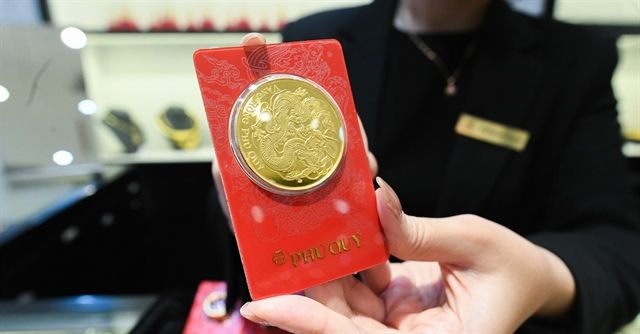
Locally, SJC gold retreated to around 146 million dong per tael (buy price) at the start of the week, then recovered quickly in the last two sessions. By week’s end, SJC gold stood around 148.4 million dong per tael for buy and 151.4 million dong per tael for sell, up more than 5 million dong per tael from the midweek low.
The late-week rally has helped improve investor sentiment, though domestic trading remained subdued. If the USD continues to weaken and the Fed adopts a more dovish tone, gold could extend its rally. Conversely, a hawkish stance from the Fed could bring back downside pressure.
Analysts point to ongoing central bank demand as a supporting factor. The World Gold Council notes net central bank purchases of 41 tonnes in May, and about 30% of central banks worldwide plan to continue increasing gold reserves. Some international organizations still forecast prices moving toward the $5,000-6,000 per ounce range in 2027.
Near-term technical levels remain in play, with the $4,000 per ounce level considered a crucial support. If broken, selling pressure could push prices lower. The market’s near-term trajectory will depend heavily on US economic data and the Fed’s rate path; a weaker dollar and a more dovish Fed could sustain gains, while a hawkish stance could reverse the rally.