Get the latest crypto news, updates, and reports by subscribing to our free newsletter.
Giấy phép số 4978/GP-TTĐT do Sở Thông tin và Truyền thông Hà Nội cấp ngày 14 tháng 10 năm 2019 / Giấy phép SĐ, BS GP ICP số 2107/GP-TTĐT do Sở TTTT Hà Nội cấp ngày 13/7/2022.
© 2026 Index.vn
REAL Shows Network (RSN) is a national TV network for top real estate professionals and influential local leaders, giving select hosts in each market the exclusive opportunity to lead a full 30-minute show showcasing their expertise, partners, and community. Created by an Emmy-nominated, Telly Award-winning production team, RSN delivers cinematic,…
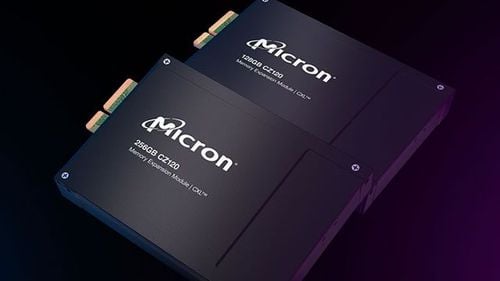
After a strong run over the past year, Micron Technology’s MU shares have been pulled back sharply. The stock fell by as much as a third in the weeks following the company’s report of one of the most extraordinary earnings results in recent memory. Since then, it has recovered some of those losses and now trades about 19% below its recent high.
At first glance, the decline could suggest the market had priced Micron for perfection. However, the current valuation implies the opposite. Micron now trades at a forward price-to-earnings (P/E) ratio of 3.3 times fiscal 2027 analyst earnings estimates, with the company’s fiscal 2027 ending in August 2027.
That valuation looks particularly low given the company’s recent performance: Micron reported quarterly revenue that more than tripled, and its gross margin expanded from 36.8% a year ago to 74.4%.
Micron operates in a memory market that has historically been highly cyclical, characterized by pronounced boom-and-bust periods. The company produces both DRAM and NAND flash, but DRAM is the core of its business, accounting for about 80% of revenue.
Micron is part of an oligopoly in DRAM alongside Samsung and SK Hynix. While Micron has historically been more of a follower, the DRAM market has surged with the growth of artificial intelligence (AI). AI chips such as GPUs require specialized memory—high-bandwidth memory (HBM)—to improve performance.
HBM has strong unit economics and high demand, prompting major memory manufacturers to allocate more manufacturing capacity to it. At the same time, HBM requires more than three times the wafer capacity of ordinary DRAM, contributing to an overall DRAM market shortage. The resulting price increases have supported higher revenue and gross margin for Micron.
The key question is whether this cycle will end—and if so, when. HBM demand is expected to track AI chip demand, though the timing could be influenced by technology developments such as Alphabet’s TurboQuant compression algorithm. In addition, Micron and its competitors are working with HBM customers to secure long-term agreements that include minimum volume commitments and quarterly pricing adjustments, which could reduce some of the cyclicality.
Micron has already demonstrated it can move from follower to leader in the memory space. It is in mass production with its HBM4 for Nvidia’s new Vera Rubin platform.
Going forward, the company needs to show that its current results are not only the product of a cyclical HBM boom, but also supported by more durable, structural growth drivers. One potential path is expanding the use of stable, long-term contracts for HBM.
For Micron shares to triple from current levels, the stock likely would not need another immediate surge driven solely by strong earnings. Instead, it would need to demonstrate that it is a long-term AI infrastructure winner capable of earning a valuation more consistent with that role.

In brief\n\nBitcoin dropped to about $93,000, falling back below the EMA50 and putting its recent golden cross at risk of invalidation. The global crypto market cap stands at $3.15 trillion, down 2.38% in 24 hours. On Myriad Markets, 82% of the money is betting on Bitcoin pumping to $100K before…