•
•
•
•
•
•
•
•
•
•
•
•
•
•
•
•
•
•
•
•
•
•
•
•
•
•
•
•
•
•
•
•
•
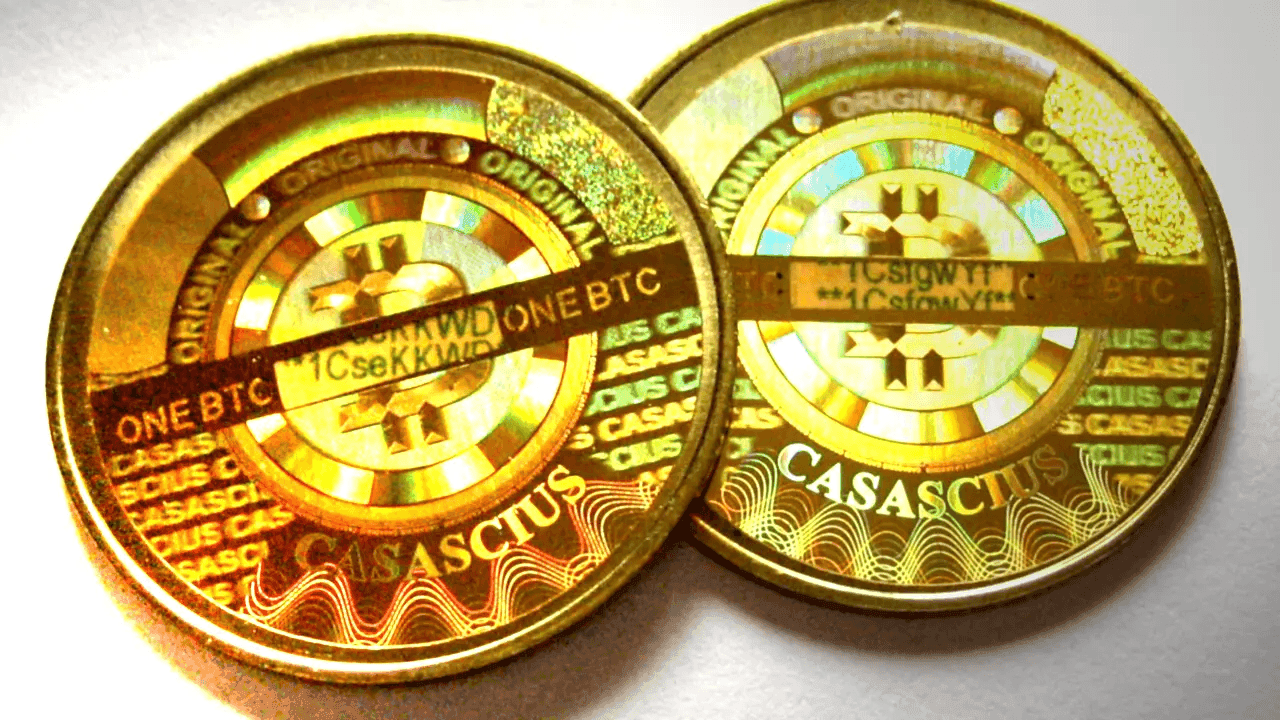
Onchain records show yet another Casascius physical bitcoin has been redeemed, this time from an address originally created on Nov. 1, 2011. The spend traces back to another dormant wallet tied to the New York Supreme Court case Noah Doe v. John Does 1–39,069, adding to a saga that has seen long-silent bitcoin linked to the litigation move again.
Just days after Galaxy Research identified 1,878.57 BTC moving from a Noah Doe-dusted address on June 7, another cache of 2011-era coins connected to the same legal saga sprang to life. At block height 953022, a fresh batch of bitcoin connected to the Noah Doe case changed hands, extending a string of movements that has blockchain sleuths monitoring the decades-old stash.
Once again, the coins originated from a Casascius physical bitcoin minted by early bitcoin pioneer Mike Caldwell. The underlying address was first funded on Nov. 1, 2011. In this instance, the redeemed piece was a 25 BTC Casascius coin tied to the legacy wallet 1Q2x5973gcdz7YMv84b4zVycWcbGdUkbeM, another long-dormant address now joining a growing procession of Noah Doe-linked bitcoin awakening from a 14-year slumber.
At the time of the original funding on Nov. 1, 2011, bitcoin was trading at about $3.32 per coin. On that basis, the 25 BTC loaded onto the physical Casascius piece would have been worth roughly $83 at the time.
The wallet is identified as address No. 38,953 in the New York Supreme Court case Noah Doe v. John Does 1–39,069.
In the case, a pseudonymous petitioner is seeking to use New York’s lost-and-found property framework to establish a claim over 39,069 long-dormant bitcoin addresses. Collectively, the addresses are described as holding an estimated 3.8 million BTC, including wallets commonly attributed to Bitcoin creator Satoshi Nakamoto.
The argument rests on the claim that the addresses have effectively been abandoned after years of inactivity and a lack of response to public notices.
The proceeding was recently paused after a New York Supreme Court judge issued a stay to review an opposing amicus brief. The brief argues that New York’s lost-property statutes were designed for tangible items and do not extend to digital assets or blockchain addresses.
While the stay has temporarily halted proceedings, it does not bring the matter to a close. The recent wave of onchain activity suggests the opposite: blockchain movements linked to the litigation have continued despite the courtroom delay.
The activity underscores a key point for interpreting dormant-wallet movements on public blockchains: finding a wallet that has sat unused for years on a blockchain explorer does not automatically mean abandoned property. Even if a petitioner identifies addresses that appear inactive, control remains with the owners who hold the private keys.