The
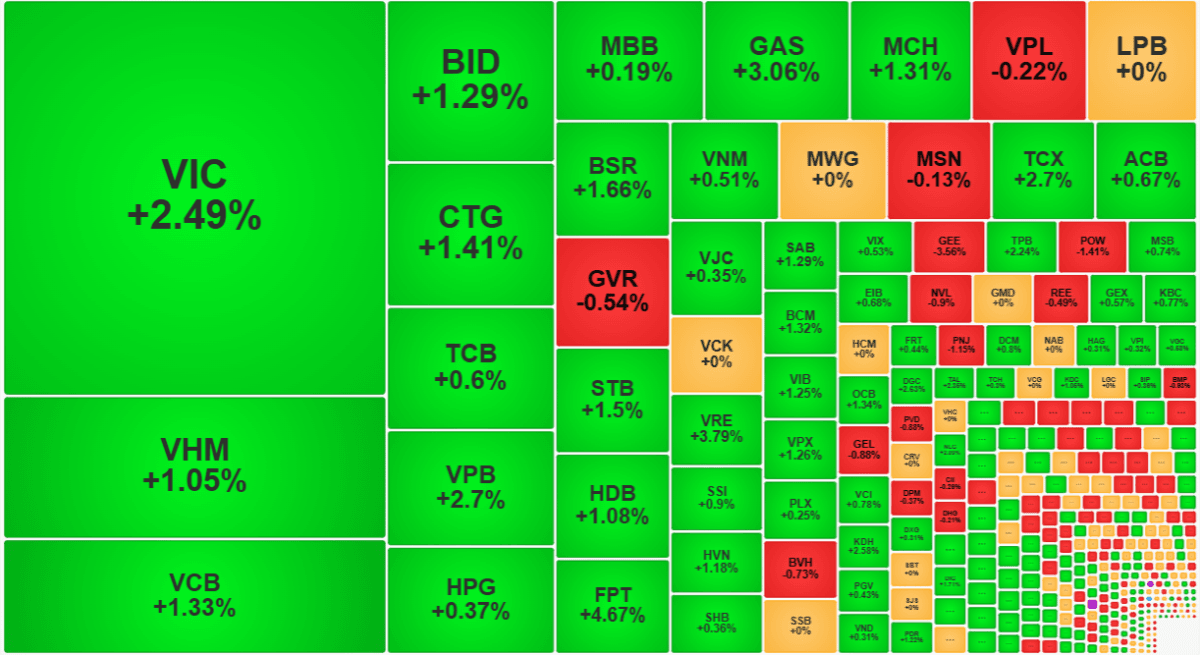
stock market has recovered about 300 points from its March trough and has largely reflected positive information such as upgrades, easing tensions in the Middle East, and solid business results. While May is a period with less information to support the market, volatility could be higher. Data on business results and macro indicators in the first months of 2026 show positive signals for the retail sector, from a rebound in consumer spending to retail revenue. At the same time, the sector’s overall results, especially for listed companies, are relatively favorable. Nevertheless, April also brought a notable variable: inflation rose, both headline and core. This could affect consumer confidence if it remains high for an extended period. In general, the retail sector is being influenced by two opposing forces: one supporting growth and one potentially creating pressure in the near term. Looking at the outlook for retail stocks, Mr. Dao Minh Chau, Deputy Director of the SSI Center for Analysis and Investment Advisory, SSI Research, emphasized: Retail and consumption are the backbone of the economy, typically accounting for more than 60% of GDP. With the government targeting double-digit growth for 2026–2030 and aiming for per-capita GDP around USD 8,500 by 2030 with an average growth rate of about 11%, consumption will continue to be supported alongside policies promoting public investment and the recovery of the real estate market. Recently, the market has also seen supporting policies such as extending VAT reductions until year-end and adjustments to personal income tax schedules. The retail sector also benefits from the wealth effect, especially in urban areas where property prices have risen sharply in the past two years. In Hanoi, the apartment segment rose about 80–100% over two years, while in Ho Chi Minh City it rose about 50–70%, creating a greater sense of wealth for property owners and spurring spending. In 2025, nationwide consumption of goods and services grew 9.2%, while Ho Chi Minh City rose 15.5% and Hanoi 12.7%, all above the national average. Another important driver is the market-share rush. Listed companies, mainly operating in modern retail channels, are expanding their market share from traditional channels through tightened input invoices, tax management for small traders, e-commerce, and stronger controls on counterfeit goods. Reports such as New Panel indicate that the market share of modern supermarket channels has risen about 2–3% in the past two years. Q1 results for many retail companies such as Mobile World, FRT, PNJ and Digiworld all grew strongly. Revenue rose about 30–50%, while profits rose more than 70%, higher than expectations and well above the roughly 20–25% profit growth seen in the past three years. Much of this surge comes from expanding market share. Each company has its own story. The electronics sector benefits from demand to replace laptops and phones serving AI trends. The price of electronic components, especially RAM, rose sharply, also supporting revenue and margins. For PNJ, the company benefits notably from the sharp rise in gold prices in Q1 via inventory advantages. Inflationary pressure remains a factor to monitor. The April CPI rose about 5.5% year-on-year, higher than March’s 4.65%. High inflation could erode real purchasing power, compress disposable income and have a stronger impact on non-essential goods. At the same time, rising inflation also tightens the room for monetary policy easing, pushing up interest rates. This could lead households to save more and reduce consumer borrowing. Nevertheless, the retail sector still shows relatively robust resilience thanks to direct-to-consumer business models, enabling firms to pass rising input costs to selling prices more easily. The growth in Q1 was very high and difficult to sustain, but profit growth of around 20–30% in the following quarters remains a feasible scenario, even Q2 could continue to sustain positive growth above 20–30%. On investment, the earnings outlook for the retail group remains positive, but each company has its own growth drivers. FRT is led mainly by the Long Châu chain, contributing about 90% of profits and aiming to increase stores by about 20% this year. PNJ faces greater exposure to gold price fluctuations. After Q1 results beat expectations, annual profit forecasts for the group could be revised upward. However, SSI Research cautions that there is no need to rush to raise valuations as growth in subsequent quarters may not sustain the spike seen in Q1 given inflation and interest rate pressures. The stock market has also recovered about 300 points from the March low and reflected most of the positive information such as upgrades, easing tensions in the Middle East and solid earnings. While May may be a period with less information support, the market could be more volatile. Although current valuations of the retail group remain below the five-year average and SSI Research’s upside potential remains above 20%, short-term investors can wait for a more attractive discount or a more stable market; long-term investors may consider accumulating gradually at current levels. Regarding foreign selling pressure in retail stocks, Mr. Chau notes that part of it results from profit-taking after strong rallies in stocks like MWG. In addition, global capital is returning to developed markets such as the United States, Japan, Korea and Taiwan to seize major themes like semiconductors and AI, which can exert capital outflows from Vietnam and many Southeast Asian markets. In the medium and long term, upgrade stories from FTSE or MSCI can still act as catalysts to attract foreign capital back due to GDP growth prospects and corporate profits remaining high and stable.