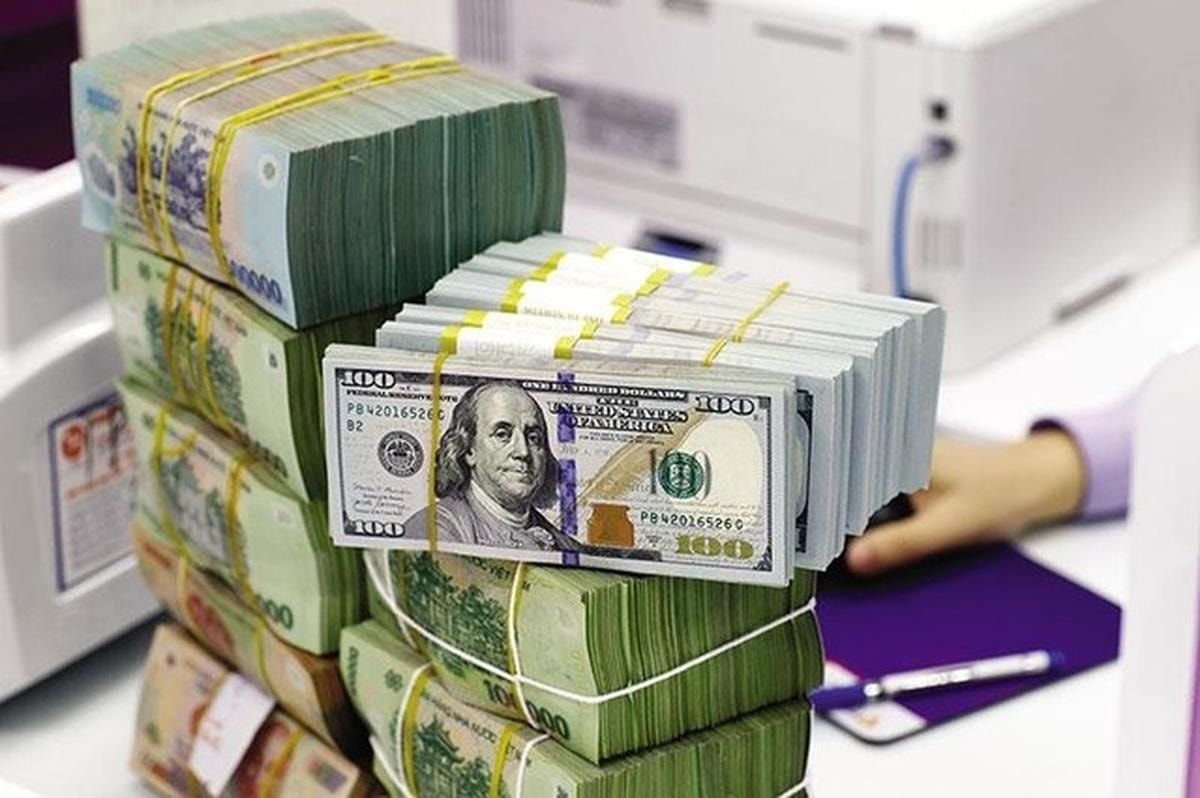
Despite Vietnam recording a trade deficit of 13.8 billion USD in the first five months of 2026, analysts say the figure is not yet a reliable signal of near-term pressure on the exchange rate. In its latest market currency report, Rong Viet Securities (VDSC) said the USD/VND exchange rate showed greater stability in May 2026 after a period of pressure in Q1.
VDSC reported that the spot rate traded in the 26,310–26,360 VND/USD range in May, with no sharp spikes and without pushing toward the 26,550 VND/USD level that had been observed previously. The report attributes the easing of exchange-rate pressure to two key developments.
First, the USD Index (DXY) fell toward around 99, below the 100.5 level recorded at the end of March. Second, Brent crude oil prices declined by nearly 20% over the month to around $90 per barrel, as markets began pricing in a potential 60-day ceasefire between Iran and the US. VDSC said this reduced the foreign currency required for oil imports, easing an underlying drag on the foreign exchange market during Q1.
As a result, VDSC said foreign exchange supply-demand tension eased notably. In this context, the USD/VND swap spread remained stable in a range from 0% to +3%.
While the 13.8 billion USD trade deficit remains a notable economic feature, VDSC cautioned that trade data do not fully capture currency pressure in the short term. The firm said FX movements should be assessed using actual FX flows rather than the border-crossing value of goods, which may not align with immediate foreign currency payments.
VDSC noted that there can be periods of sharp import growth without corresponding currency pressure, and conversely, periods of export surplus alongside rising exchange rates.
In VDSC’s view, the disbursement of FDI provides a closer reflection of actual FX than trade data, though it should still be interpreted with caution. Under IMF classification, FDI includes equity capital, retained earnings, and intercompany loans, and not all components necessarily generate new foreign currency inflows.
For example, retained earnings do not create new funds from outside. VDSC also pointed out that some offshore settlements may be completed outside the domestic financial system and therefore may not generate real USD inflows into the banking system.
Nevertheless, VDSC said that if the trade deficit persists into the second half of 2026, pressure on FX supply and demand will become more evident.
Another key element highlighted by VDSC is the foreign exchange swap (USD/VND swap). In May, the swap rate mainly ranged from 0% to +3%, with some tenors approaching 4%. VDSC said this reflects policy guidance to stabilize exchange-rate expectations and prevent a large USD/VND surge despite the ongoing deficit.
However, VDSC warned that keeping the swap high has a downside: it directly affects domestic VND interest rates. The firm said this is one reason domestic rates may remain high for an extended period.
On the US monetary policy outlook, VDSC cited US CPI inflation rising to 4.2% year-over-year, which has led markets to anticipate continued rate hikes by the Federal Reserve. Still, VDSC argued that the divergence between overall inflation and core inflation, as well as measures such as Trimmed PCE, are less affected by energy-price shocks, suggesting the Fed may have limited impetus to keep raising rates.
Even so, VDSC emphasized that the most notable factor for Vietnam remains the high USD/VND swap maintained for an extended period. With policymakers prioritizing exchange-rate stability, VDSC said domestic interest rates are unlikely to have substantial room to fall in the near term.