•
•
•
•
•
•
•
•
•
•
•
•
•
•
•
•
•
•
•
•
•
•
•
•
•
•
•
•
•
•
•
•
•


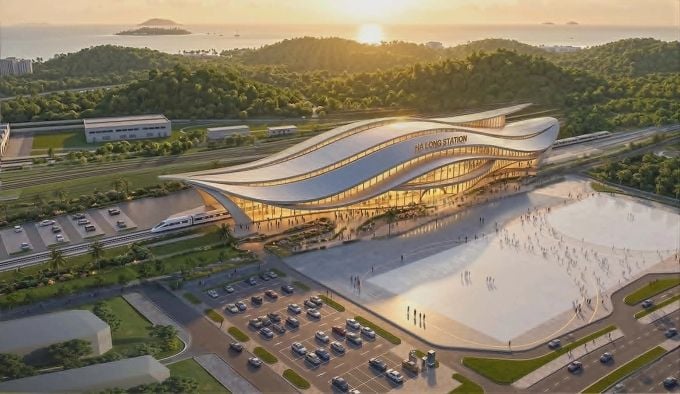
On April 25, Vinhomes unveiled Global Gate Ha Long, a 6,200-hectare coastal mega-city located opposite the Hanoi–Quang Ninh high-speed rail station. The project is positioned along the expressway axis connecting Quang Ninh, Hai Phong and Hanoi, and it also faces the depot station of the Hanoi–Quang Ninh high-speed railway, which began construction on April 12.
Global Gate Ha Long covers more than 6,200 hectares with a total investment of 456.639 trillion dong (about 18 billion USD). Vinhomes CEO Nguyen Thu Hang said the monthly fare expected for the first residents is about 5 million dong, equivalent to more than 165,000 dong per day. She noted this is the first time a fare for a high-speed railway project in Vietnam has been announced.
The Hanoi–Quang Ninh high-speed railway is 120 km long and is designed for speeds of 350 km/h. The line includes five stations: Co Loa, Gia Binh, Ninh Xa, Yen Tu and Ha Long Xanh. Completion is expected in 2028, when the rail service is projected to cut travel time between Hanoi and Quang Ninh by road from 2–2.5 hours to around 23 minutes.
Vinhomes described Global Gate Ha Long as its largest coastal city project announced to date, more than twice the size of Green Paradise Can Gio in Ho Chi Minh City and six times larger than the Vu Yen Island project in Hai Phong.
As planned, the mega-city will supply over 55,000 units, including apartments, condotels, shophouses, villas and hotels, to serve a population of over 244,000.
Beyond residential areas, the coastal megacity will include a diversified service ecosystem, such as an outdoor sea-facing stage with more than 60,000 seats, a 3,000-seat theater, and a convention center.
Pham Nhat Vuong’s company also plans a hotel, resort, casino, and a 12-golf-course complex spanning 950 hectares within the overall development.
The central business district (CBD) is planned with towers of 30–45 floors, providing nearly 2 million square meters of office space. It is expected to attract multinational companies and international professionals.
Premium gym chains are entering a “golden era” that is ending or already in decline, as rising operating costs collide with shifting consumer preferences toward more flexible, community-based ways to exercise. Long-term memberships are shrinking, margins are pressured by higher rents and facility expenses, and competition from smaller, more personalized…