•
•
•
•
•
•
•
•
•
•
•
•
•
•
•
•
•
•
•
•
•
•
•
•
•
•
•
•
•
•
•
•
•


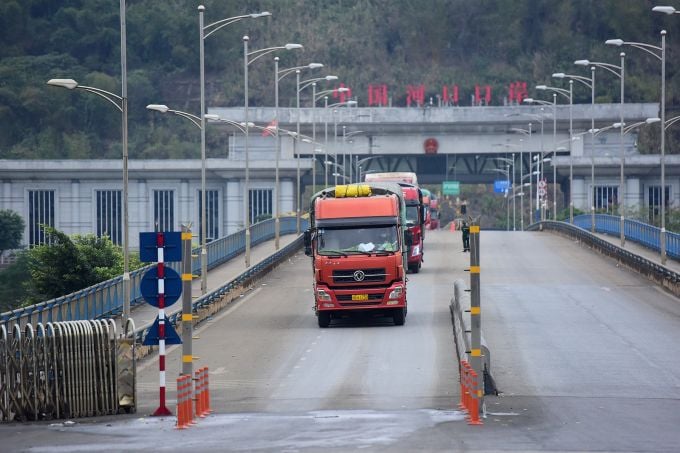
Bilateral trade between Vietnam and China has quadrupled over the past decade, while foreign direct investment (FDI) from China into Vietnam has tripled in the last five years. With new market openings and expanding cooperation, prospects for the next phase of trade and investment look set to broaden beyond traditional product categories.
Recalling the early stage of the business, Ms. Ngo Tuong Vy, CEO of Chau Thu Group, said the company started in Ben Tre as a small wholesale hub. In the late 1990s, it shipped batches of rambutan and mangosteen to China through informal cross-border routes, with each batch worth only a few hundred million dong.
A turning point came when exports shifted gradually to formal channels linked to bilateral letters of exchange between the two countries. Vy said the export scale rose by tens of times, and in some cases nearly 50 times compared with the early stage.
Chau Thu Group now grows 30–40% annually, with main products including fresh durian and jackfruit, and frozen mangoes. This year, the company targets around 40% growth, supported by China recently opening markets for citrus fruits such as lemons and grapefruits.
The protocol for grapefruit and lemons was signed on April 15 in Beijing during the state visit of General Secretary and President To Lam. The company said grapefruit, in particular, has high potential in China and has attracted early attention from major distribution networks.
According to Nguyen Thanh Binh, chairman of the Fruit and Vegetables Association, 16 types of agricultural products currently have official export status to China, generating billions of USD in revenue each year. Last year, Chinese buyers spent 5.5 billion USD on Vietnamese fruits and vegetables.
Binh said the goal of exporting fruits and vegetables to China exceeding 6 billion USD this year could be achieved if key products such as durian, bananas, and mango continue to grow. The newly signed official export protocol for grapefruit and lemons is described as an important step to diversify product categories and create more room for growth.
Beyond fruits, demand is also rising for other categories. The Vietnam Seafood Processing and Exporters Association (VASEP) said Mainland China and Hong Kong were the largest markets in Q1, with turnover of 764 million USD, up 45% year on year. VASEP deputy general secretary Le Hang said this was the highest growth among major markets and a key factor supporting positive sector performance.
At an early-year conference, Nguyen Xuan Thanh, a senior lecturer at Fulbright School of Public Policy and Management, said exports to China this year still have double-digit growth—over 14%—if the two countries continue facilitating each other’s goods. He noted this outlook helps offset risks of declines in other markets due to global trade volatility and supports the target of export growth at 15–16%.
In 2025, exports to China reached 70.4 billion USD, up nearly 15% from the previous year.
Five years on, the Vietnam–China trade relationship has expanded sharply. By 2025, bilateral trade reached 256.5 billion USD, nearly four times the 2015 level (about 66.2 billion USD). The figures reinforce China as Vietnam’s largest trading partner and Vietnam as China’s largest partner in ASEAN.
The Ministry of Industry and Trade said trade still has room to grow through bilateral deals and FTAs, including the ASEAN–China Free Trade Area (ACFTA) and the Regional Comprehensive Economic Partnership (RCEP).
Alongside trade, China’s foreign direct investment into Vietnam has risen quickly. Over the last five years, FDI from China tripled from 1.86 billion USD in 2020 to 5.7 billion USD in 2025. China became the second-largest investor last year, accounting for nearly 15% of total FDI into Vietnam.
Investment from China is mainly in manufacturing, processing, and high-tech. The article cites electronics firms including Goertek and Luxshare-ICT investing billions of USD, with Luxshare-ICT alone contributing more than 1.8 billion USD and aiming for at least 10 billion USD in Vietnam.
Logistics firms have also expanded capacity. By end-2024, Maersk opened its first bonded warehouse in the north to support integrated logistics along the Hanoi–Hai Phong corridor. The article says Maersk’s regional head for the Mekong is pushing infrastructure, technology, and cross-border talent to support Chinese firms expanding production in the Mekong region.
Analysts said the trend is encouraging Asian businesses to restructure supply chains, with Vietnam emerging as a strategic destination in regional and global value chains beyond a supporting role in a China+1 framework. Proximity to China is fostering a dual-country production model in Vietnam, while the Mekong market is developing as a consumer hub for Vietnamese goods.
Vietnamese firms are also finding opportunities for investment beyond exports. By 2024, Vietnam’s FDI into mainland China and Hong Kong reached 95.6 million USD across 76 active projects.
Trung Nguyen Legend reported it has 15 importers, 300 secondary distributors, and 30,000 offline points of sale (including major supermarkets). It also said it operates thousands of online stores on platforms including JD, Amazon, Taobao, and Tmall, and has more than 15 million G7 coffee app users in China.
The group said it plans to develop nearly 130 stores in China this year, as the start of a longer-term plan to reach 1,000 stores. It also highlighted opportunities for Vietnamese firms to supply raw materials and participate more deeply in the value chain, from processing to branding and experiential spaces.
In a meeting with Premier Li Qiang on the afternoon of April 15, General Secretary and President To Lam affirmed Vietnam’s desire to elevate cooperation with China across economic, trade, investment, and tourism. The leaders also agreed to expand sustainable trade and strengthen infrastructure connectivity, with rail cooperation receiving top priority, and to deepen ties with Central Asia and Europe.
Leaders agreed to create conditions for Vietnam to participate in broader market access initiatives, open markets for agricultural and animal products, and cooperate in science, technology, finance, and agriculture. In the Vietnam–China joint statement released on April 17, leaders reaffirmed commitments to deepen relations and expand cooperation.
Economically, Vietnam and China agreed to strengthen strategic connectivity and implement a joint plan under the framework of Two Corridors, One Belt and the Belt and Road Initiative. They also agreed to advance cooperation in finance, technology, and energy, including AI, semiconductors, 5G, big data, and cross-border electricity networks. China pledged to facilitate Vietnamese firms—especially those in digital technology—to participate more deeply in the value chain and access China’s market.
Vietnamese business voices in the article emphasized that China remains a large market and that opportunities should be pursued through a structured, value-added approach rather than focusing only on volume. Firms were urged to move up the value chain and align with consumer preferences to sustain growth.


Premium gym chains are entering a “golden era” that is ending or already in decline, as rising operating costs collide with shifting consumer preferences toward more flexible, community-based ways to exercise. Long-term memberships are shrinking, margins are pressured by higher rents and facility expenses, and competition from smaller, more personalized…




