•
•
•
•
•
•
•
•
•
•
•
•
•
•
•
•
•
•
•
•
•
•
•
•
•
•
•
•
•
•
•
•
•


Facing a requirement that business accounts must be titled in the name registered for the household business and the obligation to report to tax authorities, many household businesses are accelerating efforts to separate finances and connect with the eTax Mobile app.
In a context where tax administration for the household business segment is becoming more standardized, separating cash flows and clarifying payment accounts is increasingly seen as a mandatory requirement. These changes come not only from the regulator but also reflect a shift in the households themselves—from a simple operating model to more formal, professional financial management.
Under new regulation effective March 1, 2026, payment accounts used for business activities must be in the exact name as on the Business Registration Certificate. At the same time, household businesses are required to report all bank accounts or e-wallets used for business activities to the directly managing tax authority via the eTax Mobile app or the Electronic Tax Service Portal.
The regulation is viewed as an important step in increasing transparency of cash flows, helping authorities better monitor business operations, and reducing the mixing of personal and business accounts—a problem that was common before.
A report from Hanoi shows many household businesses are proactively adjusting to the new rule. Many initially found it difficult to change years-long financial habits, but gradually recognized clearer benefits.
Nguyen Thu Hien, owner of a fashion store on Chu đất Chu Street, said: “Previously I used a personal account to receive sales money, then to cover costs for goods, rent, etc. At month-end it’s hard to know my real profit. After learning about the new regulation, I opened a dedicated business account; at first it was inconvenient, but later it was clearly better.”
According to Ms. Hien, separating accounts helps her monitor revenue and costs more easily and makes tax dealings more convenient. “Now all business transactions go through a separate account; when reconciling or filing, it’s faster and not mixed with personal spending,” she said.
Tran Anh Minh, owner of a restaurant in Ho Chi Minh City, said the biggest previous pressure was the time-consuming tax procedures. “Each time filing taxes requires a lot of paperwork and can be very inconvenient when busy with sales. Since learning about linking accounts with the tax app, everything is much simpler,” he shared.
Digital platforms such as eTax Mobile are helping shorten processes and enabling household businesses to fulfill tax obligations directly on their phones. This is seen as a step in tax management digitization and also creates motivation for household businesses to change how they operate.
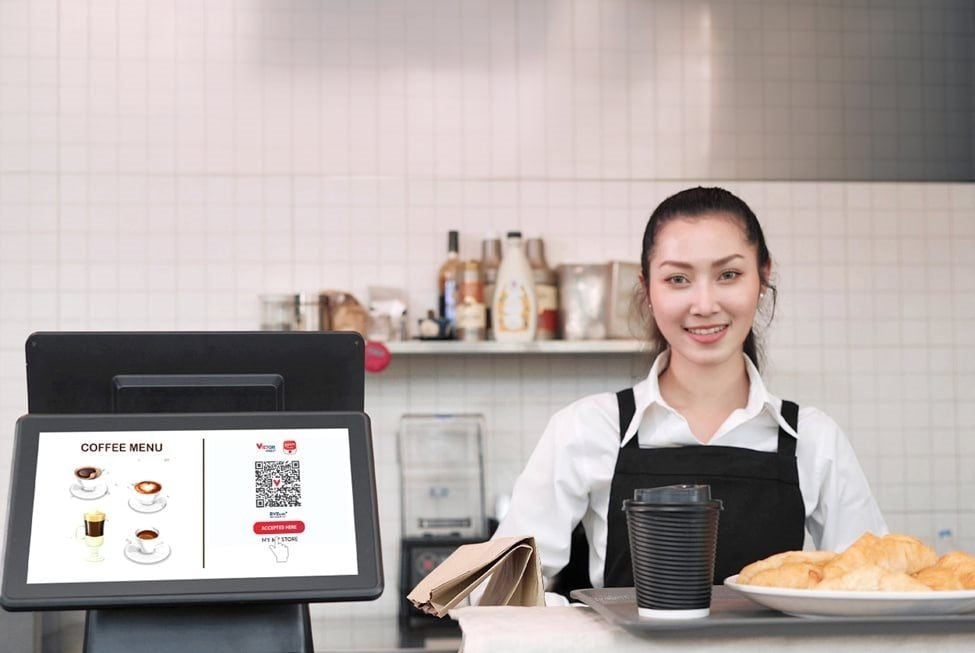
To anticipate this trend, BVBank has introduced payment account solutions for household businesses, linked directly with the electronic tax system, to help customers comply with regulations while optimizing financial operations.
The account package is designed to minimize costs, a major barrier for household businesses when opening a separate account. Customers are offered free basic services including opening an account, account management, maintaining minimum balance, using online banking, transferring money within and outside the system, and internal payroll processing.
BVBank also offers a free first premium-number account with value up to 50 million dong, applicable to sequences of 6–8 digits.
In addition to payment accounts, BVBank integrates direct linking with eTax Mobile. Household businesses can notify accounts, pay taxes electronically, and track tax obligations on the digital platform, reducing time, cost, and effort compared with traditional methods.
Ms. Tran Anh Minh added: “Since using a dedicated account and linking with eTax Mobile, I hardly need to file taxes directly anymore. Everything on the phone, fast and more proactive.”
BVBank also supports household businesses with tools including a Digistore sales management solution, an electronic invoicing solution (up to 5,000 invoices), and capital support packages to meet expansion needs. These solutions aim to help household businesses comply with regulations while gradually improving governance capabilities.
In an increasingly transparent and digitized business environment, owning a dedicated payment account—combined with management tools and electronic tax connection—is becoming an essential trend. With integrated solutions, the gap between household businesses and professional enterprises is narrowing, creating more sustainable growth opportunities.





Premium gym chains are entering a “golden era” that is ending or already in decline, as rising operating costs collide with shifting consumer preferences toward more flexible, community-based ways to exercise. Long-term memberships are shrinking, margins are pressured by higher rents and facility expenses, and competition from smaller, more personalized…