•
•
•
•
•
•
•
•
•
•
•
•
•
•
•
•
•
•
•
•
•
•
•
•
•
•
•
•
•
•
•
•
•
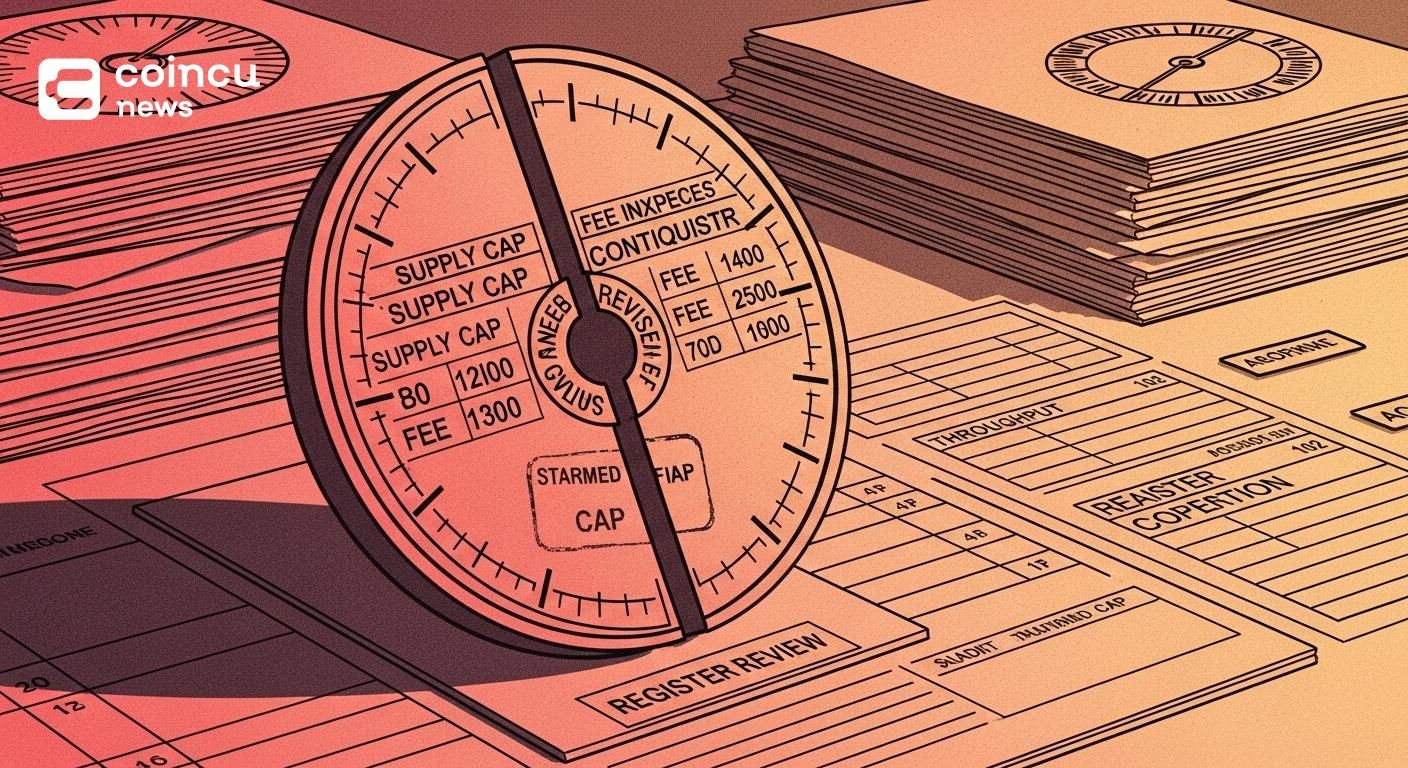
Aptos is proposing a tokenomics update that would introduce a hard supply cap near 2.1 billion APT, raise gas fees by 10x, reduce staking rewards, and include an on-market buyback plan. The package is designed to reframe token issuance around network performance, aiming to align value accrual with actual usage rather than ongoing subsidies.
Multiple reports describe the update as combining several mechanisms intended to tighten supply and shift incentives. The plan includes gas-fee burning and a permanent lock of 210 million APT to reinforce supply discipline alongside the cap. The proposals are presented as governance-contingent upgrades, with mechanics intended to scale burns as network throughput increases.
Bitget reports that the staking reward rate would decline to about 2.6% annually. With gas fees set to be burned, the framework creates a counterforce to emissions: if sustained burns driven by network activity exceed the 2.6% rate over time, net supply could contract under the new model.
Coverage also frames the approach as resembling an EIP-1559-style value flow, where higher usage increases the amount burned. However, the net effect on circulating supply would depend on realized fee levels, throughput, and unlock dynamics, with the supply cap limiting terminal supply growth while burns and reduced emissions alter the path to that cap.
The proposed 10x gas increase would raise per-transaction costs, though reports note it would be from a very low base, meaning basic transfers may remain inexpensive. Cost-sensitive, high-frequency strategies could reassess activity if margins compress.
Developers and DeFi venues may need to revisit protocol parameters and fee assumptions as execution costs rise. If activity remains resilient, aggregate burns could increase and potentially offset issuance more quickly.
For validators and stakers, nominal rewards would fall, shifting the economics toward fee-derived effects and long-term participation incentives rather than headline inflation. Yield profiles would depend more on realized fee activity and participation duration.
If approved by tokenholders, implementation is expected to be staged, with parameter monitoring intended to calibrate throughput, latency, and fee sensitivity. The timeline would depend on governance approval and technical rollout readiness.
Governance approval and multi-phase execution introduce operational and timing risk. Cryptorank notes that unlock schedules could still pressure circulating supply, making the cadence of releases a key variable to monitor during the transition.
Deflation would require annualized gas burns to exceed roughly 2.6% of total supply. The breakeven depends on sustained throughput and the average fees actually paid and burned.
Per-transaction costs would rise, but starting from a low base. High-frequency applications may feel the impact most, while aggregate burns could increase and potentially offset emissions if network activity remains resilient.
DISCLAIMER: The information in this article is provided as general market commentary and does not constitute investment advice. Readers are encouraged to do their own research before investing.