•
•
•
•
•
•
•
•
•
•
•
•
•
•
•
•
•
•
•
•
•
•
•
•
•
•
•
•
•
•
•
•
•


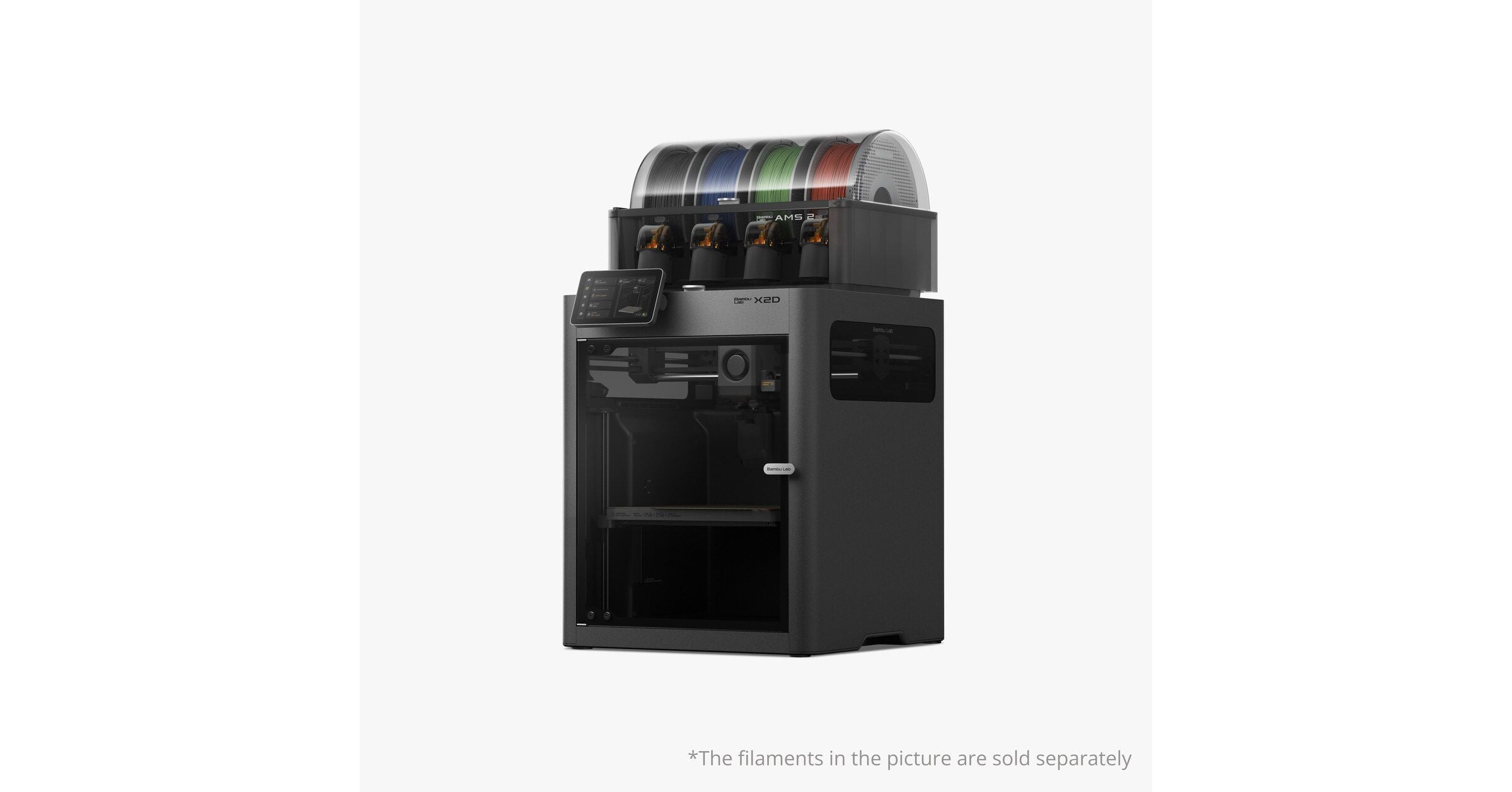
Bambu Lab this week launched the X2D, its next-generation flagship dual-extrusion 3D printer, available from $649.
The company positions the X2D as a printer designed to minimize technical troubleshooting. It is intended to operate like a household device—users select a model, click Print, and receive a finished object—while the machine handles calibration and process control in the background.
Bambu Lab says the X2D auto-calibrates before each print and monitors the process with dozens of sensors. It also performs real-time compensation for deviations from intended parameters. If a problem is detected, the printer stops before an issue occurs.
The X2D uses two nozzles, enabling easier removal of supports—temporary structures used for complex geometries. Bambu Lab says this reduces the need for post-print sanding or scraping, aiming for parts that are ready to use.
The printer features a closed build chamber with active temperature control. It also includes a three-level air filtration system designed to capture particles and absorb odors, allowing the device to be placed in spaces such as a living room, studio, or office.
Bambu Lab describes the X2D as part of a broader ecosystem, including Bambu Studio, Bambu Handy, MakerWorld, Maker’s Supply, Maker’s Lab, and a crowdfunding program for creators. The company says these elements are designed to work together rather than being added on separately.
According to Bambu Lab, filaments are profiled for specific materials, models include validated printing parameters, and components are standardized to fit printable designs—reducing friction between selecting a design and producing a finished object.
The X2D is available from $649 / €629. The Combo version, which includes a multi-material feeding system, is offered from $899 / €849. Sales are set to begin on the launch day at bambulab.com.
Bambu Lab is a consumer technology innovator focused on redefining desktop 3D printing. The company says its X1 series helped demonstrate that a 3D printer could work out of the box without requiring users to be specialists or to tinker with settings.




Premium gym chains are entering a “golden era” that is ending or already in decline, as rising operating costs collide with shifting consumer preferences toward more flexible, community-based ways to exercise. Long-term memberships are shrinking, margins are pressured by higher rents and facility expenses, and competition from smaller, more personalized…




