•
•
•
•
•
•
•
•
•
•
•
•
•
•
•
•
•
•
•
•
•
•
•
•
•
•
•
•
•
•
•
•
•


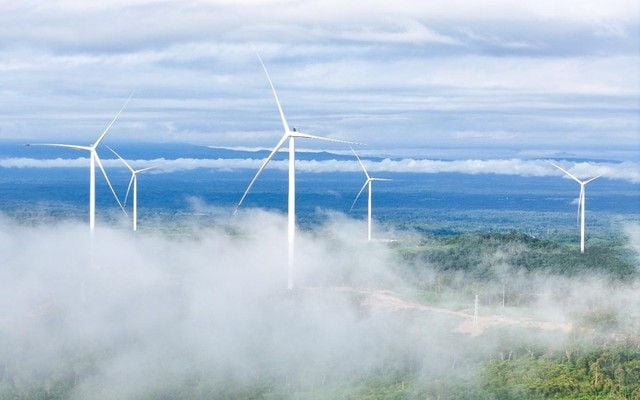
Vietnam's electricity system is entering a peak season under pressure from demand, weather, and global energy volatility, making the challenge of ensuring supply more urgent than ever. In this context, a cross-border wind project such as Savan 1, developed by T&T Group led by Bau Hien, finished in just 16 months and delivering up to 0.9 billion kWh of electricity annually is not only a record of speed but also raises questions about a fundamentally different approach to developing energy. From the contract awarded by the Lao government in January 2025, T&T Group implemented the main components of the project, including the power generation and transmission infrastructure, within a single integrated package, thus taking control of schedule and grid connection. The project faced difficult terrain, spanning mountainous regions, crossing borders, and enduring harsh weather. Yet with a 'sun and rain conquering' spirit, hundreds of workers worked day and night to complete the project as quickly as possible. They reorganized and reinforced access roads, bridges, and ongoing construction at multiple fronts. Components from foundations and turbine assembly to transmission line installation were executed in a coordinated manner, maintaining continuous progress across the site. On August 31, just over six months later, the 220 kV transmission line nearly 70 km long from the plant to the Vietnamese connection point was completed. Choosing to invest in transmission infrastructure upfront, even at higher costs, helped the project avoid the situation of 'finishing generation but waiting for grid'. In the power sector, the gap between a project and an actual power supply often lies in transmission. Savan 1 is among the few large onshore wind projects in the region to overcome this bottleneck. Later, in the final days of 2025, the Savan 1 wind farm officially achieved commercial operation (COD). From the Savannakhet highlands, electricity is transmitted along a dedicated 220 kV line, crossing the border and integrating into Vietnam's grid at Lao Bao. Notably, the entire sequence—from obtaining legal approvals and signing contracts to construction, investing in transmission infrastructure, and connecting to the grid—was completed within about 16 months, an unusually fast pace for large-scale wind projects in the region. This reflects the ability to organize and execute across all stages, from regulatory handling to solving transmission bottlenecks, creating a new approach to developing cross-border energy projects. To date, Savan 1 has operated steadily, delivering about 0.9 billion kWh of electricity annually to the national grid, with a grid-connection rate above 90%. According to experts, the Savan 1 story clearly reflects the practical momentum of Vietnam–Laos energy cooperation and underscores the private sector's role in turning energy policy into tangible results for energy security, beyond planning or commitments.







Premium gym chains are entering a “golden era” that is ending or already in decline, as rising operating costs collide with shifting consumer preferences toward more flexible, community-based ways to exercise. Long-term memberships are shrinking, margins are pressured by higher rents and facility expenses, and competition from smaller, more personalized…


