•
•
•
•
•
•
•
•
•
•
•
•
•
•
•
•
•
•
•
•
•
•
•
•
•
•
•
•
•
•
•
•
•


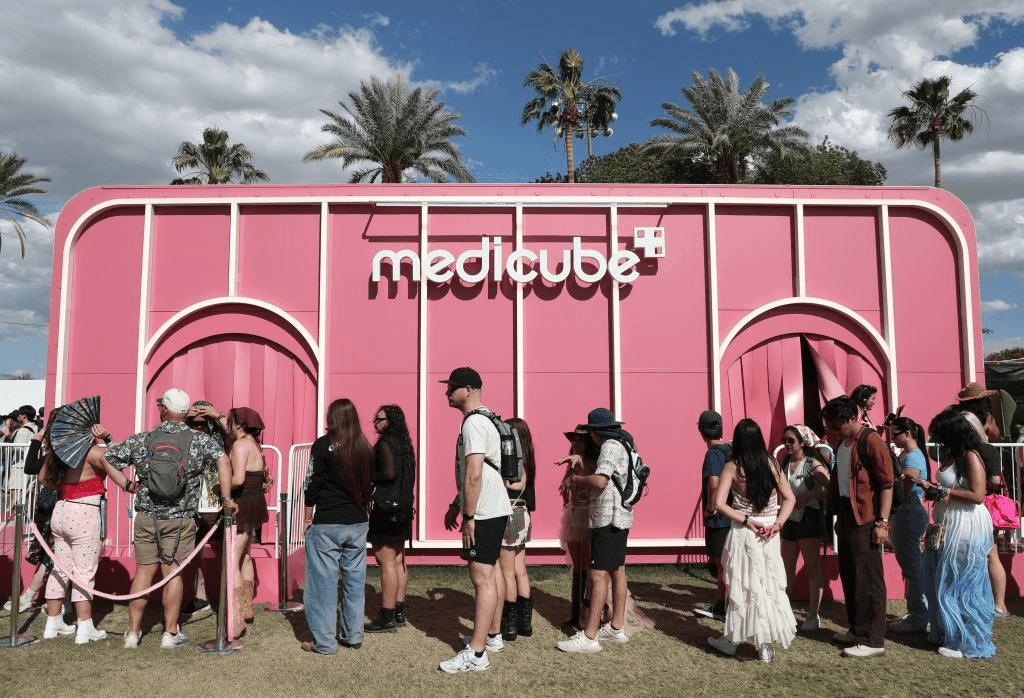
Beauty brands are generating stronger impact at Coachella than the festival’s official sponsors, according to data analysis, with off-site activation activities driving the most engagement. Coachella 2026 (Week 1), held April 10–12, 2026, drew about 125,000 attendees per day and continued to function as a major platform not only for music but also for brand-led experiences.
Alongside the main stages, Coachella added a series of creative pop-up spaces designed to amplify brand influence and connect with younger consumers. At the Rhode World mini-festival organized by Hailey Bieber, attendees experienced a green, oasis-like setting with carnival-themed games, a Sephora-funded beauty zone that played Justin Bieber’s music, and multiple branded photo spots.
Within the festival grounds, beauty brands including Medicube and e.l.f. Beauty ran interactive, consumer-focused activities aimed at capturing attention. Traackr data cited Rhode as the leading name in engagement at Coachella, attributing the result to the timely collaboration between Rhode and Justin Bieber.
Coachella 2026 also highlighted competition between established beauty players and newer entrants such as Medicube. The analysis indicates that heavy spending on pop-up spaces is providing a competitive edge, with the brands leading in engagement and social views during Coachella Week 1 largely coming from the beauty sector.
Beyond Coachella itself, “side festivals” held around the event area have become a strategy for brands. Revolve organized Revolve Fest for the first time in 2015, and while it includes fashion-forward elements featuring stars such as Teyana Taylor, it also incorporates beauty activations, including Grow Good, founded by Cardi B.
Beauty visibility extends to other mini-festivals as well, including 818 Outpost on Friday and Camp Poosh by Kourtney Kardashian and Rhode World on Saturday, which compete directly with Revolve Fest.
Rhode is described as the first beauty brand to test an exclusive single-brand festival model without external sponsors. The Rhode experience is tied to the Hailey Bieber and Justin Bieber collaboration, including products such as acne patches, lip care, and eye masks, and is presented as “Rhode-ified” across details such as signature cocktails and a baby-blue DJ booth.
Rhode by Hailey Bieber also appeared at 818 Outpost, distributing banana-themed cocktails paired with Rhode’s peptide lip care products attached to the drink dispensers.
Dash Social data showed Rhode-related content reached more than 740 million impressions during April 7–13. Over the same period, 818 Outpost recorded 183 million impressions and Revolve Festival generated 62.8 million.
Urban Decay, listed by Traackr among its top 10 beauty brands, selected 818 Outpost as its main activation to reach influencers this year, according to Fernando Febres, Chief Marketing Officer at the company. He said the goal is to focus on events with the right attendee mix so the brand can place products directly into participants’ hands.
At 818 Outpost, Urban Decay’s booth featured actress Barbie Ferreira and included a lounge operating until 4 a.m. at the after-party for the Pizzaslime streetwear brand, promoting the All-Nighter setting spray.
818 Outpost and Camp Poosh also contribute to amplifying the Kardashian family brand ecosystem, including Kylie Cosmetics, Kylie Jenner’s K2O beverage line, and Lemme by Kourtney Kardashian. Jay Hunter, CEO of Sprinter vodka (a brand launched by Kylie Jenner), said the event reflects a “family event,” noting that K2O launched on April 8, just before the festival.
The dense presence and structured investment by beauty brands at Coachella point to a shift from “selling products” to “selling experiences.” As the lines between music, fashion, and beauty continue to blur, the analysis concludes that brands able to ride the cultural wave are positioned to gain attention, emotion, and loyalty from a new generation of consumers—making Coachella a battleground for beauty as much as it is a stage for artists.


Premium gym chains are entering a “golden era” that is ending or already in decline, as rising operating costs collide with shifting consumer preferences toward more flexible, community-based ways to exercise. Long-term memberships are shrinking, margins are pressured by higher rents and facility expenses, and competition from smaller, more personalized…




