•
•
•
•
•
•
•
•
•
•
•
•
•
•
•
•
•
•
•
•
•
•
•
•
•
•
•
•
•
•
•
•
•


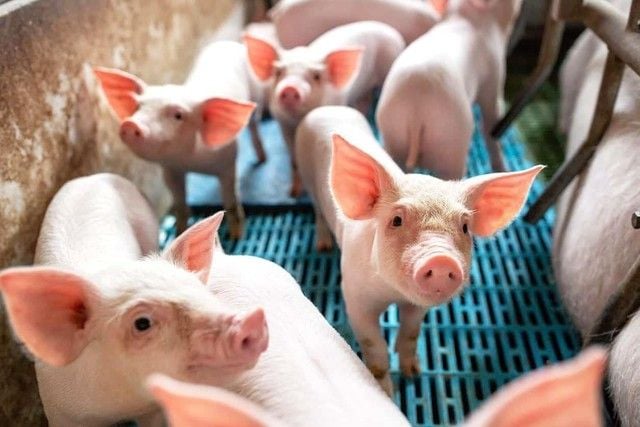
Biological assets have been newly recognized as a separate line item on the balance sheets of companies operating in agriculture and multi-industry sectors, following updates to Vietnam’s accounting regulations. In the Q1 2026 consolidated financial statements, firms are required to present biological assets under specific account codes and classification rules.
The appearance of “biological assets” as a distinct accounting category is driven by two legal documents.
Under Circular 99, biological assets are classified by expected harvest timing:
Biological assets are further divided into three core groups:
For risk management, firms must recognize impairment allowances for biological assets (Account 2295) when there is evidence that the net realizable value is below cost.
The Q1 2026 consolidated statements of companies including Hòa Phát, Dabaco, BAF, Hoàng Anh Gia Lai, Masan, Vinamilk, and others show biological assets separated from inventories and fixed assets.
Short-term biological assets are recorded at 440 billion VND (net of a 5.6 billion VND allowance). Nearly all of this relates to animals raised for a one-time harvest at 442 billion VND. Long-term biological assets total 183 billion VND, all in breeding or periodic production animals.
Biological assets represent 0.24% of Hòa Phát’s total assets, but account for 11.4% within its agricultural segment. These figures are consistent with Hòa Phát’s agricultural subsidiary, HPA.
Short-term biological assets are 1,433 billion VND, while long-term biological assets are 695 billion VND. Total biological assets are about 17.5% of total assets.
Vinamilk reports 330 billion VND in short-term biological assets and 1,564 billion VND in long-term biological assets. Total biological assets account for 3.4% of total assets.
Short-term biological assets are 622 billion VND, primarily crops, with breeding animals at 55.7 billion VND. Long-term biological assets total 183 billion VND, dominated by breeding animals.
Total biological assets are 805.3 billion VND, about 3.07% of total assets. The company records no impairment provisions.
Masan shows 584.5 billion VND in short-term biological assets and 70.5 billion VND in long-term biological assets, for a total of 655.0 billion VND, or 0.50% of total assets.
Dabaco reports 1,749 billion VND in short-term biological assets and 820 billion VND in long-term biological assets, for total biological assets of 2,569 billion VND, equivalent to 16.4% of total assets. The company reports no impairment provisioning.
The article also notes that Dabaco’s notes indicate it applies Circular 43 in its disclosure.
In summary, Circular 99/2025/TT-BTC and Circular 43/2026/TT-BTC formalize how animals and crops are presented on the balance sheet, separating biological assets from other categories such as inventories and fixed assets.
Q1 2026 data shows biological assets accounting for roughly 16.36%–17.48% of total assets at BAF and DBC, with the exposure concentrated in the animal group. At HAG, biological assets account for about 3.07%, with short-term biological assets concentrated in crops.
Premium gym chains are entering a “golden era” that is ending or already in decline, as rising operating costs collide with shifting consumer preferences toward more flexible, community-based ways to exercise. Long-term memberships are shrinking, margins are pressured by higher rents and facility expenses, and competition from smaller, more personalized…