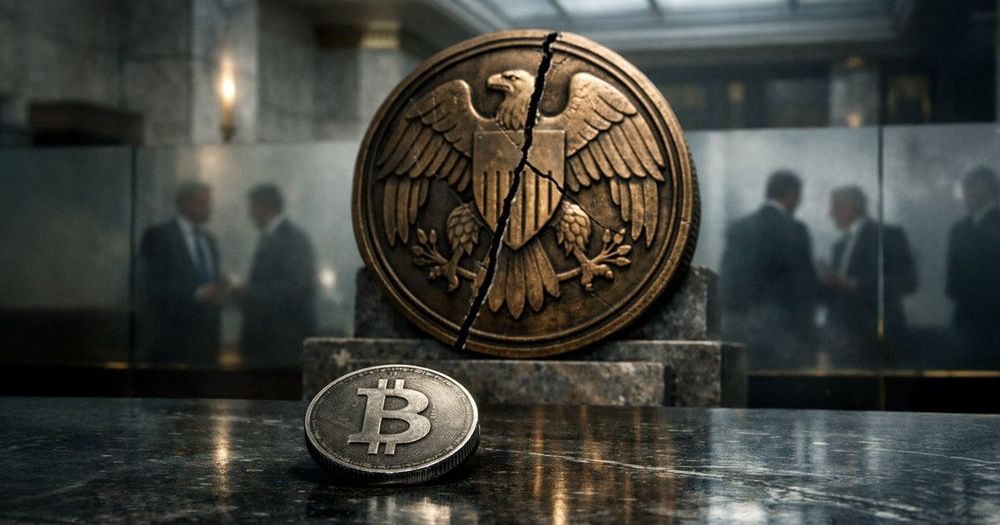
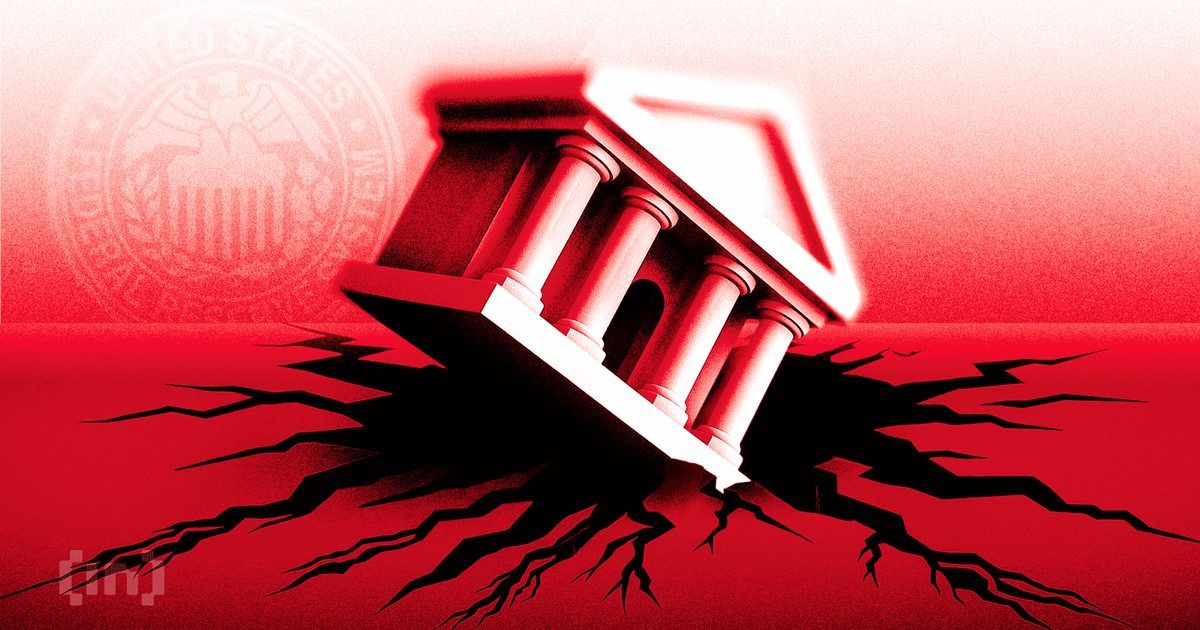
On Sunday night, a lot of people in markets did the same thing at the same time: they opened a video and listened to a central banker sound like he was reading from a crisis manual.\n\nJerome Powell said the Federal Reserve had received grand jury subpoenas and that the Trump administration had threatened a criminal indictment over testimony tied to a renovation project.\n\nPowell called it a political pretext aimed at pressuring the Fed to cut rates.\n\nThe Associated Press framed it as an unprecedented escalation and a direct hit to the idea that the Fed makes decisions without political pressure.\n\nThat phrase, “Fed independence,” can sound like a textbook concept until you watch it get repriced in real time.\n\nBy Monday morning, the classic safety valves started hissing.\n\nGold punched to a record around $4,600 an ounce, the dollar slipped, and equity futures leaned lower.\n\nCrypto did what it often does when the macro story shifts from numbers to trust.\n\nBitcoin and Ethereum climbed around 1.5% and 1.2% before retracing amid the dollar’s sharpest drop in three weeks.\n\nThis is the part where the usual crypto macro script, “rates up, Bitcoin down,” stops being enough.\n\nBecause the shock here is bigger than the next Fed meeting.\n\nIt’s about whether the institution that sets the price of money can be leaned on, scared, or bent. That sounds abstract. Markets have a way of turning abstract things into a line item.\n\nIndependence risk is a price, even if nobody admits it\n------------------------------------------------------\n\nEvery cycle has a moment where crypto traders learn that “macro” is about more than a dot plot.\n\nSometimes it’s a liquidity story. Sometimes it’s a currency story. Sometimes it’s a story about what people believe will still be true in a year.\n\nTrust is the input. Pricing is the output.\n\nWhen that trust gets questioned, the market doesn’t wait for a constitutional seminar.\n\nIt goes shopping for hedges, reprices volatility, and adjusts what it thinks future policy will look like under pressure.\n\nThat creates a new volatility channel for Bitcoin. The channel is governance risk.\n\nThe three ways this can hit Bitcoin in 2026\n-------------------------------------------\n\nIf you want a useful framework, you can think about Fed-independence risk as three overlapping transmission lines.\n\nThey can reinforce each other or fight each other, and that helps explain why crypto can move like gold one day and like a levered tech proxy the next.\n\n1) The dollar credibility channel\n\nWhen independence comes under strain, investors start asking uncomfortable questions about the future path of policy and the long-run commitment to price stability.\n\nThat shows up in the dollar.\n\nGold tends to benefit when the market wants an asset that feels outside the political blast radius.\n\nCrypto’s relevance here is emotional as much as financial.\n\nBitcoin’s origin story is tied to distrust in institutions, and whenever the world’s most important central bank looks like it’s under pressure, that narrative wakes up.\n\n2) The term premium channel\n\nThere’s a nerdy phrase that becomes a headline the moment institutional trust gets questioned: term premium.\n\nTerm premium is the extra compensation investors demand for holding long-dated government bonds, above what they expect short-term rates to average over time.\n\nIf the long end sells off without a big change in near-term rate expectations, term premium is usually part of the story.\n\nThat matters for bitcoin because term premium is the bond market’s way of shouting, “uncertainty is rising.”\n\nGeoff Kendrick at Standard Chartered has argued that bitcoin’s relationship with the 10-year term premium has strengthened since early 2024, and he has used that lens in his medium-term Bitcoin framing.\n\n3) The plumbing channel, rates volatility and liquidity\n\nEven if you never look at the word “independence,” you still feel it in the mechanics of markets.\n\nIndependence risk tends to lift uncertainty. Uncertainty lifts volatility. Volatility tightens risk budgets, and tighter risk budgets change how much leverage the system can carry.\n\nIn rates, the shorthand for this is MOVE, the Treasury volatility
index.\n\nMOVE is described as a leading indicator of fixed-income volatility, based on options tied to rates.\n\nWhen rates vol rises, it bleeds into cross-asset positioning.\n\nThat hits crypto through leverage, funding, and forced unwinds.\n\nIn practice, it can also overpower the “Bitcoin as a hedge” story in the short run, because liquidations don’t wait for narratives to resolve.\n\nThis is why Bitcoin can catch a bid on the first headline, then puke if the move triggers broader deleveraging.\n\nThe three ways this can hit Bitcoin in 2026\n\n[... truncated for brevity ...]\n\nThree scenarios for 2026, with signposts\n----------------------------------------\n\nNobody gets to forecast politics with precision. Markets don’t need precision. They need ranges and signals.\n\nHere are three scenarios that cover most of the plausible space, and the signposts that would show up in the dashboard.\n\nScenario A: Institutions absorb the shock\n\nThe legal fight drags, the Fed’s operational independence holds, and the market treats the episode as a flare-up that fades.\n\nIn this world, term premium stabilizes, MOVE stays contained, and the dollar stops reacting to each headline after headlines.\n\nCrypto implication: Bitcoin goes back to trading mostly on liquidity, growth, and risk appetite.\n\nSignposts: steady ACM term premium, muted MOVE, no sustained dollar trend after headlines.\n\nScenario B: Chronic pressure becomes the baseline\n\nPressure becomes recurring, the market starts to price a standing governance premium, and every new legal step triggers another small repricing.\n\nThe dollar weakens on shocks, gold stays well bid, and term premium drifts higher because investors keep demanding more compensation for uncertainty.\n\nCrypto implication: Bitcoin’s identity stays split.\nIt rallies on credibility angst, sells off on liquidity squeezes, and volatility becomes part of the package.\n\nSignposts: repeated dollar dips in “feud” moments, a persistent bid in gold, term premium gradually rising in decompositions.\n\nScenario C: Markets price a reaction-function shift\n\nLeadership outcomes and legal precedent convince investors that policy can be steered.\n\nThis is the world where term premium can jump, inflation expectations can become jumpier, and cross-asset volatility rises.\n\nThere’s historical research that helps explain why markets take this seriously.\n\nCrypto implication: Bitcoin can get a medium-term bid as a credibility hedge, while still suffering brutal short-term drawdowns when the plumbing tightens.\n\nSignposts: higher term premium in ACM, higher rates vol in MOVE, sustained weakness in the dollar, and larger swings in risk assets.\n\nA final detail markets will keep circling, the rate cut backdrop\n----------------------------------------------------------------\n\nIt’s easy to forget this when the headlines are dramatic, but the base macro context still matters.\n\nSome major forecasters are already penciling in easing during 2026.\nGoldman Sachs has published a rate-cut outlook for 2026 in its research commentary, including a path toward lower policy rates across the year under its macro assumptions.\nThat matters because independence risk can change how the market interprets cuts.\nIf cuts come from a weakening economy, that’s one story. If cuts look like they are arriving under pressure, that’s a different story, and it can push investors into hedges even while nominal rates fall.\nCrypto traders don’t need to become Fed historians to trade that difference.\nThey just need to watch what the bond market is charging for uncertainty.\nBecause this week’s Powell moment was a signal that a new kind of macro risk has entered the chat.\nIn 2026, Fed independence has dates attached to it, legal arguments attached to it, and now a market reaction attached to it.\nThat makes it tradable.\nCrypto markets should treat it like a factor, track it like a factor, and respect it like a factor.