•
•
•
•
•
•
•
•
•
•
•
•
•
•
•
•
•
•
•
•
•
•
•
•
•
•
•
•
•
•
•
•
•
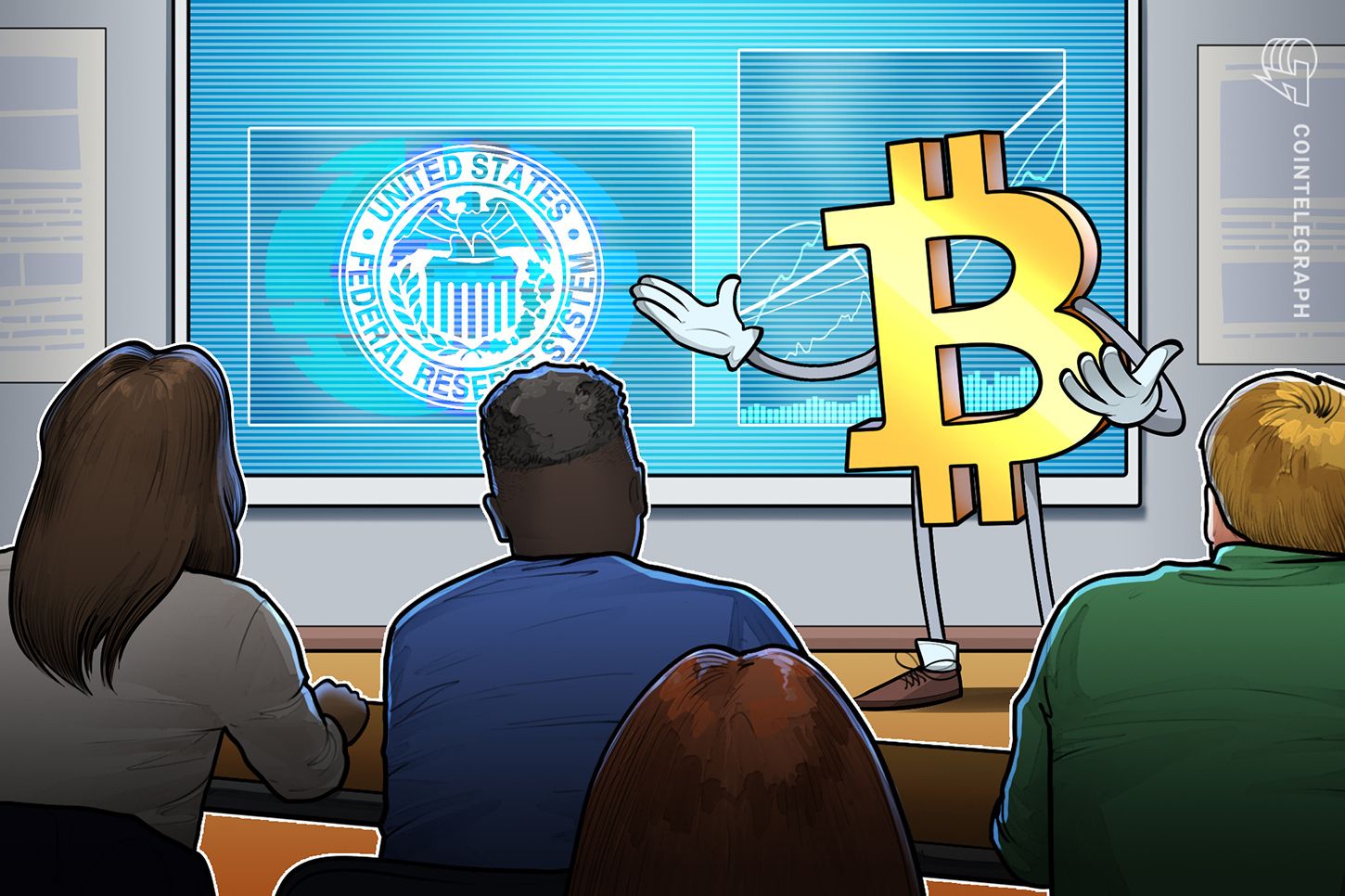
Bitcoin’s price action avoided sharp volatility after a broadly hawkish Federal Reserve meeting, but it failed to rebound from local lows as markets digested tighter policy cues and renewed posturing around Iran’s control of the Strait of Hormuz.
TradingView data showed BTC/USD trading in a tight range on lower time frames after falling to eight-day lows. The weakness followed the Fed’s latest interest-rate decision, which triggered a broader pullback in risk assets.
Wednesday’s Federal Open Market Committee (FOMC) meeting was the first for new Fed chair Kevin Warsh. In the post-decision statement, Warsh avoided dovish signals on future policy, saying: “Inflation remains elevated relative to the Committee's 2 percent goal, in part reflecting supply shocks that have driven price increases in certain sectors, including energy,” and that “The Committee will deliver price stability.”
Warsh’s tone differed from expectations that had seen him as more accommodating to US President Donald Trump’s push for rate cuts. The FOMC statement was also shortened, using “drier” language than former chair Jerome Powell, according to The Kobeissi Letter.
The Kobeissi Letter added that Warsh “dropped” forward guidance and suggested the “dot plot” could be changed or eliminated, along with other Fed communications such as the policy statement and press conferences—potentially increasing uncertainty for markets.
CME Group’s FedWatch Tool showed markets pricing in a near 40% chance of a rate hike at the next FOMC meeting in late July (July 29).
With US markets closed for the Juneteenth holiday, Bitcoin and crypto were left to process developments in the US-Iran standoff. Despite signing a memorandum of understanding (MoU) with Iran, the two sides appeared misaligned on the future road map, with Iran again signaling interest in the Strait of Hormuz oil route.
Citing Bloomberg, The Kobeissi Letter reported that traffic “cannot cross the Strait of Hormuz without its permission.” It further explained that the MoU “only says that transit through the Strait of Hormuz would be free for the duration of its 60 day term,” adding: “It appears Iran is preparing for long-term control of Hormuz.”
WTI crude oil continued to trade around $75 per barrel after hitting its lowest levels since early March, according to the article. The combination of subdued volatility in broader markets and the ongoing geopolitical risk kept traders focused on whether Bitcoin could break out of its recent range.
Rekt Capital, a trader and analyst, suggested that Bitcoin bulls may face a more difficult test later in the cycle. He told followers on X: “There tends to be a Black Swan event in the second half of Bitcoin Bear Markets. Lesson there.”
This article is produced in accordance with Cointelegraph's Editorial Policy and is intended for informational purposes only. It does not constitute investment advice or recommendations. All investments and trades carry risk; readers are encouraged to conduct independent research.
Bitcoin (BTC) investors who use steady dollar-cost averaging (DCA) may be underperforming versus strategies that adjust exposure to the market’s cycle, according to new research arguing that Bitcoin’s behavior differs from traditional long-duration assets.
In a report cited by Markus Thielen of 10x Research, Bitcoin’s market…