•
•
•
•
•
•
•
•
•
•
•
•
•
•
•
•
•
•
•
•
•
•
•
•
•
•
•
•
•
•
•
•
•


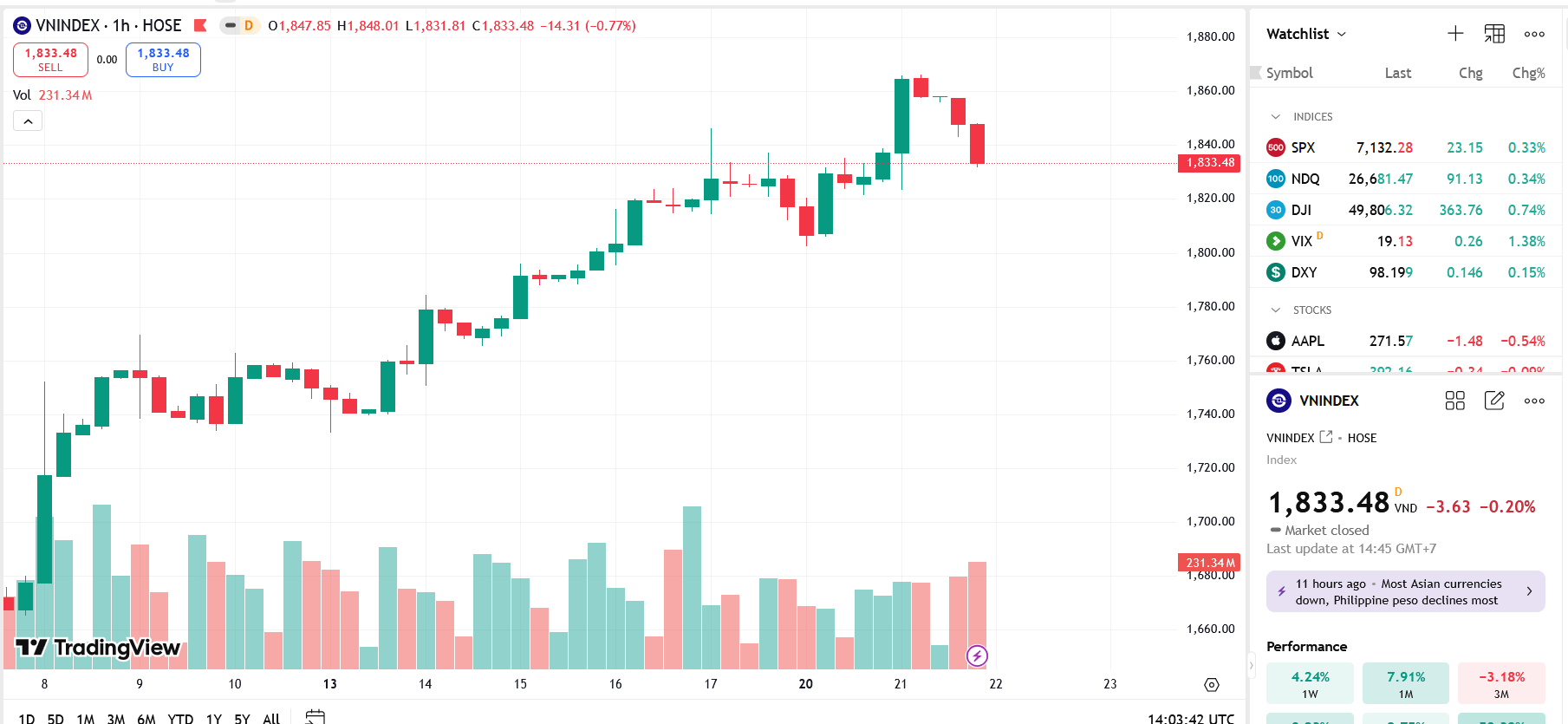
VN-Index ended the trading session with a red candle as selling pressure returned after the market approached the previous peak around 1,880–1,900 points. The index closed down 3.63 points, or 0.2%, at 1,833.48. The HNX-Index also fell, down 4.06 points, or 1.58%, to 253.27.
BVSC noted that large-cap stocks could not sustain the positive momentum seen in the morning, leading the index to turn lower at the close. The brokerage said liquidity rebounded, suggesting growing selling pressure as the index nears the 1,865–1,885 resistance zone. BVSC added that support from large-cap groups may still allow the market to advance and challenge higher resistance in the near term, while expecting sector rotation as flows shift from large caps into non-rising groups.
BSC reported that VN-Index traded in a narrow range of 1,831–1,867 before closing at 1,833.48, slightly lower than the previous session. Market breadth was negative, with 15 of 18 sectors declining; Information Technology was the hardest hit, while Real Estate posted a positive session. BSC also said foreign flows showed selling on HSX and HNX and buying on UPCOM. The brokerage described the market as volatile and advised investors to remain cautious.
SHS said the short-term trend remains upward as long as VN-Index holds above the 1,800-point support. However, the index faced substantial selling pressure near a resistance area defined by a trendline connecting the month-start highs of Jan 2026 and Feb 2026, and it failed to break through. After recovering from 1,600 and recording four weeks of gains, SHS warned the index may form a short-term peak and pull back to retest the 1,800-point support.
YSVN stated that VN-Index held above 1,820 and corrected with rising liquidity. The brokerage viewed this as a healthy consolidation before the index moves higher toward a higher range, with the nearest resistance at 1,877. YSVN’s short-term strategy suggested buying stocks in uptrends that pull back during sessions, focusing on sectors leading the market such as Banking, Real Estate, and Retail.
VCBS maintained that the technical signal for a continued move toward 1,900–1,920 remains, but short-term selling pressure is likely to trigger a pullback or a trading range. The brokerage placed near-term support around 1,800–1,820.
VCSC similarly said short-term selling pressure is likely to cause the index to pull back or move sideways in the near term.
SHS highlighted leverage risks through Q1 2026, estimating lending debt at securities firms (including margin and pre-funding) at around VND 415,000 billion. It estimated margin lending at around VND 405,000 billion, up VND 13,000 billion since Q1 2026. SHS said this could create substantial pressure, especially as margin rates show signs of rising, and it pointed to ongoing geopolitical risks. The brokerage advised investors to consider restructuring weaker names and reducing short-term speculative exposure if present.
TVS maintained a cautious view for the coming sessions. It said the index fell 3.6 points (-0.2%) to close at 1,833.5. TVS reported strong early-session demand led by VIC, VHM and bank stocks (STB, LPB), but selling pressure in the afternoon pushed the index below the reference level. The brokerage reiterated a cautious stance and a safe allocation, urging investors to watch the index closely.
BVSC advised investors to progressively raise trailing stops to protect profits on short-term positions and consider taking partial profits as VN-Index approaches the 1,865–1,885 resistance zone.
The market outlooks and technical expectations from brokerage houses are cited by VnEconomy as informational references and may reflect conflicts of interest with investors when providing their analyses.






Premium gym chains are entering a “golden era” that is ending or already in decline, as rising operating costs collide with shifting consumer preferences toward more flexible, community-based ways to exercise. Long-term memberships are shrinking, margins are pressured by higher rents and facility expenses, and competition from smaller, more personalized…