•
•
•
•
•
•
•
•
•
•
•
•
•
•
•
•
•
•
•
•
•
•
•
•
•
•
•
•
•
•
•
•
•


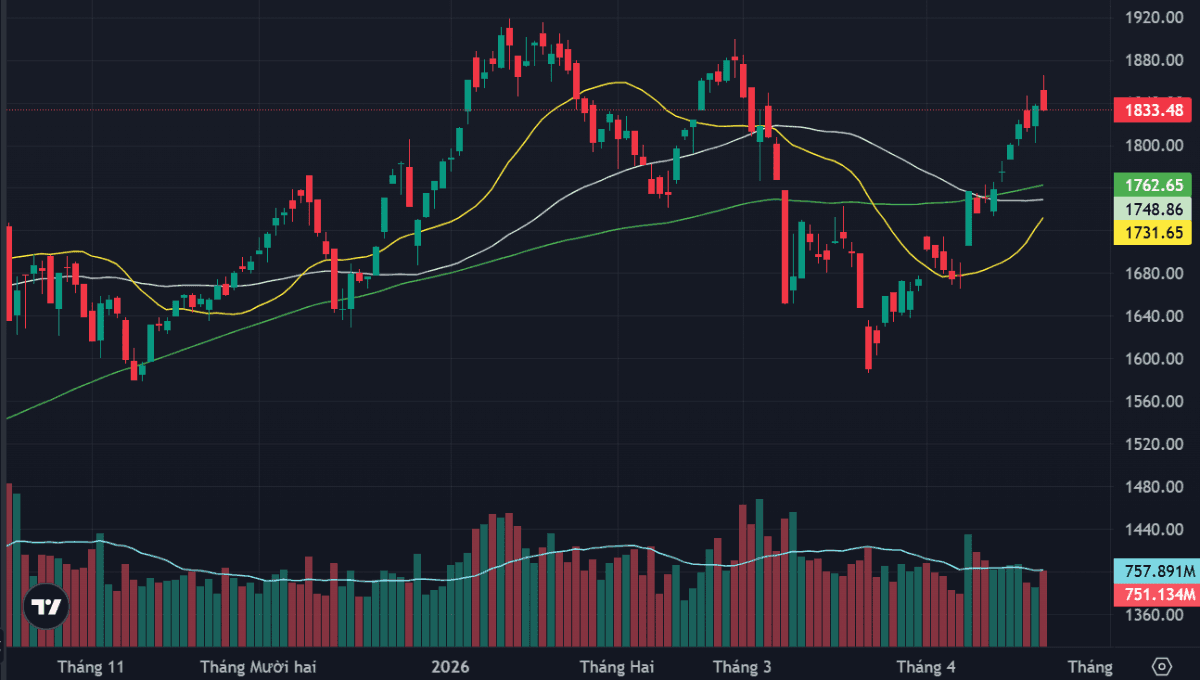
Liquidity and buying power weakened as a broad stock correction persisted, with even large-cap “blue chips” coming under pressure.
The VN-Index closed the session down 0.2%. Several stocks helped trim losses, including VIC up 1.41%, VHM up 0.48%, STB up 5.45%, and LPB up 2.28%.
At the close, market breadth was 99 gainers to 227 decliners, worse than the morning session (116 gainers to 173 decliners). By the end of the day, 125 stocks finished down more than 1%, while only 52 rose in the morning.
Within the VN30 basket, the session ended with 9 gainers and 21 decliners (morning: 12 up, 12 down). The VN30-Index fell 0.1% (morning: up 1.35%). Price declines among blue chips were particularly evident.
In the VN30, 27 of 30 stocks traded lower than their morning close, with only 2 advancing. VIC was the strongest, pressured to as low as 2.61% before ending up 1.41% versus the reference. VHM slumped 3.95%, nearly wiping out its morning gains.
Liquidity for VIC and VHM remained among the highest in the VN30 during the afternoon. STB, which hit the circuit limit in the morning, showed volatility: at 1:30 pm, the depth of buy orders at the circuit price evaporated, and the stock was pushed down before closing up 5.45%.
HPG, which led the morning with a 1.76% gain, fell steadily in the afternoon and closed with only a small gain of 0.35%. LPB finished up 2.28% but had effectively given back as much as 1.36%.
The broader weakness was not only driven by the leading stocks. The main issue highlighted was instability among large caps. While VIC posted a new all-time high, the last three sessions showed signs of profit-taking. VHM’s sharp rebound was followed by renewed selling pressure.
Replacement stocks such as major banks were not strong, except for TCB up 0.31%; other names were in the red. Investors also appeared cautious due to uncertainty in Middle East negotiations, alongside the need to manage profits and risk.
The market still appeared “green on the surface,” with the VN-Index remaining near its historic highs.
Premium gym chains are entering a “golden era” that is ending or already in decline, as rising operating costs collide with shifting consumer preferences toward more flexible, community-based ways to exercise. Long-term memberships are shrinking, margins are pressured by higher rents and facility expenses, and competition from smaller, more personalized…