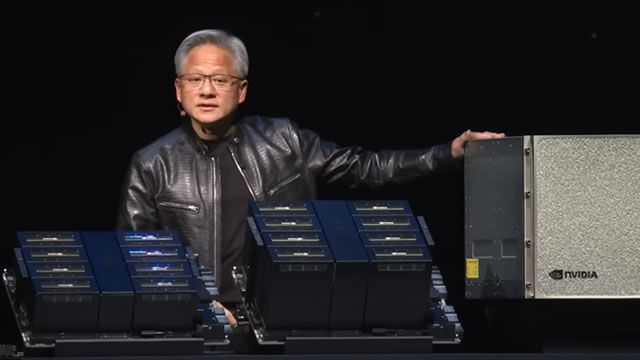
CES 2026 offered insights into the latest developments in artificial intelligence (AI). For investors tracking the AI space, particularly those invested in the ROBO Global Artificial Intelligence ETF (THNQ), three key updates are noteworthy. Nebius Group (NBIS), a top-10 THNQ holding at about 2.43% weighting, differentiates itself as a first-mover in next-generation computing and announced it will be among the first globally to deploy NVIDIA’s Vera Rubin NVL72 systems across its U.S. and European data centers starting in the second half of this year. This offers superior performance for reasoning and agentic AI, with cost benefits versus prior generations. Ambarella (AMBA), another THNQ holding, has intensified competition with larger rivals by simplifying edge AI development. At CES, Ambarella launched the Ambarella Developer Zone, a centralized platform providing “agentic blueprints” that allow developers to deploy complex AI rapidly without custom engineering. The hardware catalyst for this shift is the new CV7 SoC (system-on-a-chip). Built on Samsung’s 4nm process, the CV7 delivers a 2.5x jump in AI performance over their previous flagship CV5 while consuming 20% less power. This chip supports 8Kp60 video, transformer networks, and vision-language models (VLMs), targeting high-growth sectors — drones, robotics, ADAS (advanced driver-assistance systems), and enterprise security — represented within THNQ. Advanced Micro Devices (AMD), a top-15 holding in THNQ, aggressively expanded its reach into the edge AI market to compete with NVIDIA and Qualcomm. AMD introduced the Ryzen AI Embedded P100 and X100 series. These chips target for “tight space” applications like medical devices, automotive dashboards, and robots, allowing for split-second local decision-making. The launch of the Ryzen AI Halo developer platform further signals AMD’s intent to rival NVIDIA’s dominance in the local AI workstation market. For regular updates on robotics, AI, and healthcare technology, visit the Artificial Intelligence Content Hub for
news, information, and analysis. THNQ is not issued, sponsored, endorsed, or sold by VettaFi.