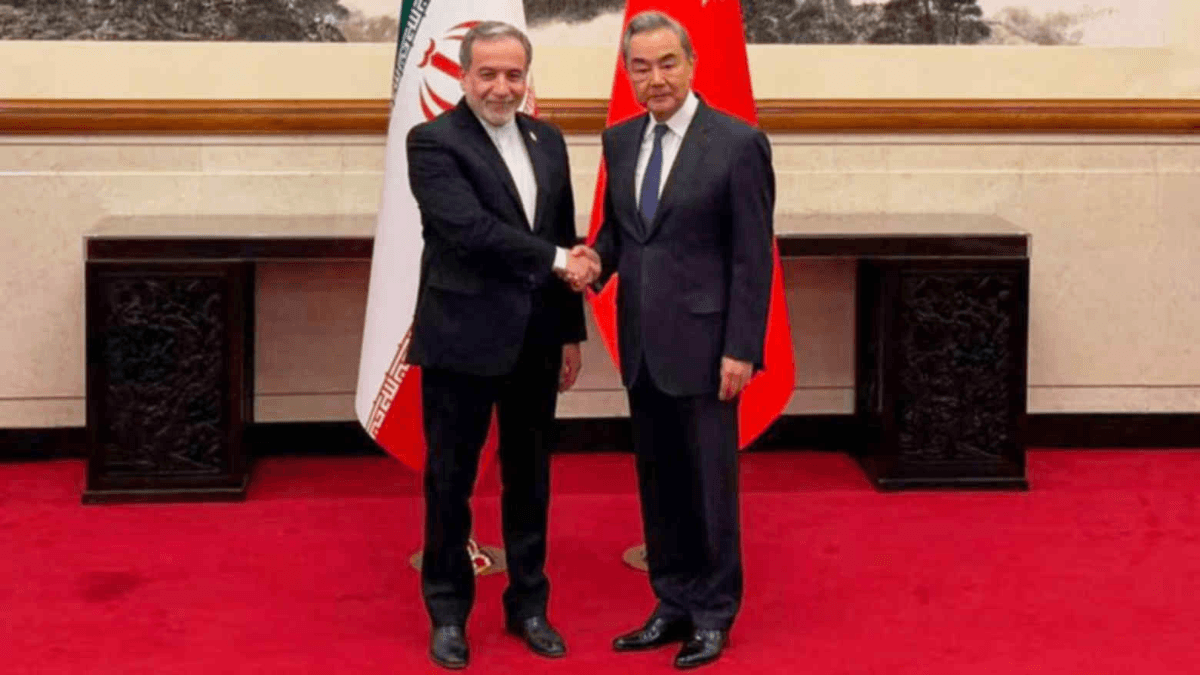
China's Foreign Minister Wang Yi called on Iran to move toward a comprehensive ceasefire, as fighting between Iran and the United States and Israel has lasted more than two months and is placing mounting pressure on the region as well as the global economy. Wang said Beijing is 'extremely concerned' about the conflict.
The remarks were made on Wednesday (May 6) during a meeting with Iranian Foreign Minister Abbas Araghchi in Beijing. This is Araghchi's first visit to China since the fighting with the United States and Israel erupted on February 28.
Analysts say the Chinese appeal could add momentum for the United States and Iran to resume negotiations, as peace talks have not yielded a breakthrough. The statement came after U.S. President Donald Trump announced a pause in the operation to escort stalled commercial vessels through the Hormuz Strait. Trump said the decision was partly driven by 'significant progress toward a comprehensive final agreement' with Iran.
Over the past two months, disruptions to ship traffic through the Hormuz Strait have pushed global
fuel prices higher, exerting pressure on the world economy and on many countries dependent on this route, including China. Before the war, Hormuz was a key maritime lane for transporting oil, natural gas, fertilizers, and other petroleum products.
'We believe the parties should urgently reach a comprehensive ceasefire. Escalation of fighting is unacceptable. What is especially important now is that the parties continue dialogue and negotiations,' Wang said in the meeting with Iran's Foreign Minister.
Wang said the conflict has lasted more than two months, causing not only serious losses for the Iranian people but also weighing on regional and global peace. Consequently, China is 'extremely concerned' about the situation.
Analysts say the close economic and political ties between China and Iran give Beijing substantial leverage with Tehran. Therefore, the Trump administration is urging China to use this role to pressure Iran to reopen the Hormuz Strait.
Former U.S. Secretary of State Mike Rubio previously expressed hope Beijing would remind Tehran of the necessity to open Hormuz. This is a crucial issue because control of this vital shipping lane remains one of Iran's biggest levers as Washington seeks to significantly curb its nuclear program.
'I hope the Chinese side will convey to Iran what is necessary. What Tehran is doing at Hormuz is isolating itself on the global stage. In this matter, Iran is in a disadvantageous position,' Rubio said at a White House briefing on Tuesday (May 5).
Chinese Foreign Ministry spokesperson Lin Jian said Beijing has made clear that the parties involved should act 'prudently' and resolve the conflict through dialogue to restore peace. He added that China has actively promoted peace negotiations and will continue to push in that direction.
Meanwhile, on May 6, President Trump continued to put pressure on Tehran. On Truth Social, he said the U.S. airstrike campaign Epic Fury against Iran could end if Tehran agrees to a peace deal, while warning that attacks would resume with greater intensity if no deal is reached.
Trump also said that if the United States and Iran reach a consensus, the U.S. Navy blockade of Iranian ports would end, thereby allowing the Hormuz Strait to reopen for all sides.
Axios reported that the United States and Iran have moved close to a 14-point memorandum of understanding to end the war and provide a framework for further negotiations. Axios also said the United States is awaiting Iran's reply to 'some key points' within 48 hours. Tehran has said it is considering Washington's new proposal.
Araghchi's visit to China occurred about a week before President Trump is expected to visit Beijing. According to plans, Trump's state visit to China could take place on May 14–15 and include a meeting with President Xi Jinping. This would be Trump's first presidential visit to China in his second term and the first visit by a U.S. president to China since his 2017 trip.