•
•
•
•
•
•
•
•
•
•
•
•
•
•
•
•
•
•
•
•
•
•
•
•
•
•
•
•
•
•
•
•
•


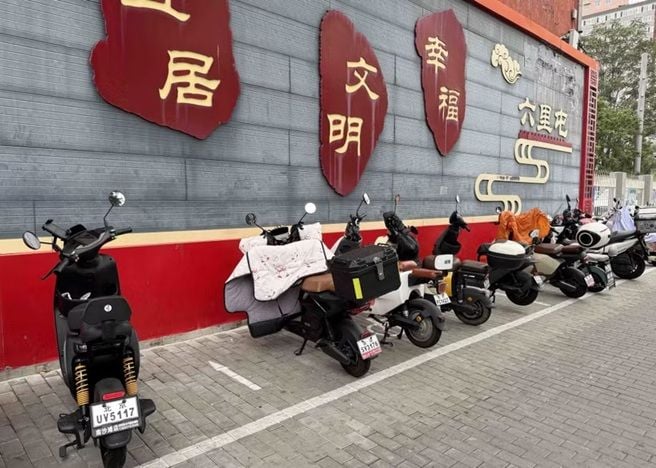
Export of China’s two-wheeled electric vehicles to Southeast Asia surged in the first quarter of 2026, driven by rising fuel prices and gasoline shortages linked to the Middle East conflict. In the first three months of 2026, the value of Chinese two-wheeled electric motorcycle exports to Myanmar, Laos and Cambodia increased year on year by 617.5%, 25.7% and 34.2%, respectively.
According to the latest data, Chinese exports of two-wheeled electric motorcycles to Myanmar rose sharply in Q1 2026. In the first three months of 2026, export value to Myanmar climbed 617.5% year on year to 64.7 million yuan (about 9.5 million USD).
Exports to Laos and Cambodia also increased, rising 25.7% and 34.2% year on year, respectively.
In Myanmar, severe gasoline shortages have prompted tighter controls. Since March 7, the government has introduced an odd-even license plate system for private cars and gasoline motorcycles, while electric vehicles are fully exempted.
Similar pressures were reflected in Laos and Cambodia. To ease cost burdens, Laos cut fuel consumption tax from March 18 and adjusted university class hours to save energy. In Cambodia, since the Middle East conflict began, prices of gasoline, diesel and liquefied petroleum gas (LPG) have risen by 41.5%, 84% and 60%, respectively.
Chinese manufacturers are expanding dealership networks across the region to capture demand. Many companies also export dismantled components for local assembly to take advantage of tax incentives, which may indicate that the actual scale of exports is larger than customs figures suggest.
While fuel shortages are boosting short-term sales, long-term adoption of two-wheeled electric motorcycles in Southeast Asia faces constraints. A report by Guotai Haitong Securities, published on March 24, noted that among 15 million motorcycles sold across nine Southeast Asian countries in 2025, the share of electric motorcycles remains low—below 10% in most markets including Indonesia, Thailand, Malaysia and the Philippines.
The main barriers are technology and cost. Lead-acid battery models are cheaper than gasoline motorcycles but have limited range and durability, while advanced lithium-ion battery models remain too expensive for most consumers.
Among Southeast Asian countries, Vietnam has the clearest electrification roadmap. The Vietnamese government has issued an action plan to electrify all transportation by 2050.
In Hanoi, where there are nearly 7 million gasoline motorcycles, the city’s People’s Council approved a resolution on November 26, 2025 to pilot a low-emission zone in the Ring Road 1 area starting July 2026. The plan restricts gasoline motorcycles by time and location as part of a phased transition.
Chinese manufacturers are accelerating investment in local production. Yadea Group identified Southeast Asia as a strategic priority in its 2025 annual report and inaugurated a plant in Bac Ninh province with capacity of 1 million motorcycles per year in early 2026, supplementing its existing facility in the province (previously Bac Giang). Tailg began operating a plant in Hung Yen province in August 2024 with a designed capacity of 350,000 motorcycles per year.
Foreign revenue from the overseas market for Yadea still accounts for less than 10% of total revenue in 2025, indicating potential for further growth in Southeast Asia.
Premium gym chains are entering a “golden era” that is ending or already in decline, as rising operating costs collide with shifting consumer preferences toward more flexible, community-based ways to exercise. Long-term memberships are shrinking, margins are pressured by higher rents and facility expenses, and competition from smaller, more personalized…