•
•
•
•
•
•
•
•
•
•
•
•
•
•
•
•
•
•
•
•
•
•
•
•
•
•
•
•
•
•
•
•
•
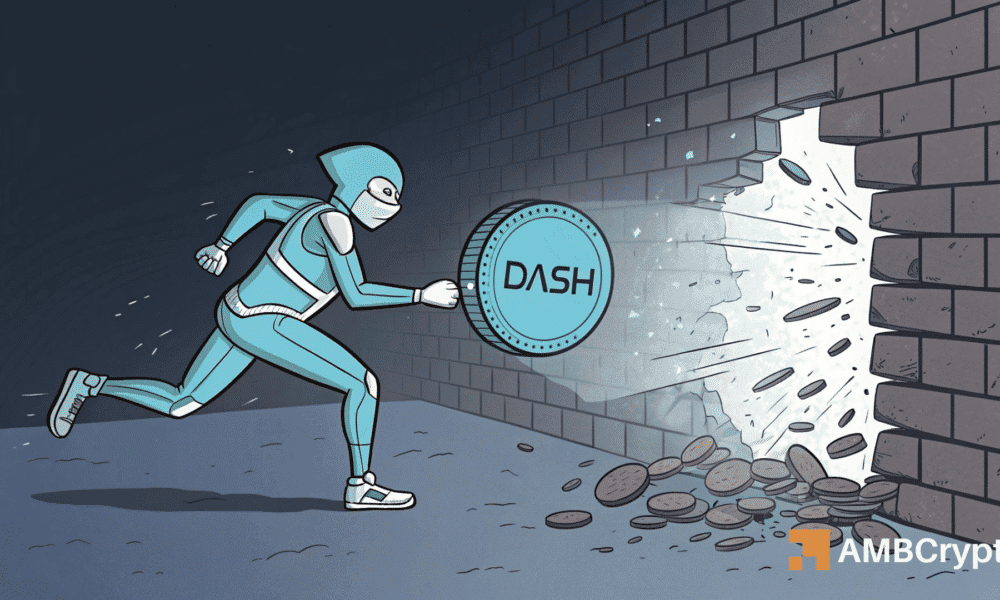
Over the last 24 hours, traders who bought DASH below its press-time price saw gains as the altcoin rallied by more than 15%, pushing it above the $40 level.
DefiLlama data showed DASH’s token trading volume more than doubled over the period. On 13 February, volume was $72 million, rising to $160 million a day later—an increase of 114%.
At the same time, total value locked (TVL) increased by about 10%. TVL was around $80k at press time.

DASH broke above $40 and began a second leg higher after clearing a descending trend channel that had lasted for more than a week. The article described the move as a potential reversal signal for privacy coins.
While momentum improved, it had not yet matched the prior upswing. The MACD bar reading peaked at 0.48 during the first leg, but was 0.16 at press time, leaving some uncertainty about whether the current momentum can carry DASH through the next resistance area.
The press-time leg-up targets were around $42, identified as a prior support level that has turned into resistance. The next upside focus was $45, which—if broken—would shift higher timeframes to a bullish bias. Otherwise, DASH could remain in a broader bear-market structure.

Ownership data suggested large holders were aligning with the market move. Addresses holding above $1 million in DASH reportedly spiked just before the second leg up.
The article linked this holder behavior, along with broader strength across privacy coins, to the possibility of a sustained price trend.
At the time of writing, the top four capped privacy coins were all trading in green. ZCash (ZEC) led with 23% gains, followed by Monero (XMR) and Decred (DCR).
The article attributed DASH’s rally partly to capital rotation back into the privacy sector, citing the increase in DASH addresses holding more than $1 million.