•
•
•
•
•
•
•
•
•
•
•
•
•
•
•
•
•
•
•
•
•
•
•
•
•
•
•
•
•
•
•
•
•


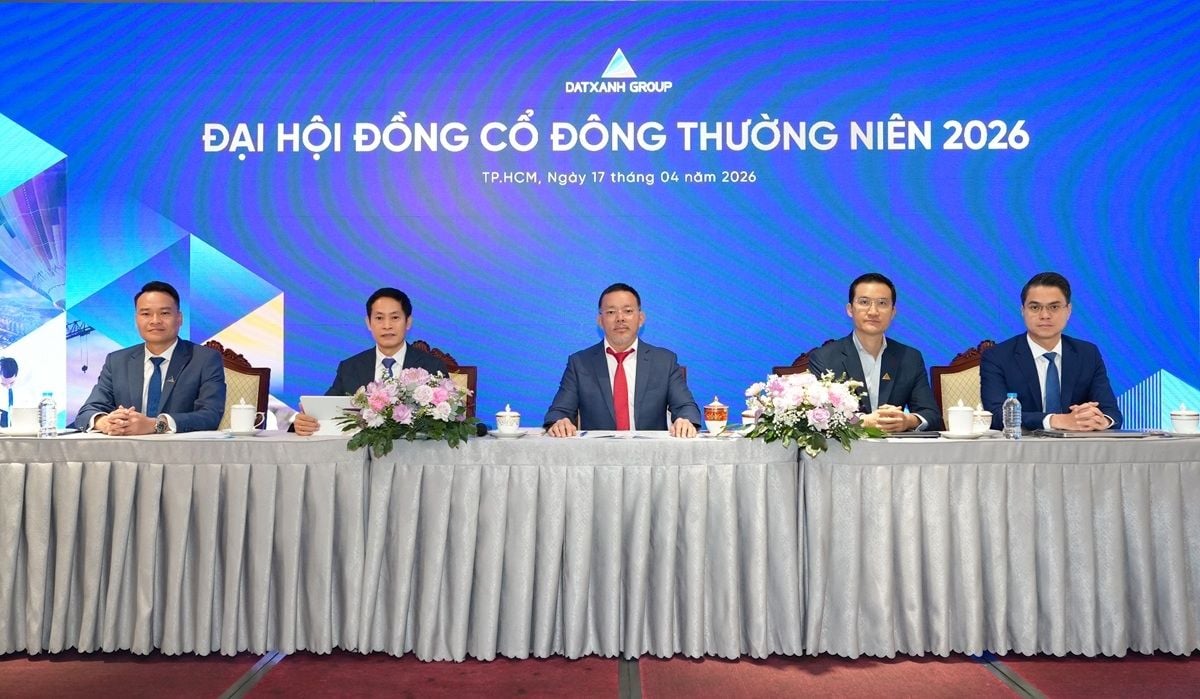
Dat Xanh Group (HOSE: DXG) held its 2026 annual general meeting of shareholders on April 17, 2026, approving key matters including business results, development plans, long-term strategic directions, and leadership changes.
In 2025, the group entered a transition phase focused on maintaining stable operations, restructuring resources, and preparing for the next growth cycle. Consolidated revenue reached VND 4,192 billion, while net profit attributable to parent company shareholders was VND 231 billion.
For 2026, Dat Xanh set a revenue target of VND 5,000 billion and net profit of VND 268 billion, implying growth of about 16% versus 2025.
The AGM also approved a bonus share issuance plan in 2026 at an estimated rate of about 14%, which would increase charter capital to over VND 12,600 billion.
Management described 2026 as an acceleration phase for major projects, with revenue and profit expected to improve as projects progress and product handovers expand.
The Privé project—one of the group’s flagship developments—is currently selling Phase 2, with Phase 3 expected to launch in Q2 2026.
On construction progress, Phase 1 has completed around 50% of the gross floor area and is expected to be handed over in Q2 2027. Subsequent phases are being implemented in parallel to support overall schedule adherence.
With this roadmap, Dat Xanh expects revenue and profit from The Privé to begin being recognized from 2027, supporting cash flow for the next growth phase.
Dat Xanh also highlighted the expected operation of Long Thanh International Airport in 2026 as a major infrastructure catalyst that could open large-scale housing demand in the surrounding area.
For the Gem Sky World project in Long Thanh, Dong Nai, infrastructure has been completed. More than 4,000 lots have been issued land-use certificates, and the company has completed handing over land-use certificates to customers for sold products.
The remaining portion of the project—nearly 1,800 lots—has now been issued separate land-use certificates for each lot. From now through the end of 2026, the group plans to bring the entire remaining portion of this project into business.
Founder and Chairman Luong Tri Thin said that in 2025, Dat Xanh had four projects nearing land-use payment completion and six projects approved to implement under the pilot mechanism of Resolution 171. These projects range from 5 to 10 hectares.
He added that the group has 10 central-city projects in Ho Chi Minh City that are ready for investment and business in the near future.
The AGM approved the repositioning of the Dat Xanh brand, described as a strategic step to support restructuring of the group’s operating model in the near future.
According to leadership, the new operating model aims to balance and diversify revenue sources, helping Dat Xanh build multiple growth pillars that can better adapt to market cycles.
Bui Ngoc Duc was approved as the new Chairman of the Board. He has been with Dat Xanh since 2014 and is expected to be the architect of the restructuring. CEO Nguyen Truong Son, who has been with the company for 15 years and has international experience, will play a key role in leading the company forward.
Management said the leadership restructuring is intended to create momentum and enhance capabilities for further growth. Luong Tri Thin also emphasized that the new generation of leaders brings energy for change and is prepared to take charge in Dat Xanh’s next development phase, supported by continued investment in human resources and talent development.
The Dat Xanh brand has been developed for 23 years, and leadership noted that market recognition through service activities will be complemented by brand restructuring to sharpen strategic positioning and lay the foundation for implementation by the Strategy Council and the management board.





Premium gym chains are entering a “golden era” that is ending or already in decline, as rising operating costs collide with shifting consumer preferences toward more flexible, community-based ways to exercise. Long-term memberships are shrinking, margins are pressured by higher rents and facility expenses, and competition from smaller, more personalized…