•
•
•
•
•
•
•
•
•
•
•
•
•
•
•
•
•
•
•
•
•
•
•
•
•
•
•
•
•
•
•
•
•


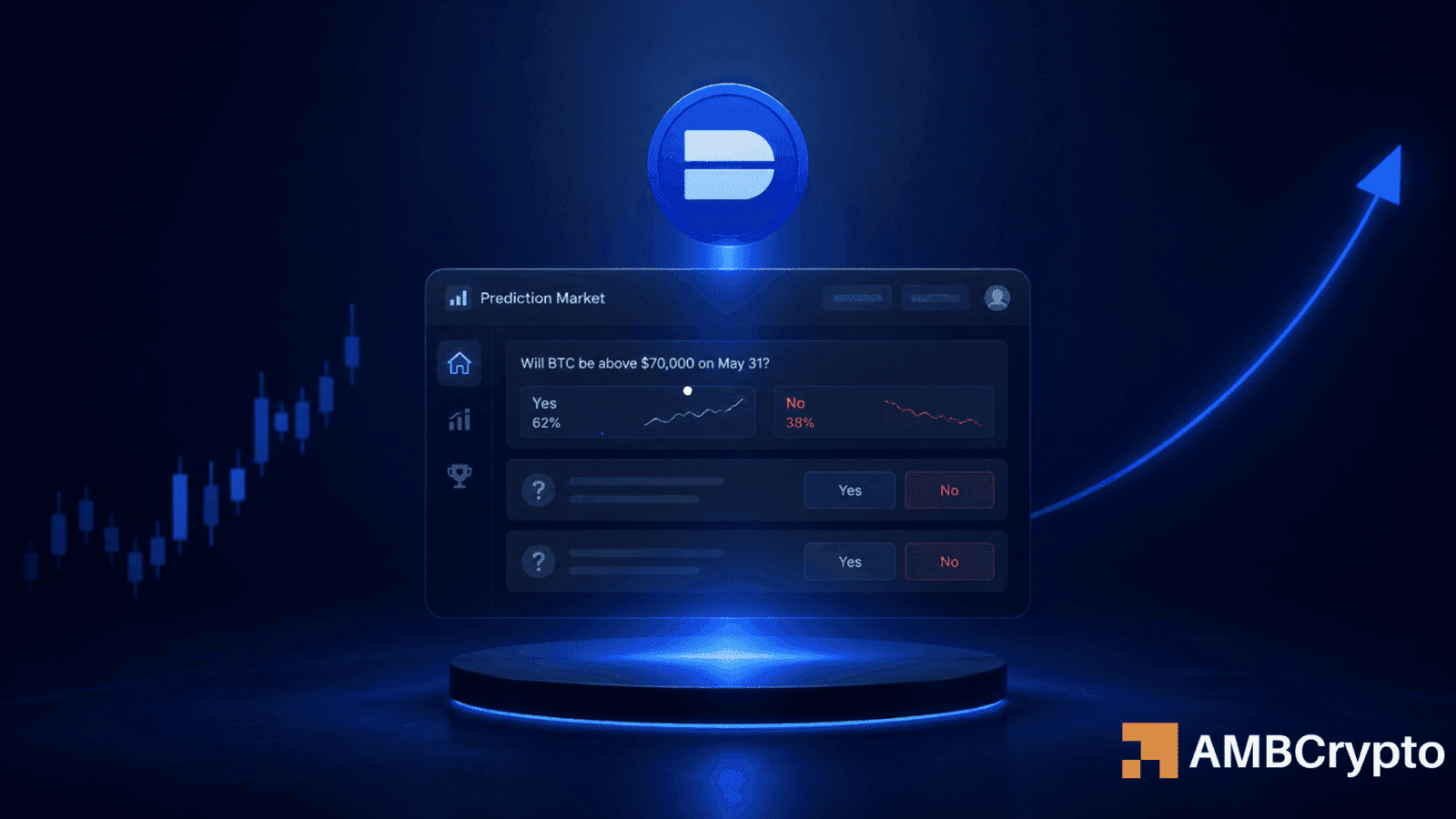
DeepBook (DEEP) was the biggest gainer among the top 200 coins by market cap at the time of press, rallying more than 23% over the past 24 hours. During the same period, the broader crypto market was up only 0.70%, highlighting the outsized move in DEEP.
The rally was primarily attributed to a new product from the DeepBook protocol, built on the Sui Network (SUI). DeepBook announced the launch of its prediction market platform, Predict, and the platform went live after the team dropped the Predict Waitlist.
Predict enables betting on any asset at any price range with leverage. The new utility immediately drew speculative activity, with daily trading volume rising 976% to more than $60 million.
Charts showed increased speculative trading as DEEP attempted to break above consolidation. The altcoin had been moving sideways for the previous 100 days.
The Choppiness Index fell sharply to 32, a reading associated with a stronger trend. However, capital inflows were still negative according to the Chaikin Money Flow (CMF).
If a reversal materializes, the next resistance levels cited were $0.07 and $0.08, where sellers may respond.
After the daily surge, DeepBook’s whales were reportedly seeing gains. The PnL of most whales was in the green, including one address up more than 307%. Additional addresses also recorded double-digit gains.
At the same time, data from Sui Vision indicated that many whales were starting to take profit, which could limit further short-term price appreciation.
Tokenomics data also raised concerns: the top 10 holders controlled nearly 70% of the circulating supply, a concentration risk given the token’s perceived decentralization narrative.
While the launch of Predict was described as bullish for both the short and long term due to increased trading activity on the protocol, the article cautioned that the move did not yet guarantee continued upside at that moment.
Premium gym chains are entering a “golden era” that is ending or already in decline, as rising operating costs collide with shifting consumer preferences toward more flexible, community-based ways to exercise. Long-term memberships are shrinking, margins are pressured by higher rents and facility expenses, and competition from smaller, more personalized…