•
•
•
•
•
•
•
•
•
•
•
•
•
•
•
•
•
•
•
•
•
•
•
•
•
•
•
•
•
•
•
•
•


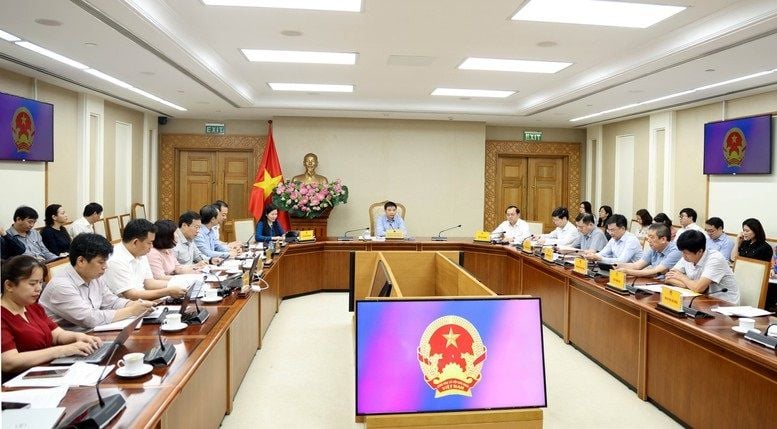
Deputy Prime Minister Nguyen Van Thang chaired the Price Management Steering Committee meeting to review the results of price management in the first quarter of 2026 and to agree on price-management scenarios for the remaining months of 2026.
At the meeting, he said global volatility is exerting strong pressure on domestic prices, creating risks of imported inflation. He asked ministries and agencies to closely assess factors with large fluctuations, including fuel prices, construction materials, and the planned base salary increase from July 1, 2026. The Steering Committee will finalize price-management scenarios for the rest of 2026.
The Ministry of Finance updated three inflation scenarios for 2026: approximately 4.5%, 5%, and 5.5%. The State Bank of Vietnam forecasts average inflation of about 5% ± 0.5% for 2026. International organizations have recently revised their Vietnam inflation forecasts to around 3.8%–4.9%.
Ministries briefed the committee on upcoming price-management actions.
According to the Ministry of Construction, in April it conducted inspections in several localities on price declarations and issued corrective actions for existing violations. It is urging enterprises to lower parking fees, reduce loading and unloading costs, and cut prices for services not related to fuel prices to share the burden with transport businesses.
Deputy Minister of Industry and Trade Nguyen Sinh Nhat Tan said the ministry is accelerating the transition to E10 gasoline and proposes exempting import duties.
Representatives noted that some government-regulated items have seen adjustments, including waivers of tuition fees for public kindergarten through high school nationwide; a 5%–20% reduction in schoolbook prices for the new academic year; and reductions in shipping fees for ships in Vietnam.
The committee also emphasized that timely price reductions should be implemented when input costs fall.
In concluding remarks, Deputy Prime Minister Nguyen Van Thang said that in the first quarter of 2026, despite many difficulties and external factors—such as energy prices rising—price-management work met its targets and produced positive results. He commended the proactive efforts of the Ministry of Finance and other ministries.
For the remaining months of 2026, he urged continued use of outcomes and experience gained, particularly in responding to sudden, unprecedented situations. Ministries were asked to be proactive and flexible, strengthen monitoring and analysis of supply, demand, and prices of essential goods, and prevent policy misuse—especially in sectors directly affected by fuel costs such as transport, logistics, construction materials, and food.
Ministries and agencies were instructed to direct and require enterprises to strictly declare and publish prices as required and not exploit cost fluctuations to raise prices unreasonably. The Deputy Prime Minister stressed maintaining supply-demand balance, especially for essential groups including fuels, electricity, food, and raw materials for production. Authorities should promptly adjust supply to meet domestic demand across regions and provinces and to meet export needs to help stabilize market prices.
Provincial People’s Committees were asked to actively implement price-stabilization programs for essential goods tailored to local conditions. The committee also called for enhanced inspection, market surveillance, and enforcement of the price law to detect and sanction price speculation, hoarding, price manipulation, or price increases not aligned with reductions in input costs. It specifically highlighted thorough inspection and handling of violations in cross-border fuel trading to prevent price gouging.
Authorities were further urged to strengthen implementation of price declarations, price disclosure, public price information, and enforcement of price laws, including punishment for violations. Information dissemination should be intensified to ensure price-management measures are carried out effectively and smoothly.
The Deputy Prime Minister also urged competent authorities to issue price-assessment documents within their scope and implement price-management responsibilities under the amended Price Law and related guidance. Authorities should monitor supply-demand trends and prices of essential items such as food, electricity, construction materials, education, and healthcare, as well as indirect price pressures including gold, foreign currencies, and real estate.
For goods and services subject to state pricing adjustments, authorities were asked to review cost factors and assess their impact on local and national price levels. They should avoid price increases before conditions are met, direct firms to control input costs, reduce production costs, improve efficiency, and share burdens while balancing national and private interests. When input costs decline, price reductions should be made promptly; if not necessary, the timing and extent of adjustments should be carefully considered to stabilize price levels and meet inflation targets.




Premium gym chains are entering a “golden era” that is ending or already in decline, as rising operating costs collide with shifting consumer preferences toward more flexible, community-based ways to exercise. Long-term memberships are shrinking, margins are pressured by higher rents and facility expenses, and competition from smaller, more personalized…