•
•
•
•
•
•
•
•
•
•
•
•
•
•
•
•
•
•
•
•
•
•
•
•
•
•
•
•
•
•
•
•
•


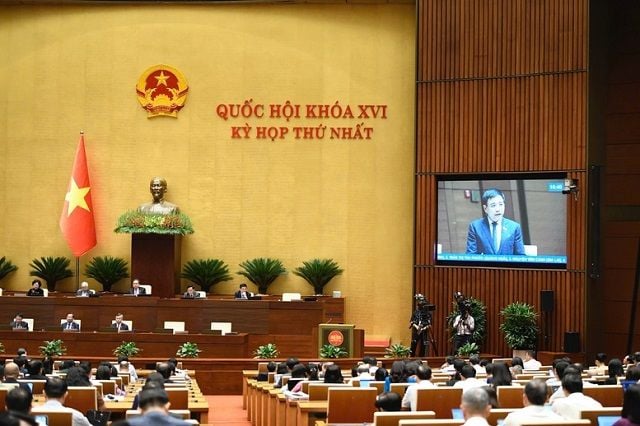
Deputy Prime Minister Nguyen Van Thang said that high and sustainable economic growth are closely linked and mutually reinforcing, describing the relationship as “two wings of one bird.” Speaking during a floor discussion at the National Assembly on the morning of April 21, he argued that transforming the growth model is a mandatory requirement to overcome the middle-income trap, catch up with, and move in step with, the region and the world, while working toward “two centennial goals.”
Thang said the country needs to shift to a new growth model supported by new engines, including the data economy, digital economy, green economy, and circular economy. He emphasized maximizing national potential while investing in science and technology, innovation, and digital transformation.
He noted that the Government has proposed 11 major tasks with 92 concrete measures for 2026–2030, aligned with the shift to the new growth model and the goal of achieving two-digit growth.
The Deputy Prime Minister stressed that fiscal policy should be expanded reasonably to stabilize the macroeconomy. He said monetary policy has been actively implemented, but policy space is narrowing, so fiscal policy must be leveraged with targeted measures.
In the short term, he said monetary policy should remain smooth to ensure liquidity and resources for businesses and people. Fiscal policy, he added, should be extended with a focus on effectiveness, combining State resources with foreign loans to spur growth and stabilize the macroeconomy.
Thang said the Government is working to unlock about 3.3 quadrillion dong and to cut administrative procedures. He also highlighted efforts to develop the capital market into a medium- and long-term funding channel for the economy, with the aim of reducing pressure on banks.
By 2028, the stock market capitalization is targeted to reach about 120% of GDP.
On public investment disbursement, the Government aims for 100% achievement. Priorities will be given to key national projects, while the number of projects will be reduced by at least 30% to avoid overextension.
The Government plans comprehensive reforms to administrative procedures and business conditions, aiming to reduce processing time and compliance costs by at least 50% and to eliminate unnecessary business conditions.
In Thang’s framing, the transition to a new growth model is essential to overcoming the middle-income trap, sustaining high and stable growth, and ensuring inclusive benefits for citizens through modernization, innovation, and improved resource allocation.







Premium gym chains are entering a “golden era” that is ending or already in decline, as rising operating costs collide with shifting consumer preferences toward more flexible, community-based ways to exercise. Long-term memberships are shrinking, margins are pressured by higher rents and facility expenses, and competition from smaller, more personalized…