•
•
•
•
•
•
•
•
•
•
•
•
•
•
•
•
•
•
•
•
•
•
•
•
•
•
•
•
•
•
•
•
•


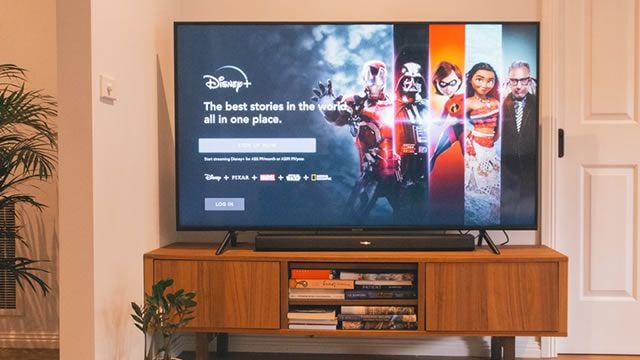
Disney’s transition away from its legacy cable networks adds an element of uncertainty that investors must factor into their outlook. The company’s streaming platforms and its experiences division are underpinned by a broad portfolio of intellectual property, but the stock’s recent performance and the broader shift in media consumption suggest that expectations should be tempered.
Long-term investors—those willing to hold for at least five years—may view Disney as a high-quality business with a strong position across multiple markets. The company’s streaming footprint includes Disney+, which has 131.6 million subscribers (as of Sept. 27, 2025), and Hulu (excluding Live TV), with 59.7 million subscribers. Disney also launched its ESPN flagship direct-to-consumer platform in August of the prior year.
These services, the article notes, give Disney a leading position in streaming and the ability to bundle offerings to support higher sign-ups and retention compared with rivals that rely on a single platform.
In addition to streaming, Disney’s experiences business is described as a dominant physical-world franchise. A September 2023 press release cited in the article states that Disney has seven of the top ten most attended theme parks in the world. The company is also expanding its cruise operations, moving from eight cruise ships currently to 13 powering its fleet around the world.
The article argues that building a competing entertainment and experiences business would require substantial investment in technology, content acquisition, and large-scale operations such as theme parks and cruise ships—barriers it characterizes as “massive.”
Despite the uncertainty tied to cable network reduction, the article highlights Disney’s valuation as a potential support for investors. It cites a forward price-to-earnings ratio of 15.7, describing the stock as a “compelling” buying opportunity.
Walt Disney shares trade 48% below their peak from March 2021 (as of April 22), the article says. It attributes the challenge to Disney navigating a changing media landscape while reducing dependence on traditional cable TV, an industry described as being in secular decline.
However, the article cautions that investors are not necessarily looking at a “home-run” scenario. It suggests that for a stock to “set you up for life,” it would likely need to generate a 50-fold gain over the next 30 years, and it characterizes Disney as not fitting the profile of an early-stage, high-octane growth opportunity.

Premium gym chains are entering a “golden era” that is ending or already in decline, as rising operating costs collide with shifting consumer preferences toward more flexible, community-based ways to exercise. Long-term memberships are shrinking, margins are pressured by higher rents and facility expenses, and competition from smaller, more personalized…