Domestic
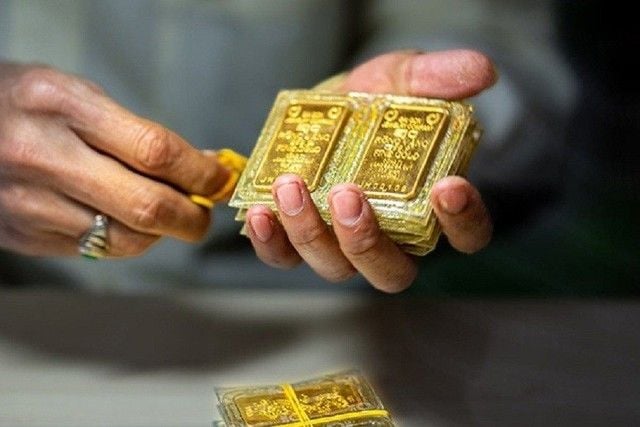
gold prices have remained steady, with the premium over world prices still wide. As of around 10:00 this morning on May 9, Saigon Jewelry Co. (SJC) was quoting gold bullion at 164.5–167.5 million VND per tael (buy to sell), unchanged from yesterday morning. Other gold merchants in Vietnam were also maintaining bullion prices at 167.5 million VND per tael. Similarly, bullion-grade gold jewelry prices remained stable, with brands such as Phú Quý, DOJI, Bao Tin Minh Chau quoted around 164.5–167.5 million VND per tael (buy to sell). Bao Tin Manh Hai quoted 164.5–167.4 million per tael. Overall, domestic gold prices are flat, even as international markets moved only modestly. By early May 9, the global price closed at around $4,715 per ounce, down about $35 from the intraday high of $4,750. Converted to Vietnamese dong using Vietcombank rates, world gold price stands at about 149.7 million dong per tael, making the gap with SJC bullion about 17.8 million dong per tael. Analysts say the weakness in worldwide gold prices stems mainly from the US jobs report for April: non-farm payrolls rose by 115,000, higher than some expectations, while unemployment remained at 4.3%. Geopolitical factors also contributed to volatility in commodities markets; although a ceasefire between the US and Iran persists nominally, tensions have escalated in practice. The US conducted airstrikes against Iranian military targets, while Iran signaled it would tighten control of key trade routes. Analysts say US macroeconomic data and geopolitical risks create a complex gold market; investors may monitor developments in the Middle East to forecast gold price directions. Premiums between domestic and world gold prices narrowed to around 16–17 million dong per tael (roughly $600), but remain high relative to China or India (about $14–20 per ounce), suggesting room for further narrowing. WGC representatives expect gold prices to rise again if global risk factors persist, though Western investor behavior could be influenced by prolonged high interest rates. WGC views gold as a long-term asset and strategic, not a short-term trading instrument. In Q1 2026, central banks purchased a net 244 tons of gold—the strongest among several years—with Poland, Uzbekistan, and China among buyers, and some Southeast Asian countries like Malaysia, Cambodia, and Indonesia also increasing holdings. Turkey and Russia were among those selling gold for currency needs. Investors are advised to monitor geopolitical developments in the coming days to anticipate further price movements.