•
•
•
•
•
•
•
•
•
•
•
•
•
•
•
•
•
•
•
•
•
•
•
•
•
•
•
•
•
•
•
•
•


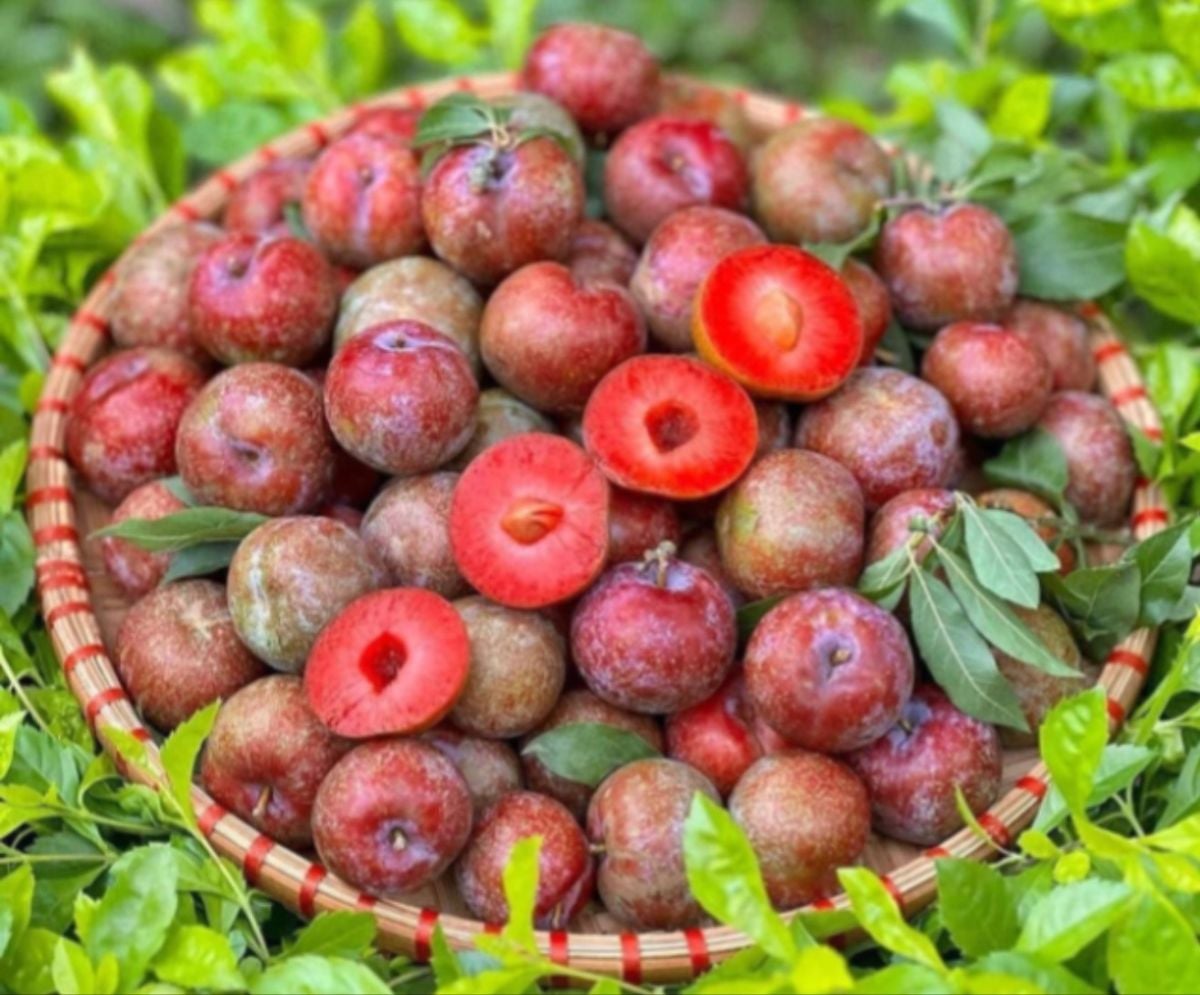
Since the beginning of April, early-season plums have started appearing in fruit shops in Ho Chi Minh City, but supply remains limited. A market survey shows first-grade plums (20–25 fruits per kg) are being sold at about 250,000 VND per kg, while smaller fruit (around 25–35 fruits per kg) ranges from 120,000–150,000 VND per kg.
At Ben Thanh Market, trader Lực Tấn Dũng said he imported four batches of plums from the North totaling nearly 250 kg. He noted that this year’s plums are of good quality, with large, uniform fruit and a crisp, sweet-tart taste that makes them easier to eat than imported varieties.
Plums have only one harvest per year, so demand rises sharply at the start of the season. At the Thủ Đức wholesale fruit market, supply is still tight: each day only a few wholesalers trade wholesale plums at 130,000–150,000 VND per kg, and some days have no stock available for import and sale.
In Hanoi, early-season plums in markets mainly come from Moc Chau (Son La). On Xã Đàn Street, a catty (about 0.5 kg) of plums—roughly 25–30 fruits—sells for 170,000–180,000 VND per kg.
Fruit sellers attributed the high price of Son La plums partly to high fuel costs, which increase transportation expenses and push up retail prices for the seasonal specialty.
Tran Van Hong, Director of HTX Tien Đạt (Lóng Piêng, Son La), said this year’s early-season harvest is smaller than last year due to adverse weather. He added that farms operating under Global GAP can command higher prices: Global GAP plums are purchased at the orchard for 95,000–100,000 VND per kg, while smaller fruit sells for 60,000–80,000 VND per kg.
Despite prices being higher than the same period last year, traders say plums remain in short supply. A trader at Long Biên Market said plums from Son La sell out every day, and late-arriving customers often find no stock.
Le Huong Mo, Deputy Director of Huong Mo Green Agricultural Cooperative (Yen Châu, Son La), said the cooperative ships 2–4 tons of early-ripe plums daily. Shipments mainly go to major hubs including Long Biên Market (Hanoi), Hưng Yên, and Thanh Hóa. The cooperative also sells via e-commerce platforms, receiving 50–150 orders per day.
In Moc Chau, an area of over 3,000 ha, early-ripe plums account for more than 20% of plantings. Trịnh Việt Cường, from Thảo Nguyên ward, said he has nearly 8 ha of plums, with more than 4 ha irrigated using drip systems to support early ripening.
He said producing early-ripe plums requires patience and advanced techniques, including accurately assessing tree age, providing full nutrition, and managing pests effectively to achieve the desired yield.
Beyond selling to traders, many growers are shifting toward agritourism and branding. Lương Hải Yến, owner of the Hai Yến plum orchard in Mộc Châu, said the farm welcomed more than 300 visitors in the past week, and that visitor numbers could reach around 1,000 per day ahead of an upcoming holiday.
Tour groups typically visit to observe, pick, and experience the orchard for 30 minutes to an hour. Self-guided visitors can also camp, have lunch, and take photos in traditional minority attire. Entry is 40,000 VND per person, and plums sold at the orchard are priced at 70,000–80,000 VND per kg.
Farmers noted that plum seasons vary across districts in Son La; Moc Chau is currently in the early season. The province expects the plum season to last until early September. Because the lunar year has an extra month, plums are expected to mature later than in previous years.
From the start of the year to now, Son La has consumed nearly 30,000 tons of fruit with a value of nearly 630 billion VND. Major fruits with large output include bananas, strawberries, grapefruits, and plums. For plums specifically (including Tam Hoa plums, late-season plums, and rice plums), the province consumed 12,500 tons in the first three months, worth 360 billion VND.
From May, Son La plums enter the main harvest, and total plum production for this year is estimated at more than 60,000 tons. After years of intensive cultivation, Son La plums are reported to have stable consumption, with average income of about 150–200 million VND per hectare.
Nguyễn Thị Hoa, Vice Chairwoman of Moc Chau Town, said for organic-plum areas, the local government will cooperate with a private wine producer to promote consumption and support exports.
Nguyễn Thanh Công, Vice Chairman of Son La Province, said the region will convert areas not yet applying scientific techniques to organic, clean, and smart agriculture to produce high-quality plums for domestic and international markets. The province has issued a document through the Center for Investment, Trade and Tourism Promotion to coordinate with the Department of Agriculture and Environment to select a supplier and prepare 2,000 kg of late-season plums for free meals on Vietnam Airlines flights.







Premium gym chains are entering a “golden era” that is ending or already in decline, as rising operating costs collide with shifting consumer preferences toward more flexible, community-based ways to exercise. Long-term memberships are shrinking, margins are pressured by higher rents and facility expenses, and competition from smaller, more personalized…