•
•
•
•
•
•
•
•
•
•
•
•
•
•
•
•
•
•
•
•
•
•
•
•
•
•
•
•
•
•
•
•
•


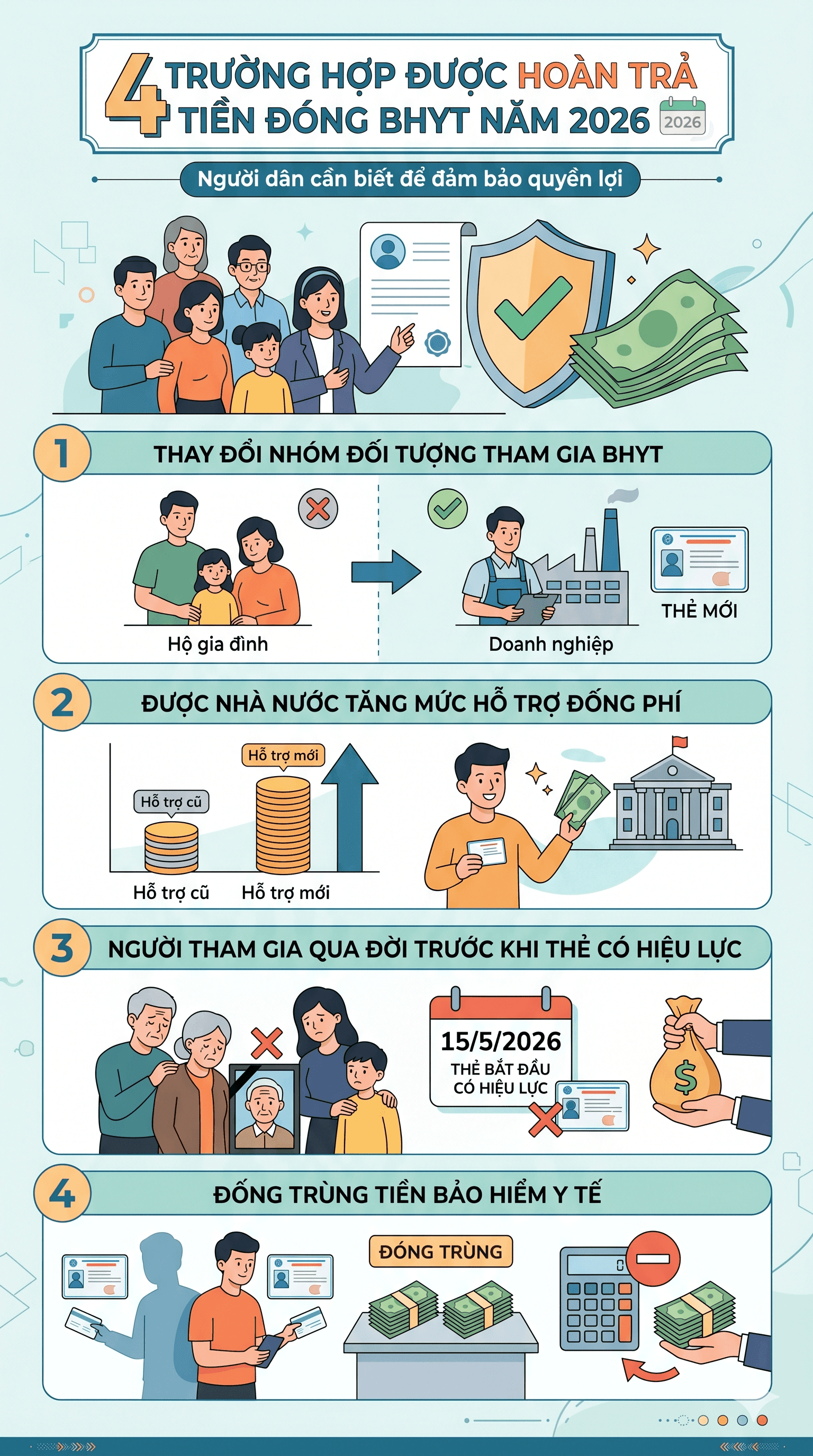
Under the latest provisions of the Health Insurance Law 2024 and guidance issued by Vietnam Social Insurance, participants may be refunded amounts they have paid in four specific groups of cases. The refund is calculated based on the remaining or overlapping coverage period, depending on the situation.
If a person holds an old BHYT card but is issued a new card in a higher-priority group, the value of the old card will be reduced.
Refund amount: Calculated based on the amount paid corresponding to the remaining time of the old card that has not yet been used.
Calculation timing: From the day the BHYT card in the new priority group officially takes effect.
When new policies adjust the share of government budget support for the BHYT group a participant belongs to, the refund reflects the difference in premium contributions for the unused time since the new policy applies.
Refund amount: The difference in paid contributions for the unused time after the new policy takes effect.
Calculation timing: Based on the date the government decision on the subsidy adjustment takes effect.
If a participant dies before the BHYT card’s value takes effect, the refund applies to the entire amount paid for that BHYT card.
Refund amount: Full amount paid for the BHYT card.
Calculation timing: Based on the full duration of the card’s value.
This applies when a person accidentally pays BHYT two or more times for the same period—for example, paying both through family payments and through an employer.
Refund amount: The excess amount corresponding to the overlapping period.
Calculation timing: Calculated from when the most recent BHYT card is issued and its value overlaps with the previous card.
To claim a refund, residents are instructed to bring the BHYT card, national ID, and receipts (proof of payment). In the case described in scenario 3 (death before the card becomes effective), a death certificate is also required. Participants should submit these documents to the Social Insurance office or the post office where they registered for BHYT for detailed guidance.

Premium gym chains are entering a “golden era” that is ending or already in decline, as rising operating costs collide with shifting consumer preferences toward more flexible, community-based ways to exercise. Long-term memberships are shrinking, margins are pressured by higher rents and facility expenses, and competition from smaller, more personalized…