•
•
•
•
•
•
•
•
•
•
•
•
•
•
•
•
•
•
•
•
•
•
•
•
•
•
•
•
•
•
•
•
•


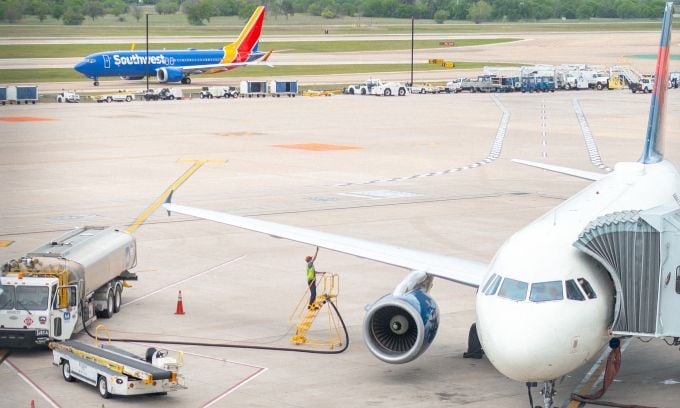
Fuel supply constraints—both expensive and scarce—have prompted many airlines to raise ticket prices and surcharges and to cut flights, as Europe faces dwindling jet fuel reserves.
Fatih Birol, director of the International Energy Agency (IEA), said Europe has jet fuel reserves for only about six weeks remaining. Some countries are even below 20 days.
Since 2020, Europe has not seen reserves fall below 29 days. The IEA says that if reserves drop below 23 days, some airports could realistically run out of fuel, increasing the risk of flight cancellations and reducing travel demand as ticket prices rise.
Austria, Bulgaria and Poland still have ample reserves, while the United Kingdom, Iceland and the Netherlands face a worse situation. France is described as around average.
Last week, the European Airports Council warned the European Commission that jet fuel shortages could begin in three weeks if the Hormuz Strait remains blocked.
Jet fuel is a refined product derived from kerosene. Europe largely produces its own demand but still faces a shortfall of about 20-25% since the Middle East conflict. Argus Media’s Amaar Khan said about 40% of the bloc’s imports pass through the Hormuz Strait.
Since hostilities began, there have been no cargo shipments moving. “Every day the strait remains closed, Europe moves closer to the risk of supply shortages,” Khan said.
Claudio Galimberti, an economist at Rystad Energy, said the situation could become serious in three to four weeks. He forecast that major flight cuts across Europe could start in May and June.
Asia-Pacific is also heavily dependent on jet fuel imports from the Middle East, though experts say it is difficult to gauge the overall picture because reserves vary by country and carrier. Japan, for example, depends on imports but has meaningful reserves.
Jet fuel prices have nearly doubled since the conflict began, reaching $165 per barrel on April 16, compared with under $100 before the conflict. Prices briefly surpassed $200 earlier this month, hitting $201 per barrel on April 2, according to Platts.
Jet fuel accounts for the largest share of airline costs—about 30% of total costs, according to the International Air Transport Association (IATA).
EasyJet said fuel costs in March rose by about 25 million pounds ($34 million). The airline expects to report a pre-tax loss of 540-560 million pounds ($731-758 million) in the first half of fiscal year 2026.
The United States is less affected because it is a major producer and is pushing to export jet fuel to Europe. About 150,000 barrels per day are expected in April, six times normal.
Clearview Energy Partners’ Jacques Rousseau said: “We may not run out of fuel entirely, but prices will be higher and some places could actually run dry.”
Fuel shortage risk also varies by airline. Airlines typically buy directly from refineries or energy companies, with fuel transported by ships and pipelines and stored at airports. A region with shortages does not necessarily mean flight shutdowns, because some airlines hold larger inventories than others. Large carriers, Rousseau said, have an advantage due to stronger financial capacity.
Airlines have responded cautiously—acknowledging fuel risk while reassuring customers—and some have shifted costs to passengers through higher baggage fees, surcharges or ticket prices. In the US, Delta, United, American Airlines, Southwest Airlines and JetBlue have raised checked-bag fees in recent weeks.
Cathay Pacific (Hong Kong) raised fuel surcharges by about 34% across all routes, while Air India charges up to $280 more on some trips. Emirates, Lufthansa and KLM have also adjusted fees or fares. Metro Global said about half of global air cargo routes have raised prices by 20% or more.
Carriers are also cutting flights. On April 16, KLM said it would cut 160 flights next month—about 1% of total European routes—citing that it is no longer financially viable to operate.
Lufthansa said labor disputes and high fuel costs forced it to suspend CityLine earlier and retire 27 older, energy-inefficient aircraft.
Cathay Pacific said it would reduce capacity by about 2% from mid-May to June and pause some routes to the Middle East. Other carriers including United Airlines, Air India and Air New Zealand have taken similar steps.
Metro Global said airlines are revising contingency plans, including further capacity reductions, retiring older aircraft, and reallocating fleets to save more fuel. In some cases, airlines can reduce capacity by up to 5% if the situation worsens.
Christopher Anderson, a professor at Cornell University, said: “This is no longer just a story about fuel prices. For airlines, it’s now a story about network planning.”
He recommended travelers prepare for more than just higher ticket costs. If jet fuel supply remains tight into peak summer, passengers may face not only difficulty finding cheap tickets but also more volatile flight schedules.


Premium gym chains are entering a “golden era” that is ending or already in decline, as rising operating costs collide with shifting consumer preferences toward more flexible, community-based ways to exercise. Long-term memberships are shrinking, margins are pressured by higher rents and facility expenses, and competition from smaller, more personalized…




