•
•
•
•
•
•
•
•
•
•
•
•
•
•
•
•
•
•
•
•
•
•
•
•
•
•
•
•
•
•
•
•
•


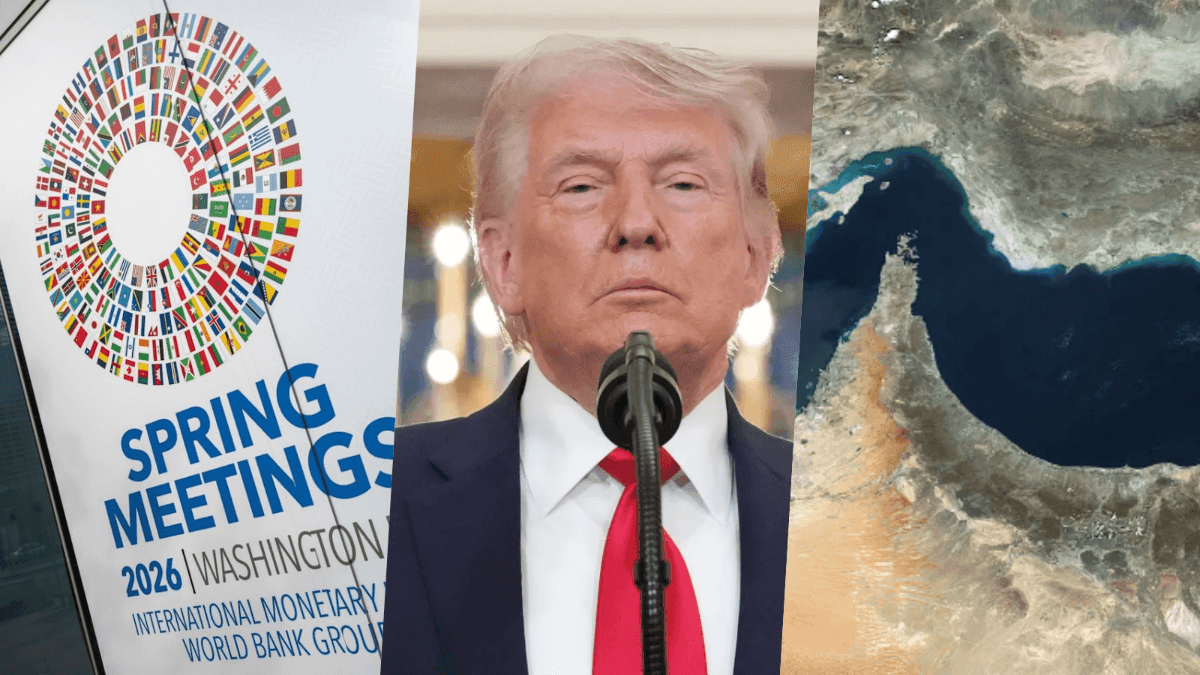
This week, the global economy remained focused on developments in the Iran conflict. The Hormuz Strait was fully reopened to commercial shipping, and U.S. President Donald Trump said the war was nearing its end. These signals helped ease market tensions after weeks of sharp volatility, though risks to growth, inflation, and global energy markets have not been fully removed.
On April 17, Iran announced the full opening of the Hormuz Strait for merchant ships while an Israel–Lebanon ceasefire remained in effect. Oil prices fell, European stocks and U.S. stock futures rose, and the dollar weakened.
Despite the reopening, Trump said the U.S. Navy would continue to block vessels entering Iranian ports at Hormuz Strait until an agreement is reached, while thanking Tehran.
In an interview with Fox Business, Trump said the U.S.–Iran conflict is very close to ending and that Tehran is seeking a quick peace agreement with Washington. He also forecast that stocks would rally when the conflict ends and that oil prices would ease.
On April 16, Trump reiterated his view that both sides would soon reach an agreement to end the war, without providing a specific timeline. Peace talks between the United States and Iran held over the weekend of April 11–12 did not produce results, and some sources suggested the next round could occur next week.
The IMF and World Bank’s annual spring meetings in Washington took place amid pressure from the new geopolitical shock tied to the U.S.–Iran war, with implications for energy prices, inflation, growth, and financial stability.
The IMF’s World Economic Outlook for April 2026 lowered the global growth forecast to 3.1% for 2026, from a prior 3.3% estimate. The U.K. outlook was revised down the most to 0.8%, attributed to higher energy prices and slower Bank of England rate cuts. Downward revisions were also reported for the U.S., Germany, France, China, and Italy, while India, Russia, and Brazil were upgraded. Japan’s outlook was unchanged.
On April 16, the International Energy Agency warned that Europe could face jet-fuel shortages in about six weeks unless replacement imports from the Middle East are secured. The IEA noted that the Middle East supplies about 75% of Europe’s net imports.
The IEA also cautioned that Middle East tensions could disrupt supply and curb demand. It said high energy prices could dampen consumption and economic activity, and if the disruption persists, the world may need to draw heavily on reserves and accept weaker demand in the remaining quarters of the year.
On April 14, U.S. Treasury Secretary Scott Bessent urged the Fed to cut rates, arguing that core inflation is easing even as energy prices rise due to the war. The next day, Trump warned he would dismiss Fed Chair Jerome Powell if Powell did not step down at the end of his term. The White House reportedly wanted Kevin Warsh to replace Powell, but a criminal investigation into Powell has slowed that plan.
Deutsche Bank, JPMorgan, and HSBC said they view rate cuts in 2026 as unlikely, citing higher oil prices that could fuel inflationary risk even as the U.S. economy remains resilient and the labor market stays tight. Deutsche Bank also trimmed its forecast for a September rate cut. However, Goldman Sachs, Morgan Stanley, and Bank of America still project two rate cuts beginning in September, and Fed officials remain cautious due to uncertainty around the full impact of the energy shock. The prevailing view is that the Fed may delay easing longer than previously expected.
A record gap between physical crude prices and futures is driving debate about the market’s direction. With Middle East supply disruptions, physical prices have surged on tight stock levels, while futures have risen more slowly as traders remain cautious amid volatility and persistent selling in the futures market.
The implication highlighted in the coverage is that investors should monitor Hormuz developments and the physical oil market rather than rely solely on futures.
OPEC data showed crude production in March 2026 fell by a record more than 27%, to 20.79 million barrels per day. The decline was attributed largely to disruptions in Iraq, Saudi Arabia, the UAE, and Kuwait, as conflict-related pressures hinder Hormuz flows and damage regional oil infrastructure.
Coverage also noted that U.S. stocks hit new highs as oil fell by roughly 12% on Hormuz-related news. Gold rose after Iran declared Hormuz fully open during the Israel–Lebanon ceasefire, and SPDR Gold Trust reportedly bought nearly 8 tons of gold.

Premium gym chains are entering a “golden era” that is ending or already in decline, as rising operating costs collide with shifting consumer preferences toward more flexible, community-based ways to exercise. Long-term memberships are shrinking, margins are pressured by higher rents and facility expenses, and competition from smaller, more personalized…


