•
•
•
•
•
•
•
•
•
•
•
•
•
•
•
•
•
•
•
•
•
•
•
•
•
•
•
•
•
•
•
•
•


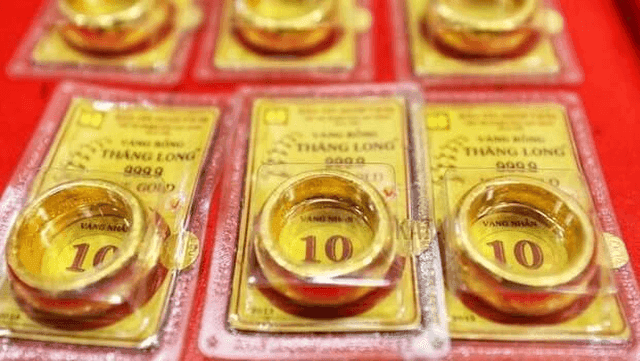
The current gap between the buying price and the selling price is about 3 million dong per tael.
On May 9, SJC bullion prices were unchanged from the end of the previous day, generally at 164.5–167.5 million dong per tael.
Prices for plain gold rings vary slightly between dealers. DOJI and Bao Tin Minh Chau apply prices of 164.5–167.5 million dong per tael, while PNJ quotes 164.3–167.3 million dong per tael. SJC buys and sells plain gold rings at 164.0–167.0 million dong per tael. Bao Tin Manh Hai applies 164.5–167.4 million dong per tael.
On the international market, gold prices stay above 4,700 USD per ounce.
Kitco News said the pace of gold gains may be slowing in the near term, but central banks continue to signal they are buyers when prices correct, even amid economic volatility.
The latest data from the World Gold Council shows central banks sold a net 30 tonnes of gold in March, mainly due to sizable selling from Turkey and Russia. Despite this, the broader picture remains supportive for the precious metals market, as some countries continue to increase reserves during price corrections.
Poland, Uzbekistan and Kazakhstan remain active buyers, while China continues a multi-month accumulation streak.
For investors, the key point is not a single modest monthly net sale, but a structural trend that has formed over roughly the last four years. Gold accumulation has increasingly become a strategic decision linked to reserve diversification, geopolitical risk, and efforts to reduce dependence on the USD.
The People’s Bank of China continues to play a central role in this trend, increasing official gold reserves for 18 consecutive months. While it does not appear to manage reserves based on short-term price signals, data show it still buys when prices weaken. In March, China bought 8 tonnes of gold, the highest since December 2024, as prices remained about 16% below the January 2026 historical peak.
Beyond China’s activity, the World Gold Council notes that the share of gold in official reserve assets remains relatively low. Gold now accounts for about 15% of total global reserve assets, leaving room for further allocation to the precious metal.
Kosovo’s decision to buy gold for the first time in history highlights that even smaller central banks are seeking to bolster reserve stability through gold. This expansion reinforces the view that gold’s role in the global monetary system is increasing.
Recent behavior also suggests central bank demand is becoming less price-sensitive than in previous cycles, with analysts attributing this to institutions prioritizing long-term strategies over short-term price signals.
Premium gym chains are entering a “golden era” that is ending or already in decline, as rising operating costs collide with shifting consumer preferences toward more flexible, community-based ways to exercise. Long-term memberships are shrinking, margins are pressured by higher rents and facility expenses, and competition from smaller, more personalized…