•
•
•
•
•
•
•
•
•
•
•
•
•
•
•
•
•
•
•
•
•
•
•
•
•
•
•
•
•
•
•
•
•
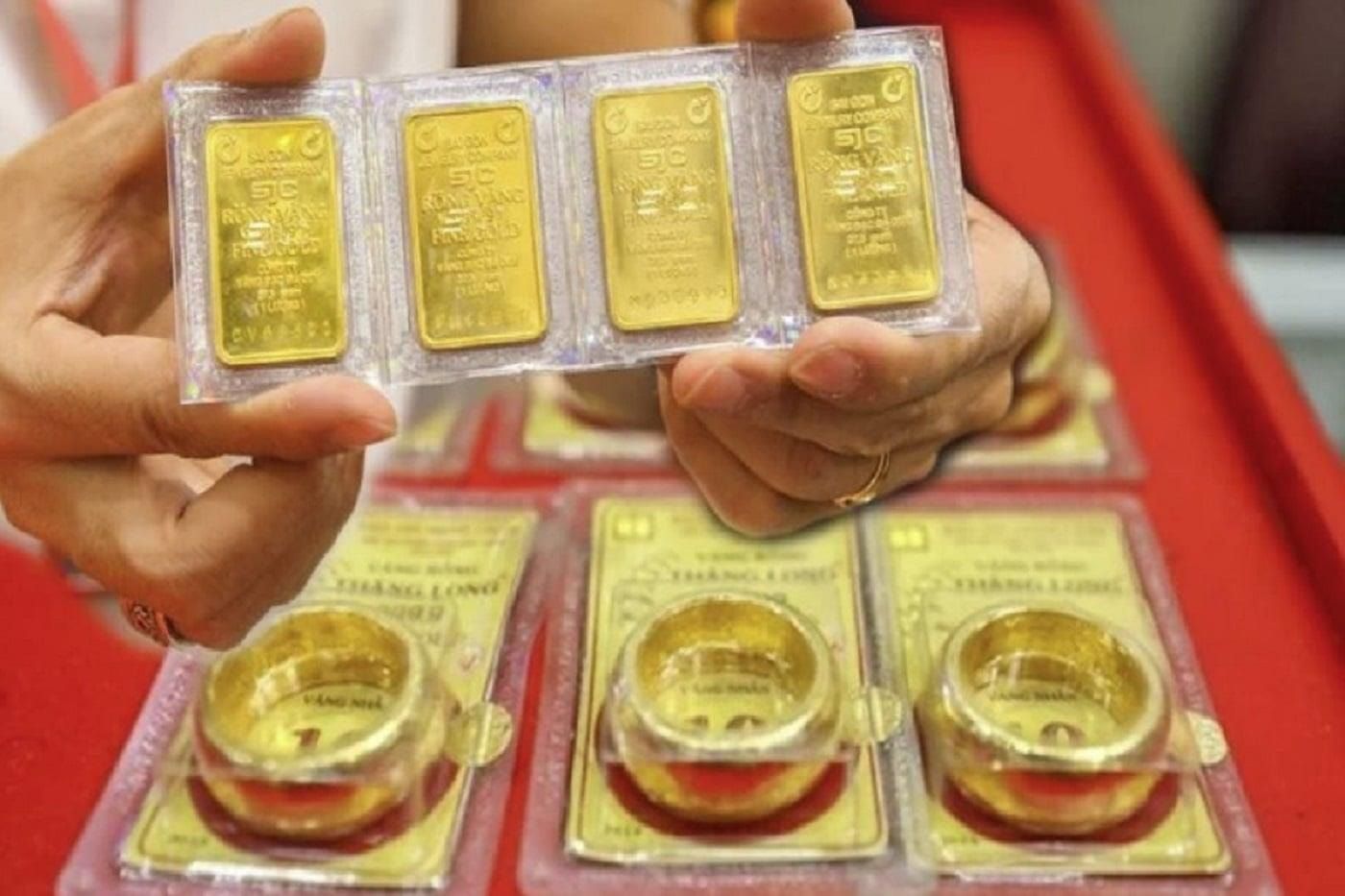
Gold prices in Vietnam remained at low levels in morning trading on June 11 following a run of declines in recent days. World gold prices fell more than 4% in the latest session and were trading around 4,066 USD per ounce, as investors weighed concerns about prolonged high interest rates and rising geopolitical tensions in the Middle East.
In the domestic market, major processing companies made no meaningful adjustments to listed prices during the morning session. Bullion prices were generally below 139 million VND per tael.
For SJC, bullion is quoted at 133.3–138.3 million VND per tael (buy–sell). PNJ, DOJI, Bao Tin Minh Chau and Bao Tin Manh Hai also quoted bullion at similar levels: 133.8–138.8 million VND per tael for PNJ and DOJI, 133.8–138.8 million VND per tael for Bao Tin Minh Chau, and 133.8–138.8 million VND per tael for Bao Tin Manh Hai.
Gold jewelry prices were also largely unchanged. SJC trades at 133.2–138.2 million VND per tael. PNJ quotes 133.8–138.8 million VND per tael, DOJI at 134.3–138.3 million VND per tael, Bao Tin Minh Chau at 133.7–138.7 million VND per tael, while Bao Tin Manh Hai trades at 133–138.3 million VND per tael.
On the international market, spot gold traded around 4,066 USD per ounce in the afternoon session, down 0.1% from yesterday’s close after previously dropping 4.4% in the latest session.
Global gold prices fell more than 4% on Wednesday as concerns about a potential escalation of conflict between the US and Iran weighed on the market. Investors also remained cautious ahead of key US economic data that could influence expectations for the Federal Reserve’s monetary policy path.
On Wednesday, President Trump said Iran had dragged negotiations too long and would face corresponding consequences, warning Washington could take strong military measures if no peaceful agreement is reached.
In response, Iran launched missiles and drones at US military bases in Jordan, Kuwait, and Bahrain following US strikes on Iranian targets near the Hormuz Strait.
Analysts said gold has faced pressure since the conflict began in late February, with record oil prices contributing to inflation fears and expectations that interest rates will stay high for longer. While gold is often viewed as an inflation hedge, a high-rate environment reduces the appeal of the non-yielding metal.
According to CME Group’s FedWatch tool, the market assigns about a 67% probability that the Fed will raise rates in December.
US data released on Wednesday showed core CPI (excluding food and energy) rose 0.2% in May, below the 0.4% increase in the prior month. Investors also awaited the US Producer Price Index (PPI) data scheduled for Thursday for further signals on the Fed’s policy path in the coming months.
Paul Wong, market strategist at Sprott Asset Management, said that although gold is in a correction phase, long-term fundamentals remain supportive. He cited inflation pressures, central-bank gold purchases, and concerns about currency depreciation as key drivers for gold.