•
•
•
•
•
•
•
•
•
•
•
•
•
•
•
•
•
•
•
•
•
•
•
•
•
•
•
•
•
•
•
•
•


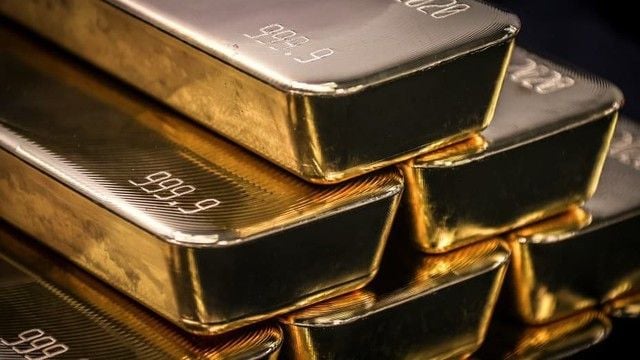
After a period of sharp gains and strong attention at the start of the year, the gold market is entering a consolidation phase with subdued trading. Gold prices have recently traded in a range of roughly $4,600 to $4,900 per ounce, signaling a lack of near-term momentum even as geopolitical tensions and global growth concerns continue to provide support.
Rising inflation pressures are reviving expectations for higher interest rates, increasing the opportunity cost of holding gold and tempering buying interest. Even so, gold remains widely viewed as a neutral safe-haven asset amid geopolitical risk, which keeps investors cautious about taking bearish positions.
The current lull does not point to a deterioration in fundamentals. Instead, it reflects a shift in gold’s role. With relatively subdued price movement, gold continues to function as a stabilizing anchor in a stressed global financial system, alongside changes in the composition of buyers.
Recent initiatives by the London Bullion Market Association (LBMA) and the World Gold Council (WGC) continue to support efforts to classify gold as a high-quality liquid asset (HQLA). If recognized, gold could be treated on par with cash and government bonds for prudential standards.
While the regime is not yet officially complete, central-bank purchases suggest the market is behaving as if the change is already underway. Sustained official-sector accumulation over time reflects growing caution toward traditional reserve assets.
Even after retreating from its January highs, gold prices remain elevated and global demand is described as solid. The consolidation occurs alongside a focus on the widening gap between asset valuations and core risks, particularly in equities and sovereign debt markets.
Central-bank gold purchases are a key indicator of this shift. The People’s Bank of China was singled out: in March, as gold prices recorded the sharpest correction in decades, China accelerated gold purchases at the fastest pace in more than a year.
This pattern suggests declines are being treated as opportunities to accumulate rather than as warning signals, helping explain why gold remains near historically high levels even as momentum slows.
Ongoing geopolitical fault lines continue to be viewed as risks not fully priced into global economic stability. In this context, gold is increasingly seen not only as a hedge against a single macro scenario, but also as insurance against broader systemic risk.
In the longer term, gold continues to serve as portfolio diversification despite short-term volatility that can interrupt correlations with other asset classes. The lack of yield is not necessarily a major drawback as cycles become more driven by interest rates.
Unlike most financial assets, gold carries no credit risk, a factor that can become more valuable during periods of systemic uncertainty.
Overall, the consolidation phase does not indicate waning appeal. The market appears to be absorbing a high price level without meaningful selling pressure, suggesting that long-term investors remain in control. The return of a quiet, range-bound trading regime may reflect stability rather than stagnation.






Premium gym chains are entering a “golden era” that is ending or already in decline, as rising operating costs collide with shifting consumer preferences toward more flexible, community-based ways to exercise. Long-term memberships are shrinking, margins are pressured by higher rents and facility expenses, and competition from smaller, more personalized…




