The World Gold Council (WGC) said the near-term outlook for the gold market remains positive, citing price-supporting factors that have not disappeared. The main drivers include geopolitical tensions, central bank gold purchases, and investor demand for safe-haven assets.
In a recent online press conference, Shaokai Fan, APAC regional director (excluding China) and Global Bank Head at the WGC, said that in the first quarter of this year global central banks recorded net purchases of 244 tonnes of gold. He noted this level is higher than the recent five-year average, indicating gold continues to be treated as a strategic reserve asset amid ongoing international economic and financial market uncertainties.
The WGC said gold currently has almost no correlation with other risky assets such as equities or cryptocurrencies. As a result, its defensive role is likely to strengthen, particularly as the world faces growth slowdown risks, geopolitical conflicts, and debt sustainability pressures.
Despite the positive outlook, the WGC warned that the gold market could see more volatility in the near term due to the prolonged high-rate environment.
Shaokai Fan said Western investors’ behavior is changing as yields and rates remain high, increasing the carrying costs of holding gold. This could curb short-term investment inflows into gold.
He also pointed to factors that could influence the global gold price trend, including concerns about the independence of the Federal Reserve, U.S. debt risk, and potential weakness in the U.S. dollar. The WGC said that if the USD weakens, gold typically benefits because it becomes more attractive to international investors.
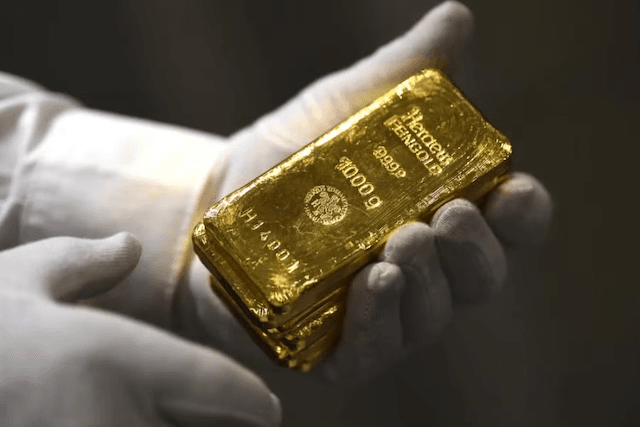
The WGC said investors should monitor changes in gold exchange-traded funds (ETFs), as well as demand for physical gold bars and coins. These indicators can directly reflect market sentiment and help determine the magnitude of potential increases or decreases in gold prices.
On Vietnam, the WGC said the domestic price premium over the world price has narrowed significantly to about 16–17 million dong per tael, which it described as a positive sign for the local gold market. However, the gap remains higher than in many large markets such as China or India.
Shaokai Fan said one measure to continue narrowing the price gap is to clarify the mechanism and quotas for gold imports. The WGC said increasing legitimate supply can help ease shortages and reduce the domestic-global price difference.
The WGC said mobilizing gold held by the public is a path many countries have pursued to bring stockpiled gold into circulation in the economy. It cited Turkey’s experience, where gold has been used as collateral or as a payment instrument within the banking system.
According to a WGC expert, for gold to flow into the economy rather than simply be stored, it is important to build a proper legal framework and ensure gold is widely recognized within the financial and banking system.
In a meeting with the State Bank on 29 April, Prime Minister Le Minh Hung urged the banking sector to establish an effective gold market management mechanism, supported by a practical roadmap.
The Prime Minister said citizens have the right to hold gold as a commodity or asset, but the state does not encourage this because it does not add value to the economy. He emphasized that hoarding and speculation in gold should be limited as much as possible.
He added that when macroeconomic fundamentals are stable and the legal framework is transparent and predictable, households and businesses are more likely to reduce gold hoarding, shift toward production and business activity, or deposit money in banks. This, he said, would help policymakers mobilize resources for growth.