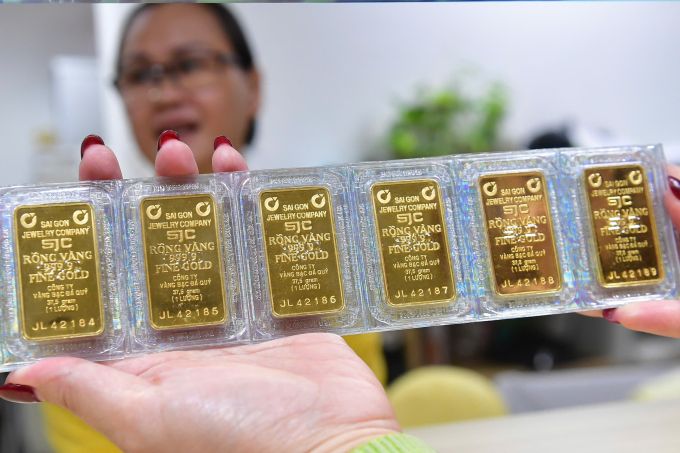
Gold brands in Vietnam have raised the price of gold bars by 1 million dong per tael, pushing domestic prices to 168.5–172 million dong per tael. The buy-sell spread is 3.5 million dong, widening compared with the 2 million dong range maintained since early April. Several brands adjusted their quotes in line with this move.
SJC plain gold bars increased by 1 million dong to 168–171.5 million dong per tael. PNJ, DOJI, and Bao Tin Minh Chau set the same selling price for plain bars as SJC, while their bid prices are higher by about 500,000 dong.
World gold prices rose by more than 40 USD, reaching 4,829 USD per ounce at the close of April 17. The international market was supported by a weaker US dollar. In addition, Iran fully reopened the Hormuz Strait after a 10-day ceasefire, contributing to lower oil prices, easing inflation concerns, and supporting metals.
Peter Grant, vice president and senior metals strategist at Zaner Metals, described the Hormuz opening as a significant event. He said the development suggests investors are positioning for potential rate cuts, which is supportive for gold, and added that prices could soon return to the 5,000 USD level.
Using Vietcombank’s exchange rate, world gold is equivalent to about 154 million dong per tael. This narrows the domestic-global gap to about 18 million dong, down from the record 30 million dong at the end of March.
On April 14, Dao Xuan Tuan, head of the Foreign Exchange Management, said the State Bank of Vietnam has received 11 license applications to produce gold bars. He noted that the review will be conducted carefully.
Silver bars and ingots rose by 2%. Phu Quy priced the metal at 3.04–3.12 million dong per tael, equivalent to 74.9–83.4 million dong per kg. Ancarat and Sacombank-SBJ traded around 3.01–3.11 million dong per tael.