Gold prices on 19 April 2026 closed the week higher, but did not manage to break above the psychologically important 4,900 USD/ounce level. In Vietnam, SJC gold bars rose back to 172 million dong per tael.
World gold prices over the week fluctuated but stayed on a positive trend. At the start of the week, spot gold was at 4,676 USD/ounce. It then recovered quickly and maintained an upward path, moving above 4,700 USD/ounce and reaching 4,790 USD/ounce during the Asia session on Tuesday.
Prices continued to advance in the US session, surpassing 4,800 USD/ounce and setting a midweek high above 4,850 USD/ounce. After that, gold entered a consolidation phase, trading mainly between 4,790 and 4,835 USD/ounce over the following two sessions.
The largest move came in the final session of the week. Positive news tied to Middle East tensions—particularly the reopening of the Hormuz Strait after a ceasefire—pushed gold sharply higher from around 4,786 USD/ounce to above 4,890 USD/ounce. However, gold failed to break 4,900 USD/ounce as profit-taking emerged late in the session. By week’s end, spot gold eased to 4,829 USD/ounce.
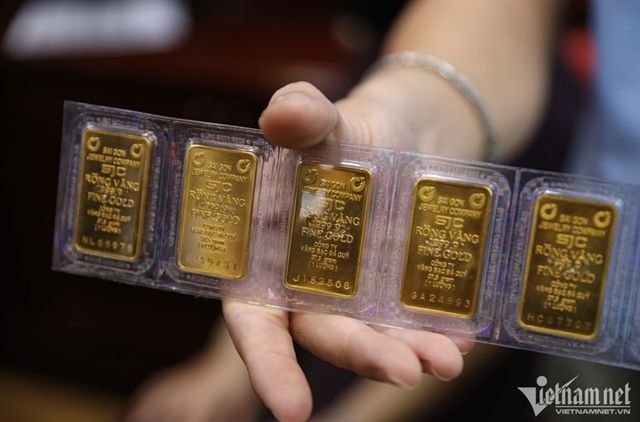
On 18 April, SJC 24K bars increased by 1 million dong per tael versus the previous session, trading at 168.5–172 million dong per tael (buy–sell).
Compared with last week, SJC bars were down 900,000 dong per tael on the buy side and 400,000 dong per tael on the sell side.
As Middle East tensions ease, the market is expected to shift focus back to economic data that could influence Federal Reserve policy expectations. The article notes that gold is likely to continue oscillating strongly, driven by expectations for Fed rate policy, geopolitical developments, and risk sentiment in financial markets.
It also highlights that if US data weaken or recession fears rise, gold may receive support from safe-haven demand. Conversely, if risk-on sentiment strengthens, equities continue to rise, and the Fed signals rates will stay high, gold could face downward pressure.
The near-term outlook for gold, according to the article, depends heavily on geopolitical developments, risk sentiment, and whether capital returns to safe-haven assets.