•
•
•
•
•
•
•
•
•
•
•
•
•
•
•
•
•
•
•
•
•
•
•
•
•
•
•
•
•
•
•
•
•


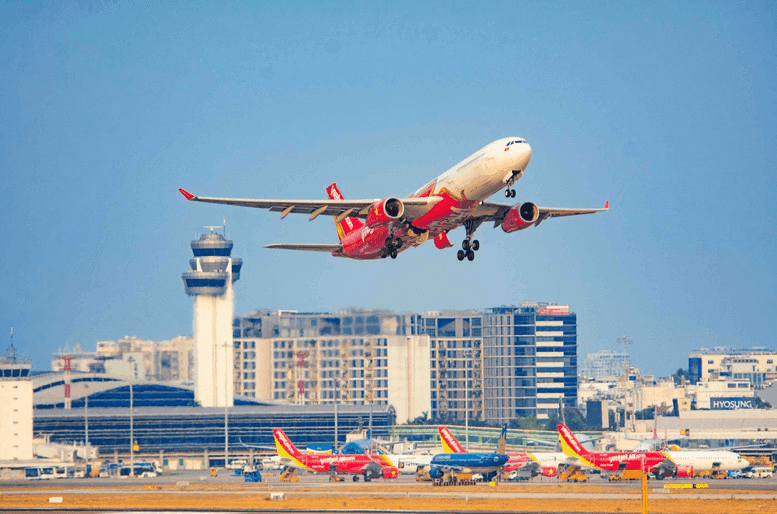
The Standing Government has issued a document outlining its views on a proposal to expand Vietjet’s role from an airline into a participant in infrastructure investment, including airport-related projects.
In its submission to regulators, Vietjet said it wants to invest in multiple components at Long Thành International Airport, including:
At Gia Bình Airport, Vietjet proposed a dual-use model combining civil aviation with related air services.
Vietjet also sought deeper involvement in existing airports, including Terminal 1 at Tan Son Nhat International Airport and Noi Bai International Airport.
In the response set out in Notice 180/TB-VPCP, the Standing Government welcomed and appreciated Vietjet’s proactive approach to researching and proposing to invest in and operate airports.
The document states the move is expected to support the development of Vietnam’s transport infrastructure system, act as a driver for economic and social growth, and contribute to national defense and security.
It also notes that relevant ministries and localities have been asked to engage promptly in reviewing Vietjet’s proposals and providing initial solutions within the short term.
The Standing Government said the policy is to mobilize maximum social resources and diversify investment forms for airport system development, as defined in Resolution 68-NQ/TW by the Politburo and the Civil Aviation Law of Vietnam. It added that decentralization and delegation mechanisms and procedures for airport projects have been completed, creating a legal framework for relevant parties.
The Standing Government asked the Ministry of Construction, the Ministry of Finance, and the People’s Committees of localities including Da Nang, Dong Nai, and Thanh Hoa, together with Vietnam Airports Corporation (ACV), to promptly review and process Vietjet’s proposals within their authority and report promptly to competent authorities on matters beyond their authority.
The review is required to follow key principles:
The document also emphasizes that considerations of overall operational efficiency extend beyond aviation to include non-aviation service ecosystems such as tourism, urban development, logistics, and the aviation economy.
For airports allocated to investors such as Long Thành and Gia Bình, Vietjet is asked to actively work with investors to discuss and agree on a business cooperation plan based on mutual benefits and shared risks, with the aim of stabilizing airport operations and ensuring high-quality customer service.
Localities including Da Nang, Thanh Hoa, and Dong Nai are instructed to actively select investors to expand airports such as Chu Lai, Thọ Xuân, and Long Thành (airport city), using flexible application of existing policies. If necessary, they may propose special mechanisms to accelerate progress.
From Vietjet’s side, the Standing Government requires Vietjet to review overall demand for technical infrastructure, ground handling, and passenger services, as well as its capacity to participate in infrastructure investment, in order to balance resources and determine priorities to ensure feasibility and effectiveness.





Premium gym chains are entering a “golden era” that is ending or already in decline, as rising operating costs collide with shifting consumer preferences toward more flexible, community-based ways to exercise. Long-term memberships are shrinking, margins are pressured by higher rents and facility expenses, and competition from smaller, more personalized…